by Legalnaija | Apr 16, 2024 | Blawg

This article is the first part of the KS Legal Infrastructure & PPP series which will examine the levers of procuring and closing of PPP projects and programmes in Nigeria
In February 2024, the Federal Executive Council, under the directive of President Bola Ahmed Tinubu GCFR, approved the implementation of the recommendations in the Oronsaye Report .
Among these recommendations is the proposed merger of the Infrastructure Concession and Regulatory Commission (ICRC) with the Bureau of Public Enterprise (BPE), which will consolidate the oversight of the procurement of PPPs, concessions, and privatizations under the National Council for Privatization (NCP), chaired by the Vice President .
This reform, if fully implemented, with the necessary legislative action, promises to be the most significant overhaul of Nigeria’s framework for the procurement of Public-Private Partnerships (PPPs) and infrastructure concessions at the federal level in the last twenty years.
Institutional and Regulatory Framework for PPPs at the Federal Level
The Ministries Departments and Agencies of the Federal Government are generally responsible for project identification, prioritisation, development, and implementation within their respective sectors, working in tandem with regulatory agencies to facilitate successful PPP outcomes.
However, there are broadly two ways set out in the laws for federal PPP projects to be delivered i.e. taken from project identification through to commercial and financial close, wherein the contracts are signed between the government and the private sector party, financing is approved and disbursed by the lenders. These are the ‘BPE route’ and the ‘ICRC route’.
The current regulatory landscape is chiefly governed by two laws, the Public Enterprises (Privatization and Commercialization) Act of 1999 and the Infrastructure Concession Regulatory Commission Act of 2005.
The Infrastructure Concession Regulatory Commission Act 2005 (ICRC Act) is the law enabling and governing the participation of the private sector in the financing, construction, development, operation, or maintenance of infrastructure or development projects of the Federal Government Ministry, Agency, Corporation or body through concession or contractual arrangements entered into by the relevant Sector, Ministry or Agency .
The ICRC Act establishes the Infrastructure Concession Regulatory Commission (ICRC), tasked with overseeing concession agreements and ensuring compliance.
Conversely, the Public Enterprise (Privatization and Commercialization) Act 1999 (PEPC Act) governs the partial or full privatization and commercialization of public enterprises in Nigeria. The PEPC Act established the National Council on Privatization (NCP) under the chairmanship of the Vice President with the power to approve public enterprises to be privatised and commercialized . The PEPC Act also created the Bureau of Public Enterprises (BPE) with the mandate to implement and execute the NCP’s policy on privatization and commercialization.
Apart from the two main laws discussed above, the Public Procurement Act of 2007 which establishes the Bureau of Public procurement is also quite critical. This is the law and the body that oversees all public procurement processes including PPP project procurement, and ensures that all procurement methods, whether through the ICRC or the NCP, complies with legal and procedural requirements that safeguard public funds and promotes competition among bidders.
Regulatory Agency Dichotomy and Ambiguity
The NCP, in exercise of the powers conferred upon it pursuant to Sections 2 and 3 of the PEPC Act approved the commercialization of some public enterprises by way of concession under the Public Enterprises (Privatization and Commercialization) Order 2012. Consequently empowering the BPE to use concessions for the commercialization of government-owned enterprises.
The authorization of the BPE to engage in concessionary activities has crystalized into the existing dichotomy between the ICRC and BPE, by presenting a maze of overlapping regulatory responsibilities. This ambiguity has confounded investors and stakeholders involved in PPPs in deciding the route to embark on in originating, bidding and closing PPP projects in Nigeria.
Although the ICRC route grants significant autonomy to Ministers and the heads of Ministries, Departments and Agencies (MDAs) to shape the entire process, and even to expedite it. However, concerns linger over bid quality and project sustainability. For instance, is there a sufficient minimum mandatory scrutiny to ensure competitiveness and as a result ensuring the success of the best possible technical and financial bids with the most value for money under the ICRC bidding process?
Conversely, the NCP/BPE route is a rather slow process due to the multiple committee approvals projects must receive at the level of the BPE and the NCP from the various internal technical committees and from the Ministers and stakeholders in Council.
Recent directives such as the Presidential Directive of September 2020 have attempted to clarify responsibilities, The ICRC is to serve as the regulatory Agency for PPP transactions, with powers to inspect, supervise as well as monitor projects and process, on order to ensure compliance with relevant laws, policies and regulations while the BPE shall be responsible for the concession of already listed in the First and Second Schedules of the Public Enterprise (Privatization and Commercialization) Act 1999 and to act as the counterparty on behalf of the Federal Government alone or in conjunction with relevant MDAs on all infrastructure projects being developed on a public private partnership basis.
Despite the Federal Government’s efforts in streamlining the functions of the ICRC and BPE, operational disputes still persist.
Conclusion
The potential merger of the Infrastructure Concession and Regulatory Commission (ICRC) with the Bureau of Public Enterprise (BPE) represents a significant step towards enhancing the clarity and efficiency of Public-Private Partnership (PPP) procurement in Nigeria, particularly at the federal level. For investors, both domestic and foreign, this merger holds the promise of streamlining regulatory processes, reducing ambiguity, and fostering a more conducive environment for infrastructure investment.
By consolidating regulatory oversight under a single entity and aligning institutional frameworks, the merger aims to provide investors with greater certainty, transparency, and consistency throughout the PPP project lifecycle. Moreover, the synergy between the ICRC and BPE, under the umbrella of the National Council for Privatization, chaired by the Vice President, is poised to facilitate stronger policy coordination and strategic direction, bolstering investor confidence and attracting much-needed capital for critical infrastructure development. In the next part of this series we will examine the framework for executing PPP projects at the state or sub-national level, and the complexity of delivering projects across a diverse regulatory jurisdictions laws and insitutions.
References
– https://punchng.com/breaking-tinubu-orders-full-implementation-of-oronsanye-report%E2%81%A3-%E2%81%A3/ > accessed 18th March 2024.
– President Goodluck Ebele Jonathan set up the Stephen Oronsaye led committee to suggest reforms to streamline government agencies, reduce redundancy, and enhance operational efficiency in the executive branch of the Federal Government.
– https://von.gov.ng/wp-content/uploads/2024/02/Steve-Oronsaye-Report.pdf > accessed 18th March 2024.
– Section 1(1) ICRC Act
– Section 2(3) ICRC Act
– Section 6 of the PEPC Act defines public enterprises as any corporation, board, company or parastatal established under any enactment which the Government, a Ministry or agency has ownership, equity interests, partnership or any other form of business arrangement
– Section 9 PEPC Act 1999
– Section 11 PEPC Act 1999
– Section 12 PEPC Act 1999
– Circular Ref No SGF.50/S.37/II/749 dated 14th September 2020
by Legalnaija | Apr 9, 2024 | Blawg

Dear Charles,
As the sun marks the start of another day, we celebrate the milestone of your 40th birthday. It’s not just a measure of time, but a testament to the journey of a man who has lived with purpose and passion.
Your role as the NBA Assistant Publicity Secretary has been marked by dedication and a commitment to excellence. Your voice has been one of reason, your actions a reflection of integrity, and your presence a source of inspiration.
As we prepare to celebrate you on April, 12 (more…)

by Legalnaija | Apr 6, 2024 | Blawg
NBA-SBL Announces Lawyers Got Talent (LGT) 2.0
Lagos, Nigeria — Lawyers are often seen as people with formidable minds. However, beyond the courtroom facade lies an array of talents and untapped potential waiting to be unveiled.
In a world where the perception of lawyers as formal and workaholics prevails, The Nigerian Bar Association Section on Business Law (NBA-SBL) is on a mission to challenge this narrative, providing a platform for lawyers to showcase their talents outside the confines of traditional legal practice.
Therefore, building on the success of its inaugural edition, The Nigerian Bar Association (NBA) – Section on Business Law (SBL) proudly announces Lawyers Got Talent (LGT) 2.0, an extraordinary showcase of the multifaceted skills and passions of legal practitioners.
Reflecting on the upcoming event, Ose Okpeku, Chairman of the 2024 NBA-SBL Conference Planning Committee, expressed enthusiasm for the diverse talents that Lawyers Got Talent will showcase. “Our legal community is brimming with creativity and passion, and Lawyers Got Talent provides a platform to celebrate and honor these talents,” Ose Okpeku remarked. “We look forward to an unforgettable evening filled with inspiration and entertainment.”
According to the NBA, this year’s Lawyers Got Talent (LGT) is expected to deliver a heightened level of excitement and thrill. Attendees can expect an evening filled with pleasant surprises, entertainment, excitement, and mirth.
To qualify for the talent showcase, interested participants are invited to submit a 1-minute video showcasing their talent in one of the following categories: music (voice and instruments), poetry (Spoken words), or comedy.
Submissions should be sent to nbasblconference@gmail.com no later than May 2nd 2024. To be eligible for the talent show, participants must also register for the conference, adding an exciting incentive to secure their spots.
Prizes await the most outstanding performers, with cash rewards totaling over 2 Million Naira, for the top three winners. Beyond the allure of monetary prizes, Lawyers Got Talent offers participants a chance to connect with fellow legal professionals in a spirit of camaraderie and celebration.
Registration for the conference is ongoing. The link to the registration portal is www.nbasbl.org. For more information, please visit the NBA-SBL website at www.nbasbl.org or contact the Conference Secretariat at info@nbasbl.org.
For more information, please visit NBA-SBL on Instagram – @nbasbl and Twitter – @nbasblofficial or call the following Contact numbers: Johnson – 08032543244,
Harry – 08068000517 and Temitope – 08138492338.
************************************
About the NBA SBL: The Nigerian Bar Association Section on Business Law Is committed to advancing the practice of business law within the legal community. Through conferences, publications, and educational initiatives, NBA SBL provides a platform for legal professionals to stay informed and connected.
by Legalnaija | Mar 29, 2024 | Blawg
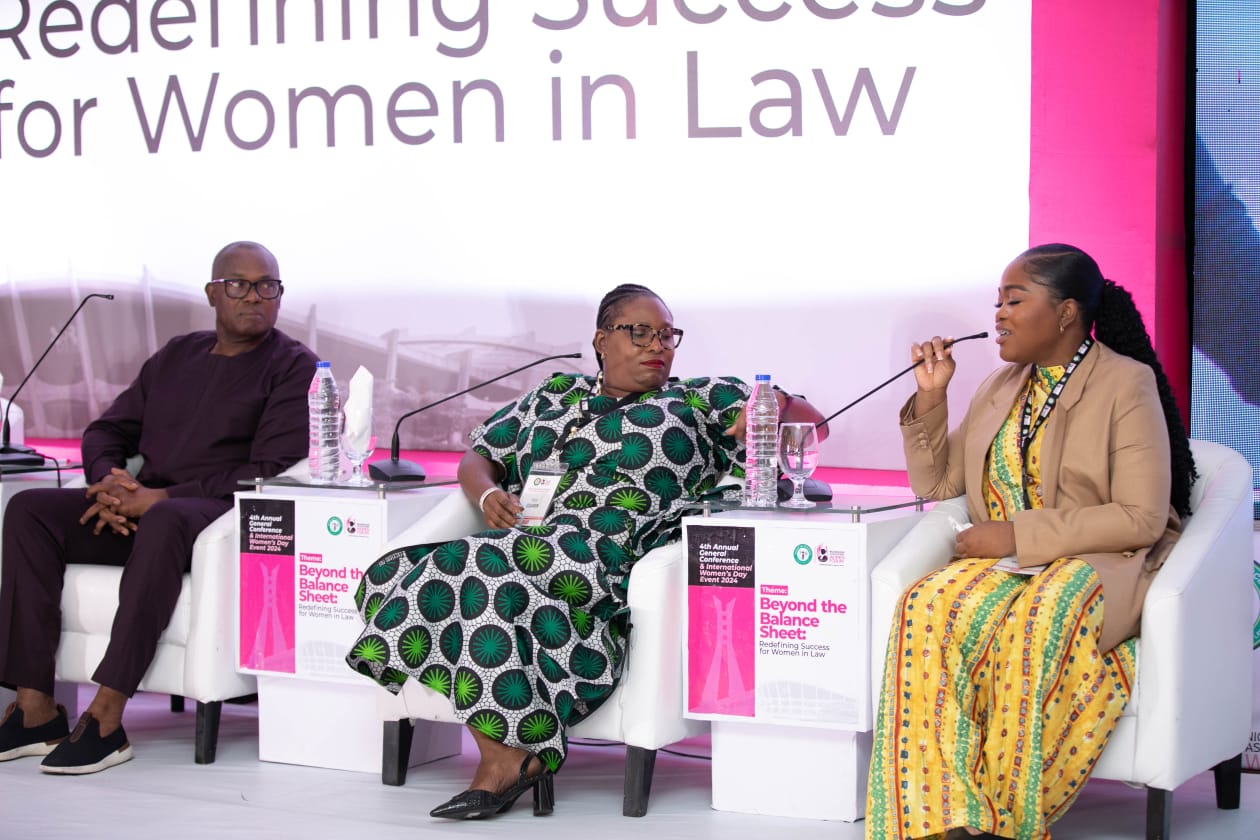
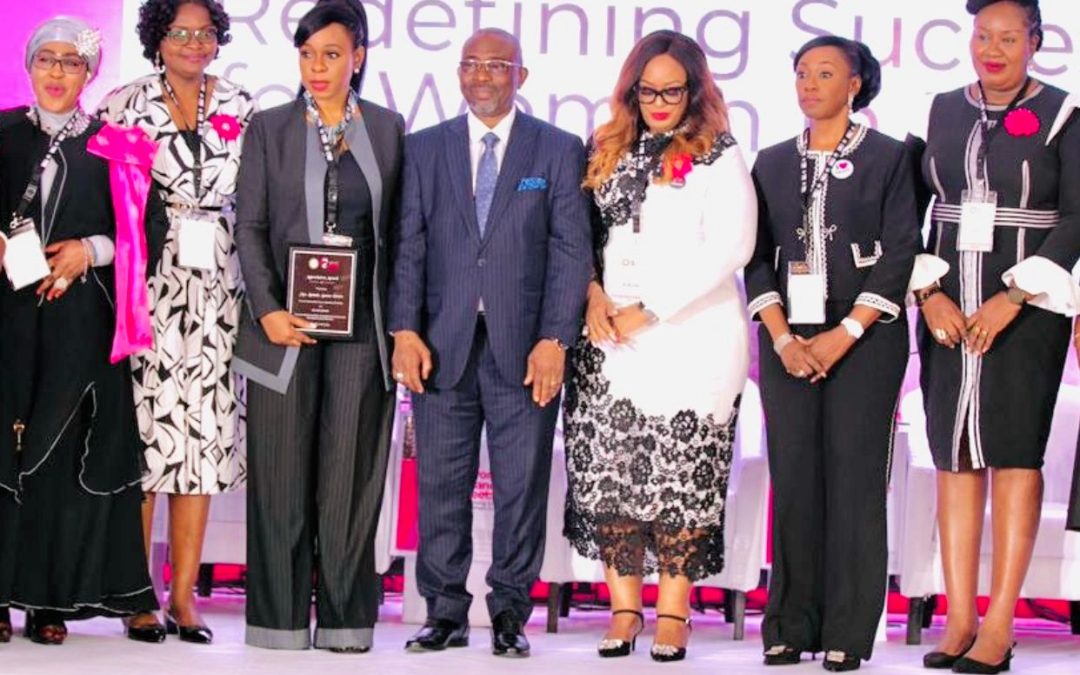
The Annual General Conference held on the 21st and 22nd in Lagos, Nigeria. The conference opened with a pre-conference cocktail night where delegates had the opportunity to network and interact with other female lawyers on the first day of the conference.
Day 2 of the conference was the day of the main event and was opened with the recitation of the national anthem followed by opening remarks of the Chairperson of the Nigerian Bar Association Women Forum, Mrs. Chinyere Okorocha after which Mrs. Folashade Alli SAN, the chairperson of the planning committee of the 4th annual general conference gave a welcome speech.
After the welcome addresses, some dignitaries present were invited to give their good will messages. The Attorney General of Lagos, Honourable Lawal Pedro, Mrs Amina ably represented by Mrs. Funke Oduwole and the representative of the first lady of Ogun state amongst others gave their good will messages.
The conference kicked off in full with the keynote speech presented by the ever vibrant and change maker Mrs. Bolanle Austen-Peters who spoke to the theme of the conference “Beyond the Balance Sheet, Redefining Success for Women in Law” she urged Nigerian female lawyers to define what success means to them, to follow their passion and not allow other people or society define what happiness should mean to them. She suggested that the body in charge of conferring Senior advocate ranking look beyond court advocacy and that they should consider lawyers who work in-house and non-litigation lawyers generally. She opined that senior lawyers embrace the culture of mentoring young lawyers as the younger lawyers would be the one to take over the baton in few years to come. She left the audience with the words that a female lawyer also needs to balance her sheets as the goal is to be successful while also making the money.
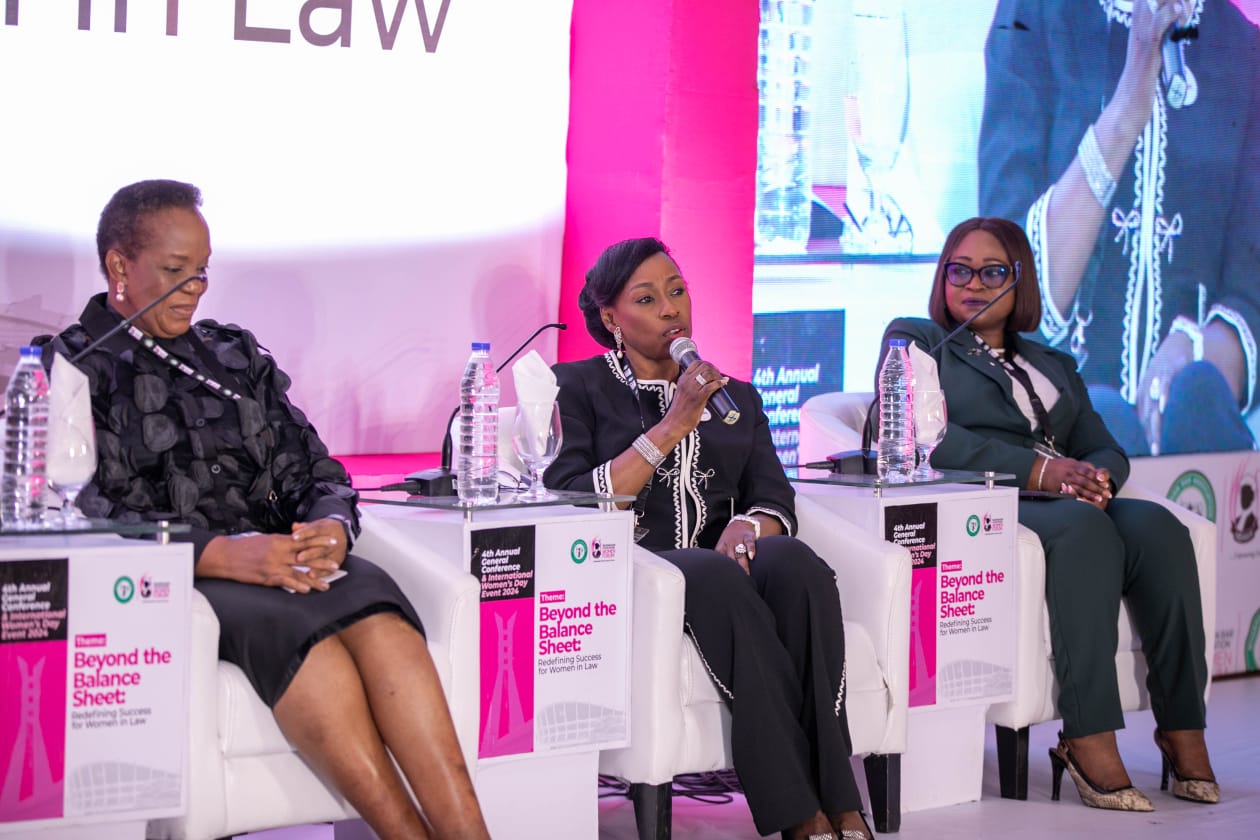
After the speech, a question and answer section was anchored by the Chairperson of the Nigerian Bar Association Women Forum, Mrs. Chinyere Okorocha where she asked the keynote speakers questions regarding challenges she must have faced during the cause of her career in the creative industry which used to be men dominated before the emergence of women who dared to change the narrative. At the conclusion of this segment, the first panel session commenced. This section delved into how a professional ecosystem can be created for the female lawyer, the panelists narrated personal experiences and also encourage law firms and employers to put structures that will make the workplace enabling for women to thrive.
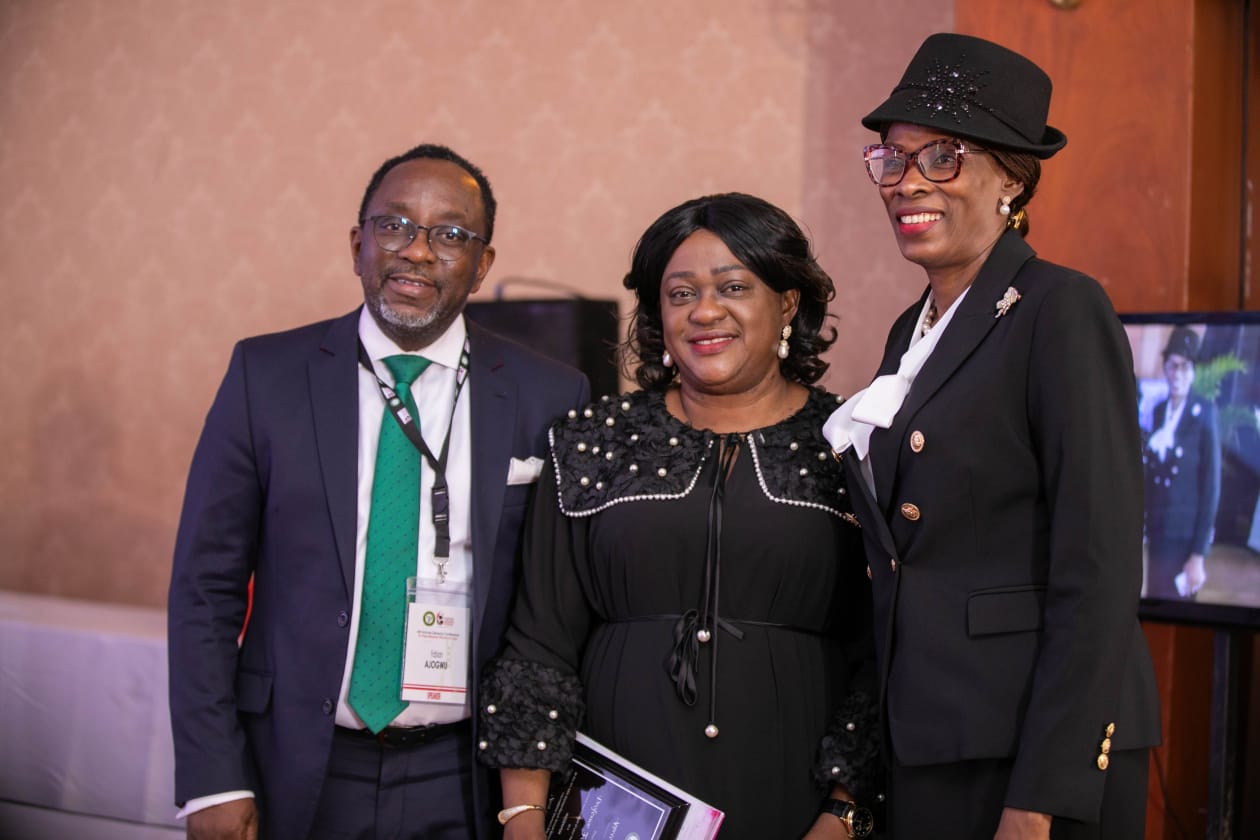
The second session which had seasoned lawyers like Mr. George Etomi, SAN, Mrs Kofo Dosekun speak about how a business of law is formed and managed. Mr. George Etomi, SAN from his wealth of experience gave three key insights which include employing or partnering with lawyers who can get the work in, ensuring that all jobs gotten are done to the best and lastly getting money into the firm to continue to finance the law firm business. Third section was on technology, the panelist gave examples of how women in law can leverage on technology. One of the panelists noted that gone are the days where female lawyers especially married women struggle with staying back at the office to finish a research work, a woman can now within the confines of her house do researches and access cases using platforms like the Law Pavilion.
The fourth session had panelists like Mrs. Funmi Roberts who spoke about how women in law should dress and compose themselves. Women in law are advised to remain authentic, dress appropriately, network and always speak in rooms where they find themselves. The fifth session had a mental health specialist Dr. Yusuf Kadiri, Mrs. Fatima Ibrahim-Ali, Professor Fabian Ajogwu, SAN and was moderated by Professor Foluke Dada. The panelists narrated personal experiences and advised young lawyers to ay attention to ow their body works. Women lawyers are advised to engage in activities that will help the stay healthy both physically and mentally.
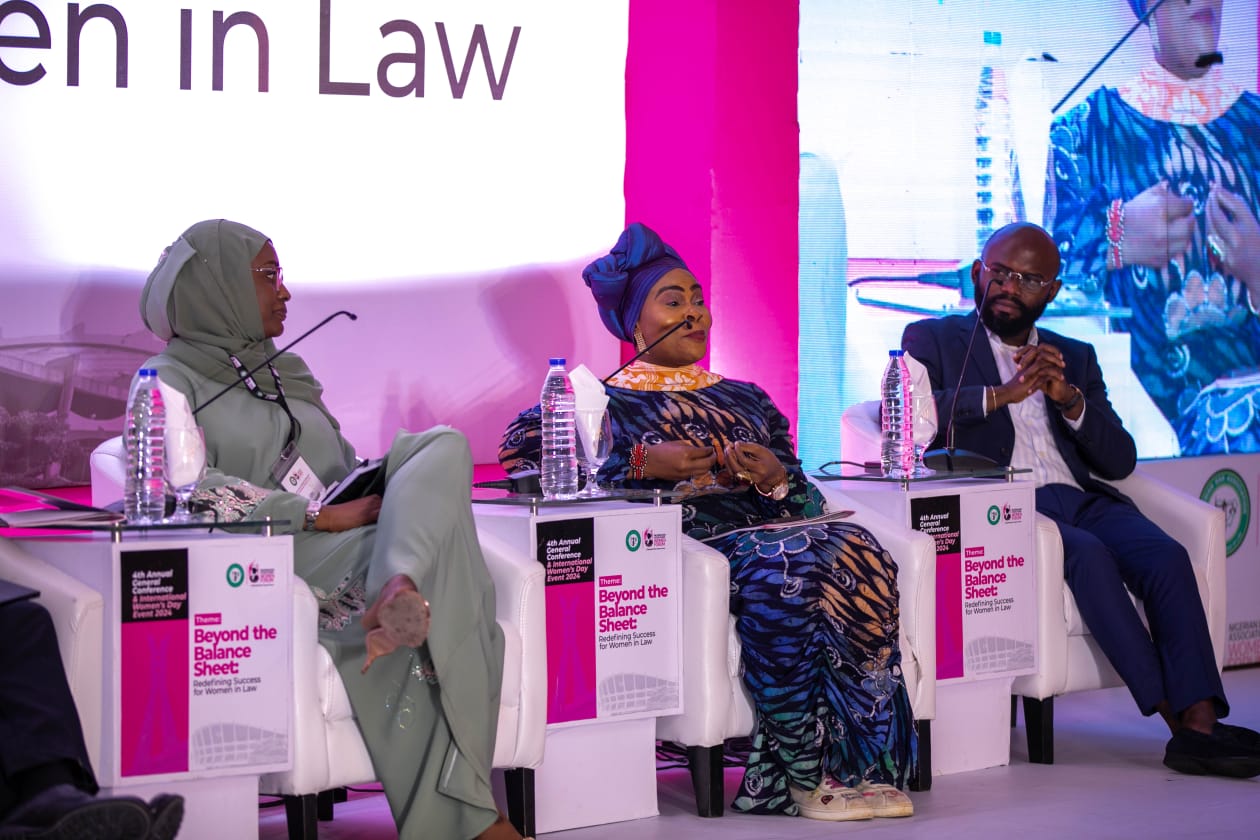
The last session had women and very senior lawyers who have journeyed both the legal career and raising families. Professor Yemi Bamgbose, SAN, Mrs. Folashade Alli, SAN and Honourable Justice Ipaye shared their wealth of experience, challenges they have faced and triumphed while casing their career, the key takeaway from this session to a young female lawyer is that you can n have it all, the thriving career, successful life and an happy family life. The formal session of the conference was rounded off by the 6th session. Delegates and guests were excused to go and dress elegantly for the dinner which will mark the closing of the annual general conference.
The dinner held at the same venue, a keynote speech was given by the representative of the Dr. Olusin the CEO of Bank of Industry. Series of entertainment activities were done, awards were presented. The conference came to an end with the conclusion of the dinner. The conference was a resounding success and all participants were excited to have been of such an epoch making event.
by Legalnaija | Mar 26, 2024 | Blawg
INTRODUCTION
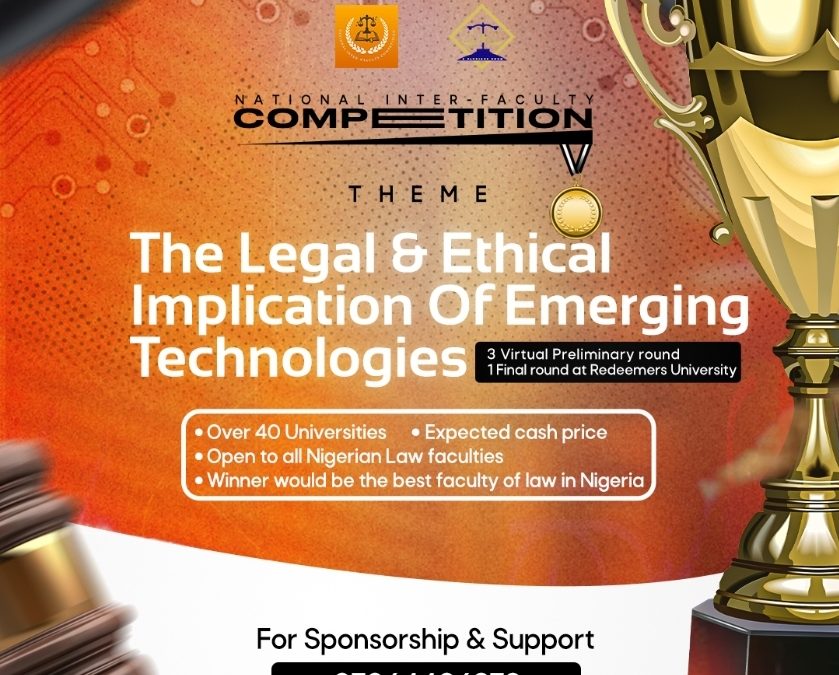
The National Inter-Faculty Competition is an initiative of the Academic Arm of the Redeemer’s University Law Students Society. It is currently being organized and planned by the National Inter-Faculty Competition (NIFC) Planning Committee, a subordinate committee created under the Redeemer’s University Law Students Society for the effective planning and administration of the National Inter-Faculty Competition (NIFC). The National Inter-Faculty Competition is named in honour of its patron Davidson Oturu.
In light of the recent and prevalent trends regarding technological advancement and the very concept of emerging technology globally The National Inter-Faculty Competition has been themed: The Legal and Ethical Implication of Emerging Technology.
The National Inter-Faculty Competition has been set to be divided into four stages:
– The Essay Stage: All registered faculties of law in Nigeria would be required to submit an essay centered on the topic From Pixels to Policy: Unraveling the Legal and Ethical Dimensions of Nigeria’s Emerging Digital Economy in accordance with the modalities provided in the NIFC rules of procedure. The faculties with the best essays as determined by impartial external judges will qualify and move on to the second stage of the competition.
– The Asynchronous Debate stage: This is the second stage of the competition where the qualifying faculties will be expected to record a video speaking in support or opposing the topic provided to them in compliance with the modalities contained in the rules of procedure. This stage adopts the traditional debate style where two teams will face off and speak either for and against a provided topic, the topic varies from team to team but are all centered on the central theme of the competition. The qualifiers of this round will progress to the third stage.
– Memorial Writing Stage: This stage commences the moot segment of the competition. Here, the qualifying faculties will be expected to draft a memorial in preparation for the mooting session on particular facts formulated by the National Inter-Faculty Competition Planning Committee.
– Mooting Stage: The four faculties with the best memorials will qualify to participate in the moot competition which is the final round. This round will hold physically in Redeemer’s University, Ede, Osun state from May 1st to May 3rd, 2024. The final round is set to hold in conjunction with National Inter-Faculty Competition Conference centered on the same theme: The Legal and Ethical Implication of Emerging Technology. The winners of the competition will emerge from this stage and be crowned the best faculty of law in Nigeria and be awarded with prizes.
OBJECTIVES
The central purpose of the National Inter-Faculty Competition is to ultimately foster the spirit of sportsmanship, cooperation and oneness among all faculties of law in Nigeria. The National Inter-Faculty Competition was also organized with these objectives in mind:
– The National Inter-Faculty Competition intends to test the intellectual capabilities of the participating faculties of law and awaken them to an area of law they have not been adequately expose to.
– This competition being organized and hosted by a private university is aimed at balancing the scales between public and private universities in Nigeria, in a bid to eliminate segregation.
– This competition intends to create a space for networking, it will give students the opportunity to connect with other law students and established legal practitioners.
– This competition also intends to create an avenue for students to showcase their talents and skills; it also aims to assist in developing problem solving skills, creativity, and communication skills.
– The National Inter-Faculty Competition was also organized with the intention of providing Redeemer’s University, specifically the Redeemer’s University Law Students Society, the visibility it desires.
The National Inter-Faculty Competition promises to be an insightful experience and it holds immense potential for growth and development.

by Legalnaija | Feb 9, 2024 | Blawg
Dear Lawyers, we have the resources to help you nail that brief and succeed in legal practice. On Legalnaija.com you can;

Visit us on buff.ly/35imRyO and chat with us via Whatsapp on 09029755663 to inquire about our services.
#lawdirectory #agreements #agreementtemplates #lawyersbookstore #bookstore #lawyers #nigerianlawyers #legaltech
by Legalnaija | Feb 2, 2024 | Blawg
As a lawyer, you know how important contracts are for your clients and your practice. Contracts are the foundation of any legal relationship, and they can protect your clients’ rights, interests, and obligations.
But drafting a contract can be a daunting and time-consuming task. You have to make sure that the contract is clear, accurate, and enforceable, and that it covers all the essential terms and conditions.
That’s why I want to share with you some practical tips and best practices on how to draft a contract in 5 easy steps. These steps will help you create a contract that is effective and professional, and that meets your clients’ needs and expectations.
Step 1: Identify the parties and the purpose of the contract. The first step is to clearly state who the parties are and what the contract is about. You should use the full names and addresses of the parties, and avoid using ambiguous terms like “seller” or “buyer”. You should also describe the main purpose and scope of the contract, and the benefits and obligations of each party.
Step 2: Define the key terms and conditions of the contract. The second step is to define the key terms and conditions of the contract, such as the price, payment, delivery, performance, quality, warranty, liability, and termination. You should use simple and precise language, and avoid jargon and legalese. You should also avoid vague or ambiguous terms, such as “reasonable”, “as soon as possible”, or “best efforts”. You should also specify how any disputes or changes will be handled, and what the governing law and jurisdiction will be.
Step 3: Draft the contract clauses and structure the contract. The third step is to draft the contract clauses and structure the contract. You should use headings and subheadings to organize the contract into sections and subsections, and use numbers and bullets to list the items and points. You should also use consistent and logical formatting, such as fonts, spacing, and indentation. You should also use transitions and connectors, such as “therefore”, “however”, or “in addition”, to link the clauses and sentences.
Step 4: Review and edit the contract. The fourth step is to review and edit the contract. You should check the contract for any errors, inconsistencies, or gaps, and make sure that the contract reflects the parties’ intentions and agreements. You should also check the contract for any grammar, spelling, or punctuation mistakes, and use a proofreading tool or service to help you. You should also ask a colleague or a friend to review the contract and give you feedback.
Step 5: Sign and execute the contract. The final step is to sign and execute the contract. You should make sure that the parties sign the contract in the presence of a witness or a notary, and that they use their full names and titles. You should also make sure that the parties date the contract and keep a copy of the contract for their records. You should also follow up with the parties and monitor the performance and compliance of the contract.
As you can see, drafting a contract can be a simple and straightforward process if you follow these 5 steps. But if you want to save even more time and effort, I have a special offer for you.
I have created a free contract template that you can use for your next contract. This template is based on the best practices and standards of contract drafting, and it covers all the essential elements and clauses of a contract. You can customize and modify this template to suit your specific needs and preferences.
To get your free contract template, all you have to do is log into your dashboard on www.legalnaija.com
Don’t forget to share this with your friends and colleagues.

by Legalnaija | Feb 1, 2024 | Blawg

Aviation law concept. Judge gavel and airplane on blue background. Flight cancellation
Disputes are inevitable in our day to day life especially in business and in the social strata of the society. It is pertinent to state that there are numerous benefits of using an arbitrator in handling civil aviation disputes which allows the disputing parties to make a choice on having a neutral third party to hear their case and pass an award. exploring this mechanism is helpful where the parties have a history of conflict or a risk of bias.
The aviation sector is a sensitive sector of any nation, it is very sensitive because of the high cost of running the sector. arbitration can be used to resolve complex or technical disputes. disputes in aviation are complex and technical in nature. the areas where the disputes mainly spring from aircraft design or maintenance. when legal disputes arise in this areas mentioned, it is important to understand that merely proving that the aircraft design was the probable reason for the accident/injury is not adequate as there are factors to consider like that of the misuse of the aircraft by the pilot, the preliminary presentation of risk by the aircraft design, and other similar factors.
The factors which are to be taken into consideration regarding disputes in the civil aviation sector vary completely. In respect of the issue of maintenance in a legal dispute it is worthy to mention that to comprehend that maintenance becomes necessary to ensure that the novel structure and materials employed for the better operation of the aircraft are carried out smoothly and are not incurring losses if the structure, parts are always malfunctioning. The following are inspections, repair processes and various maintenance programs. the manufacturers of these parts of the aircraft and the companies buying these aircraft are regarded as the same. The result of this is that disputes are bound to arise in the case of malfunctioning of the aircraft/parts of the aircraft.
On the issue of handling aviation disputes by arbitration, an arbitrator who is considered to handle civil aviation dispute resolution and passing an award when he or she has been selected, several factors should be considered when choosing. The main point to consider in choosing is to select an arbitrator who is familiar with the civil aviation sector. The reason is because the arbitrator will need to be able to understand the complex issue that may be involved in the dispute. again, it is adequate to choose an arbitrator who is neutral and impartial. the arbitrator must not have any personal interest in the outcome of the case. and finally, in the choice of an arbitrator the point is that the arbitrator should have experience in arbitration. This is because the arbitrator will need to be able to handle the complex legal issue that may arise during the arbitration. Apart from the arbitrator, all related persons have roles to play in the Civil Aviation process such as, mediators, parties, lawyers and experts.
In conclusion, the role of civil aviation arbitration in resolving disputes in the aviation sector is crucial, it provides a forum for the parties to resolve their differences without resorting to litigation. this is also important for promoting industry wise stability and growth.

by Legalnaija | Dec 22, 2023 | Blawg

Are you looking for the best books and accessories for lawyers? Do you want to publish your own legal book and get it marketed by experts? Do you need to buy outfits that suit your professional style and budget?
If you answered yes to any of these questions, then you need to check out Princess Legal World!
Princess Legal World is a one-stop shop for all your legal needs. We offer a wide range of books, from textbooks and case studies to biographies and novels, all written by renowned authors and experts in the field. Whether you are a student, a practitioner, or a enthusiast, you will find something that interests you in our collection.
We also sell high-quality accessories for lawyers, such as pens, notebooks, briefcases, mugs, and more. These items are designed to make your work easier and more enjoyable. You can also personalize them with your name, logo, or motto.
But that’s not all. Princess Legal World also helps aspiring authors to publish and market their own legal books. We finance the production of new books and provide editorial and promotional support. We have a network of distributors and retailers who can help you reach a wide audience and earn royalties.
And if you are looking for outfits that match your professional image, you will love our clothing line. We have suits, dresses, shirts, skirts, and more, all made from high-quality fabrics and tailored to fit you perfectly. You can also choose from different colors, patterns, and styles. And the best part is, we offer bulk sales of our outfits at a highly discounted rates.
So what are you waiting for? Visit Princess Legal World today and discover the amazing products and services we have for you. You will be glad you did!
See flyer for more details!

by Legalnaija | Dec 6, 2023 | Blawg
In Nigeria, it is a statutory requirement for all businesses, private limited companies, and trustee organisations to file annual returns every year. This is in accordance with the Companies and Allied Matters Act (CAMA) 2020, which states in Chapter 16 that all companies in Nigeria must submit the prescribed form with the necessary information to the Corporate Affairs Commission (CAC).
The only exception is companies with one member, which are exempted from filing annual returns according to Section 421 (2) of CAMA 2020. Newly incorporated companies have 18 months from incorporation to submit their first annual returns, while established companies must file their returns within 42 days of their annual general meetings. Therefore, it is necessary for companies in Nigeria to file their annual returns on a yearly basis.
Importance of filing annual returns
The filing of Annual Returns is an essential part of business operations. It is necessary for companies to stay current with their post-incorporation services from the CAC such as filing for Certified True Copies (CTC) of Incorporation documents, increasing share capital, making changes to business objects or registered addresses, and changes to directors, partners, or trustees. Filing Annual Returns on time and paying any applicable penalties in full is required to receive any post-incorporation service from the CAC.
Furthermore, the majority of contractual bids in public or private sectors usually require an up-to-date yearly report from the entity as a major pre-requisite for compliance. It is essential for companies to keep their records updated in order to satisfy this obligation.
Annual Returns also serve to inform the Commission of a company’s ongoing existence, referred to as a ‘going concern’, and keep the company’s name on the CAC register. Additionally, a business that is fully compliant and up to date with its Annual Returns will be able to demonstrate trustworthiness during due diligence checks with CAC, allowing investors to quickly and confidently obtain information about the company.
In conclusion, filing Annual Returns is a vital factor in ensuring a company’s post-incorporation services are processed in a timely manner and that the company is seen as a reputable entity.
Implications of failing to file your annual returns
The implications of not following the law when it comes to filing annual returns are outlined in Section 425 of CAMA 2020. This provision stipulates that companies and their directors or officers may face a penalty at the discretion of the Commission. In addition, the Commission is empowered to delist a company from the Register of Companies if it fails to file yearly returns for a period of ten years. This is based on the presumption that the company is inactive.
Those who disagree with the removal of the company’s name from the register may appeal to the court at any time before the expiration of 20 years from the date of the notice of removal, on the condition that the court is convinced that the company was indeed operating at the time of the striking off. To make such an appeal, a formal letter must be written to the CAC’s Registrar General (RG), detailing the reasons why the annual return was not filed on time. Supporting documents such as all payable dues and updated company records must also be provided. If the application is accepted, a relisting certificate will be issued to the company.
 Olamide Oyetayo
The information provided in this article aims solely to educate readers generally. It does not establish an attorney-client relationship with our law firm or constitute legal counsel. Please contact us directly for any specific legal assistance required.