How to Resolve Your Business Dispute Online — Introducing Legalnaija ODR

Every Nigerian business owner knows the feeling!
You delivered the goods. You completed the service. You held up every obligation under your agreement. And then the other party went silent — no payment, no response, no accountability.
You thought about going to court. You made a few enquiries. Then reality set in: legal fees alone could exceed the value of the dispute. The case could drag on for three to five years. Your time, energy, and money would be consumed by a process that, in the end, may not restore what you lost.
So you did what most Nigerians do. You absorbed the loss and moved on. Quietly. Reluctantly. And with the lingering frustration of knowing that justice was technically available — just not to you.
This is not a personal failing. It is a systemic one. And it is the problem that Legalnaija Online Dispute Resolution (ODR) was built to solve.
What Is Online Dispute Resolution?
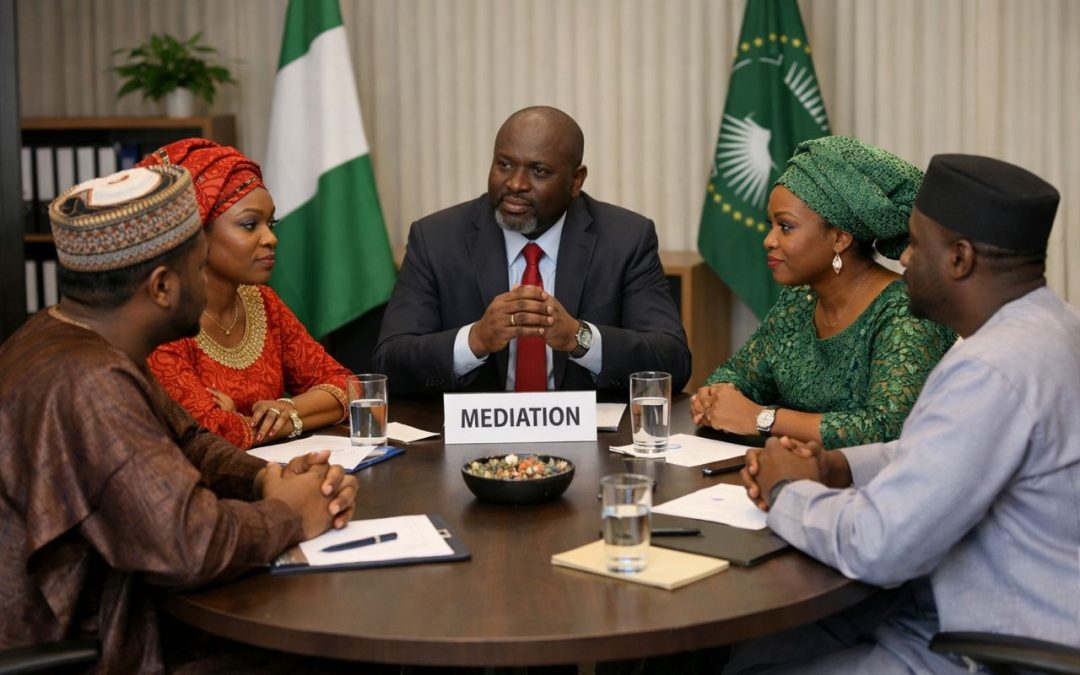
Online Dispute Resolution (ODR) is a technology-enabled method of resolving disputes between parties — without going to court. It draws on the principles of Alternative Dispute Resolution (ADR), specifically negotiation and mediation, and delivers them through a secure digital platform.
ODR is not a new concept globally. In the United Kingdom, India, China, and across the European Union, online dispute resolution platforms handle millions of disputes annually — from consumer complaints to complex commercial disagreements. The World Trade Organisation and the United Nations Commission on International Trade Law (UNCITRAL) both have ODR frameworks for cross-border disputes.
In Nigeria, the Arbitration and Mediation Act 2023 now provides a robust and updated legal framework for ADR, making this the right moment to bring ODR to the Nigerian market at scale.
Introducing Legalnaija ODR
Legalnaija Online Dispute Resolution is a secure, confidential digital platform that enables parties to a commercial dispute to negotiate, mediate, and reach a binding settlement — entirely online.
It was designed with the realities of Nigerian business in mind: unreliable access to courts, high litigation costs, the informal nature of many commercial agreements, and the desire to preserve business relationships wherever possible.
Here is what Legalnaija ODR offers:
– Speed
– Affordability. The platform charges a structured fee that is a fraction of what litigation would cost for most commercial disputes.
– Confidentiality.All dispute details are private. Nothing shared on the platform is disclosed to any third party.
– Accessibility.The platform is accessible from any device — a smartphone, tablet, or laptop. You do not need to be in Lagos. You do not need to take a day off work to sit in a courthouse.
– Legal standing. Settlement agreements reached on the platform are binding contracts. With legal assistance, they can be entered as a judgment of court, giving them the full weight of a court order.
How Legalnaija ODR Works — Step by Step
The process is straightforward, and you do not need a lawyer to begin.
Step 1 — Create an account.** Visit legalnaija.com/online-dispute-resolution and register. The process takes minutes.
Step 2 — File your complaint.** Complete the complaint form, describing the nature of your dispute clearly. Include relevant details such as the amount in dispute, the nature of the agreement, and what the other party failed to do.
Step 3 — Notify the other party.** Legalnaija sends an email notification to the respondent — the party you are in dispute with — informing them of your complaint and inviting them to respond.
Step 4 — The respondent creates an account. The respondent registers on the platform and enters their response to your complaint.
Step 5 — Upload your evidence. Both parties can upload supporting documents — contracts, receipts, invoices, messages, photographs, or any other evidence relevant to the dispute.
Step 6 — Direct negotiation begins. If the respondent engages within 7 days, both parties gain access to a secure messaging dashboard where they can negotiate directly. This phase lasts up to 14 days.
Step 7 — Bring in an expert (if needed). If direct negotiation does not resolve the dispute, either party may request the appointment of a Mediator or Neutral — an independent, certified ADR expert selected from the Legalnaija panel.
Step 8 — Reach a settlement. If an agreement is reached, both parties complete a settlement form outlining the terms. This is executed via electronic signature.
Step 9 — Download your agreement. The signed settlement document is available for download. It is a binding contract between the parties.
Step 10 — Seek enforcement if necessary. If the other party fails to comply with the settlement terms, a lawyer can assist you in having the agreement enforced, including entering it as a court judgment.
Who Is Legalnaija ODR For?
The platform is designed for commercial disputes. If you are a business owner, entrepreneur, contractor, freelancer, trader, or corporate entity that has experienced any of the following, Legalnaija ODR was built for you:
– A client or customer who received goods or services and has not paid
– A contractor or supplier who failed to deliver on an agreement
– A business partner who broke the terms of a contract
– A landlord or tenant in a commercial property dispute
– A creative professional whose contract for services was dishonoured
– A company with an outstanding supply chain dispute
What Legalnaija ODR Is Not
It is important to be clear about the boundaries of the platform.
Legalnaija ODR is a **voluntary** process. Neither party can be compelled to participate. If the respondent does not engage within 7 days, the case is closed and the claimant may explore other legal options, including traditional litigation. It is designed for commercial disputes. Criminal matters, family law disputes, and other non-commercial disagreements are outside the scope of the platform.
The Mediator or Neutral on the platform is **not a judge**. They do not impose a decision. Their role is to guide both parties toward a mutually acceptable resolution. This is the essence of mediation — a facilitated, party-driven process where both sides retain control of the outcome.
Why This Matters for Nigeria
Nigeria has over 200 million people and one of the largest informal economies on the African continent. Millions of commercial transactions happen every day — many of them governed by nothing more than a handshake, a WhatsApp message, or a verbal agreement.
When those transactions go wrong, the people involved rarely have a clear, affordable, dignified path to resolution. Courts are congested. Legal representation is expensive. And the emotional cost of unresolved disputes — the anxiety, the broken relationships, the financial uncertainty — is carried by individuals and businesses that can least afford it.
ODR does not solve every problem. But for commercial disputes — particularly those involving small to medium values — it provides something that has been profoundly missing in Nigeria: a realistic first step.
Beyond individual disputes, the broader adoption of ODR has the potential to ease pressure on an already overburdened court system, support the formalisation of business relationships, and contribute to a culture of accountability in Nigerian commerce.
A Note for Legal Practitioners
If you are a legal practitioner reading this, we want to speak to you directly.
Legalnaija ODR is not designed to replace lawyers. It is designed to extend access to dispute resolution for matters that, in reality, would never reach your desk — because the client cannot afford the fees, or because the dispute value does not justify the cost of litigation.
For lower-value commercial matters, ODR gives your clients a dignified first option. For matters where ODR does not resolve the dispute, or where enforcement is required, a lawyer remains essential. The two are complementary.
We also invite legal practitioners to consider joining the Legalnaija ADR expert panel, where your training and expertise can be deployed in a flexible, technology-enabled environment.
Begin Your Dispute Resolution Journey Today
If you have a commercial dispute that has been unresolved, Legalnaija ODR gives you a structured, credible, and affordable path forward. You do not have to absorb the loss. You do not have to give up.
Visit https://legalnaija.com/online-dispute-resolutio
Create an account, file your complaint, and let the process begin.
Because you deserve resolution — not resignation.
Legalnaija is Nigeria’s one-stop legal technology platform, offering lawyer directories, legal templates, AI legal assistance, a legal resource library, and now, Online Dispute Resolution. Visit legalnaija.com to explore all our tools.
 Written by S. I Adeshina, ACArb