by Legalnaija | May 8, 2021 | Book
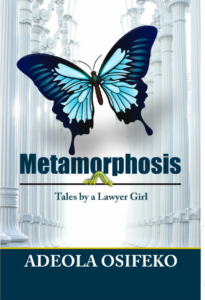
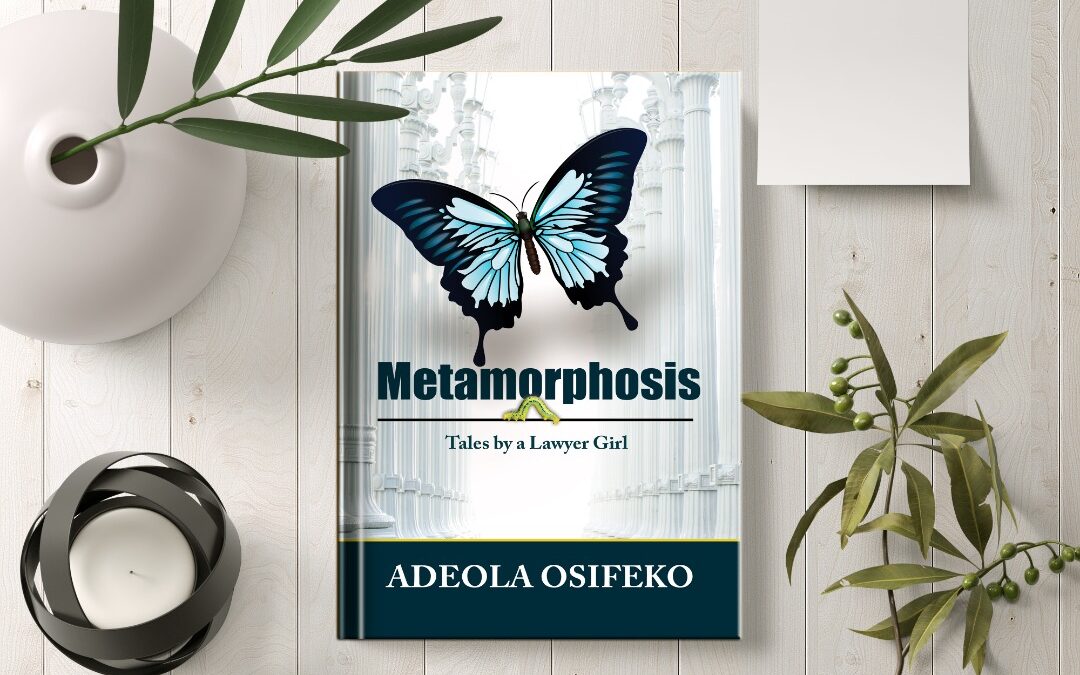
Title: Metamorphosis: Tales By A Lawyer Girl
About
This book is a fascinating and entertaining book, one that exposes the challenges of young professionals, in this case a young lawyer and her drive for success.
Genre: Fiction
Cost: N2800
Description:
Fresh out of law school, Tolani Balogun hurdles through a job search until she finally settles down at The Grey Wing Practice. Life becomes a maze as a commercial lawyer, with fierce expectations amidst the seeming camaraderie at the firm. She soon admits that having a global exposure as a lawyer qualifies THE WHO IS WHO in the black and white community. Meanwhile new wigs jostle for fair workplace terms but reality soon hits her when Naomi like Dozie get better recognition at work. She figures out that having career goals are critical and a good alternative to reinvent herself while staying relevant but the reality is that you either play big, adapt, settle for less or go home. Despite these challenges, her love for the art finds some level of nexus with her career and she takes advantage, perhaps it would secure a fair playing space in the black and white community but that it comes with disappointments, losses and other times discoveries.
Order Link: https://legalnaija.com/product/metamorphosis-tales-by-a-lawyer-girl/
by Legalnaija | May 8, 2021 | Uncategorized
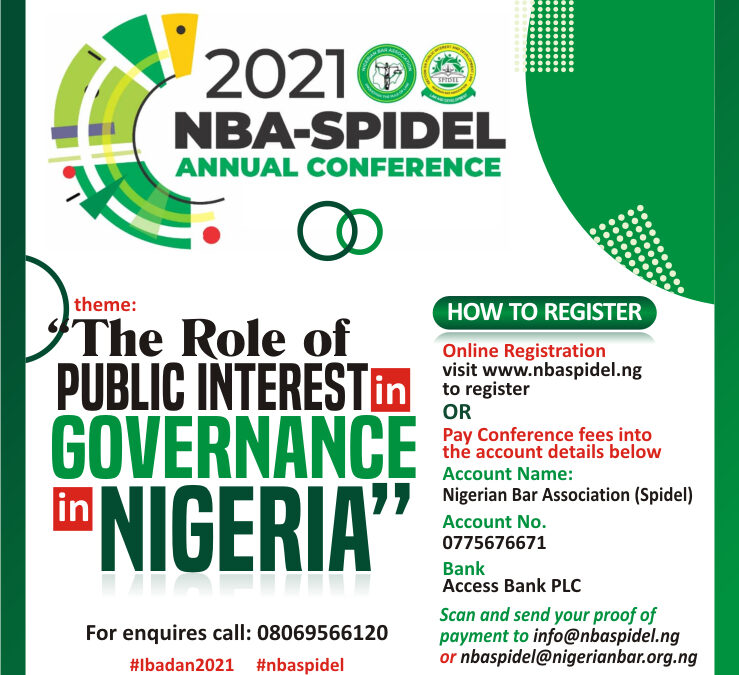
*NBA SECTION ON PUBLIC INTEREST AND DEVELOPMENT LAW ANNUAL CONFERENCE: INVITATION TO PARTICIPATE
Dear Colleagues,
You are specially invited to participate in the Annual Conference of the Section on Public Interest and Development Law of the Nigerian Bar Association (NBA-SPIDEL), which will take place from the 23rd -26th May 2021 at the Jogor Event Centre Ibadan, Oyo State. The theme of the conference is *”The Role of Public Interest in Governance in Nigeria.”*
Kindly register through this link http://nbaspidel.ng/nba-spidel-conference/.
Also, attached is a copy of the letter from the Chairman of the SPIDEL Conference Planning Committee – M. O Ubani Esq., detailing amongst other information, the various sub-topics for discourse, array of speakers, list of topclass hotels at discounted rates, membership information etc.
Be assured that the topics of discourse, array of speakers, serene environment will make this year’s NBA-SPIDEL conference a memorable one.
*Dr. Rapulu Nduka*
Publicity Secretary,
Nigerian Bar Association
by Legalnaija | May 5, 2021 | Uncategorized
The world of sport has fast become a billion-dollar entity, morphing from a mere recreational activity to a financial and economic haven. In its own right, sporting activities account for over 3.7% of the aggregate GNP of the twenty-eight EU states. It is also responsible for over 3% of world trade. It employs fifteen million people in the EU, which is about 5.4% of the entire European labor force. In December 2020, NBA superstar Giannis Antetokounmpo agreed to sign a five-year contract extension with the Milwaukee Bucks worth $228.2 million, in what is the largest deal in NBA history today[1]. Barcelona FC conceded in January 2021 that Lionel Messi indeed earned $167 million a year on a 4-year contract he signed in 2017[2].
Evidently, sport is now bigger than it has ever been, in terms of its lucrativeness and the human resource it employs. It is only natural that in an industry with so much money and people, there would exist a barrage of laws. Although there is no defined and distinct ‘sports law’, it is governed by the basic principles found in our civil and criminal laws.
Arbitration is the primary dispute resolution mechanism employed in sport, with the Court of Arbitration for Sports (CAS) the apex Court for this purpose. The CAS recently overturned the UEFA’s club financial control body (CFCB) decision banning Manchester City FC based on allegations that the club is involved in serious breaches of financial fair play regulations. Recent trends in sports have shown that intellectually property is increasingly regarded as a major source of value and revenue and is thereby heavily guarded. This article focuses on these intellectual property considerations in sports law.
IMPORTANCE
Intellectual Property Rights herein referred to as ‘IPRs” play a massive role in the world of sports, especially in terms of copyright and trademarks. This is because they enable the protection of rights and in this regard, sports branding and marketing, which in turn boosts the successful commercialization of Sports events; major sport events like the Olympic games, the FIFA World Cup, WrestleMania among others are built around IPRs.
One could argue that without the IPRs, these events would not hold. Simply because, nobody wants to pay a ton of money to sponsor sports teams, athletes or events, and not have rights to safeguard such investments. IPRs is the recognized law which breeds confidence in investors or sponsors to part with money and invest in sports because they know such rights, will be legally exploitable and also enforceable in cases of breach. IPRs are not only of importance to sponsors but also to athletes, organizations and personalities.
In marketing sports events, IPRs are important for the aforementioned reasons. The issues with marketing sports events in most common law jurisdictions is the fact that a sporting event as a whole cannot be protected, “A spectacle cannot be owned in any ordinary sense of that word.”[3] This means that a sporting event is legally not a property that can be protected on its own rights. What happens therefore in practice is, potential marketers and investors in sporting events would have to focus on properties within the event which can be legally protected.
This element further raises the level of importance attached to trademarks and copyright. Special note should be taken on the importance of registered ‘domain names’ for sports bodies who use this domain names to promote, market and commercialize sporting events, organizations and personalities. In practice, these domain names serve as quasi trademarks and most times, it gives corporate identity with commercial and cultural goodwill[4].
LEGAL PERSONALITY AND GOODWILL
Goodwill generally is an intangible asset in relation to the acquisition of a company or business by another. Goodwill is an essential asset of any enterprise because the core essence of its existence is embedded into it. The spectators and supporters of a sports organization or federation are to a great extent its customers, as their passion for their favorite sports team/event makes them follow with unquestionable enthusiasm. Asides the proprietary interest in goodwill, there are also personality interests. Personality rights are not limited to natural persons, as juristic persons like companies also have personality rights like reputation and identity.
Goodwill as well as reputation is intricately related to identity. Identity entails a wide range of things including specific products of an enterprise and the pattern in which it is packaged. In relation to sports federation as an enterprise, the “product” is the sports events and its identity is echoed in the tournaments, events or matches which uniquely differentiates it from other sports federations or bodies.
For instance, when one thinks of the International Federation of Association Football (FIFA)World Cup, it automatically gives you an image of the FIFA world cup trophy (18carat gold with bands of malachite on its base)[5], the blue FIFA flag with the organization logo in the middle, the FIFA anthem, the grand opening of the ceremony, the idea of it being a football game amongst the member countries, the recognitions and awards, and so on. These are essential characteristics of the identity of FIFA, and same can be said for other sports federations and tournaments they represent. It is these identifications that make it easy for a football fan to differentiate a premier league game from the German Bundes liga.
The identity right of FIFA in the above is breached where another person uses these distinct features which are primarily attributable to the Association for commercial gains without authorization. The core element of this breach is that the use was for a commercial purpose which is solely aimed at promoting a product or service to attract customers. The unlawfulness in this case is mainly vested in the violation of the right to freedom of association and the commercial exploitation of the individual or company.[6]
PROTECTION
Sporting International organizations in most cases explore various avenues to protect their IPRs. For example, the Olympic Charter in Article 7[7] contains provisions which provide strict safeguard for these IPRs. It provides among others that, “The International Organizing Committee (IOC) is the owner of all rights in the Olympic Games and Olympic properties described in this Rule, which rights have the potential to generate revenues for such purposes.
It is in the best interests of the Olympic Movement and its constituents which benefit from such revenues that all such rights and Olympic properties be afforded the greatest possible protection by all concerned and that the use thereof be approved by the IOC”. This point is further buttressed by paragraph 2 of Article 7 of the same Olympic Charter, which provided that “The Olympic Games are the exclusive property of the IOC which owns all rights and data relating thereto, in particular, and without limitation, all rights relating to their organization, exploitation, broadcasting, recording, representation, reproduction, access and dissemination in any form and by any means or mechanism whatsoever, whether now existing or developed in the future”[8]
This provisions show that the IOC have taken necessary steps to protect their brand. This protection goes beyond protecting the basic ‘properties’, but also the cultural goodwill and the commercial viability of the organization. In practice, along with the Olympic Charter, the IOC would need to have legislations passed by host cities to prevent ambush marketing. Host cities are also obligated to implement ‘brand protection programs’[9].
An instructive case study for this is the series of Intellectual Property cases that both FIFA and the Local Organizing Committee (LOC) of the 2010 FIFA World Cup had to battle against in South Africa, a decade ago. About 450 cases where filed against said offenders of these IPRs[10]. FIFA and the LOC’s campaign for protection of IPRs is probably one of the biggest in Sports history, as an extensive list of trademark registrations was released which demonstrated the paramount importance Sports organizations place on protecting their brands in terms of organization, staging and commercialization.
On the issue of FIFA and World Cups, in preparation for the 2014 World Cup, FIFA had 13,000 trademarks registered worldwide, 1160 of them registered for the World Cup and 400 occurred after the passage of the World Cup Law in Brazil, which was a law passed to prevent this ambush marketing[11]. This protection goes beyond, sports organizations or committee, and includes franchises who can file trademark applications for team names, logos and mascots.
Individual athletes also feel the need to create their own brands, gain endorsements and gain financially from trademarking names, initials, catch phrases or celebrations. In football and basketball, these are known as ‘image rights’, which allows a player employed with an organization to also gain value from the use of their images that is unconnected to their employer’s brand.
LANDMARK CASES OF TRADEMARK IN SPORTS
BARCELONA FC TRADEMARK CASE
In April 2013, Barcelona Football club (Barcelona) applied for the registration as a community (EU) Trade Mark of the silhouette of its crest in relation to a range of goods such as paper goods, stationery, clothing, footwear, headgear and even some sports activities. The Office for Harmonization in International Markets (OHIM) now known as the European Union Intellectual Property Office (EUIPO), which is the body responsible for the registration of community trademarks, rejected the application on the grounds that the mark lacked distinctiveness, and therefore did not meet the basic requirement for registration. Barcelona appealed until it got to the EU General Court, where they also dismissed the appeal and ruled that:
- The crest silhouette is not capable of attracting the attention of consumers as a sign indicating the origin of the goods/services carrying that mark.
- The silhouette of a crest does not differentiate itself much from the basic shapes generally used in various commercial sectors as a decorative element.
- Therefore, the crest silhouette does not possess the inherent distinctive character[12]
WASHINGTON REDSKINS TRADEMARK CASE
There has been a legal fight which has persisted for about twenty years over the use of the Redskins team name by the Washington Redskins American Football club. The court in a ruling ordered the United States Federal Trademark and Patent Office to cancel several trademark registrations held by the club in respect of this name, on the ground that the name ‘Redskins’ may be reproachful to Native Americans, who have objected to the name for decades, while also citing dictionary entries stating that the name is considered to be offensive.
However, the present ruling does not prevent the club from using the name although the legal implication is that the name would no longer enjoy the full legal protection attributable to a federally registered trademark.
INTELLECTUAL PROPERTY RIGHTS IN THE NIGERIA SPORTS SECTOR
Speaking particularly about the branches of Intellectual Property in Nigeria, we shall begin the discussion with Patents. Patents can be defined as the legal rights vested on inventors of new and useful products and processes, the right to exclude all others from commercially exploiting the invention. It is a right that rewards, ingenuity of thought. It ensures the author of the invention is afforded legal recognition and protection.
Once a patent has been registered in Nigeria and indeed around the world, it prevents those not afforded the rights from exploiting the use of that invention for commercial purposes. Patent protects the authors time, effort and resources used in producing a new invention. The author or patentee then holds the patent to such invention for the next twenty years (Section 7(2) of the Patents and Designs Act)[13]
In Nigeria today, the Sports industry, is still lacking behind the rest of the world in terms of industrialization and technological development. Instead we continue to reap the reward of the invention of others. One can confidently speak on and say that patent is the least utilized IPR in Nigeria. It is also key to state that, Sports people and inventors should not be deterred from being creative. The resources or platform may not be there, but one can never truly know, when his invention is the next best thing.
Copyright is another branch of IPR that seems to not exist in the Nigeria Sports industry. This branch of IPR is not only infringed on, but one might argue it is abused in Nigeria. This is because local markets are field with all sorts of fake jersey’s, scarfs, cups, slippers, boots etc. Essentially copyright is a right which protects the expression of an idea in a definite form and gives rights to the creator or owner the right to sell, produce, reproduce that expression of idea for their commercial benefits. This could be by themselves or another via through a testamentary deposition or grant of license.
The areas of sports where copyright abounds are the merchandise, Television and media rights literature contained in match day programs sold to fans, ticket sales, the software of computer and online games. In Nigeria most of the aforementioned being copied without permission. This also seems to discourage creativity as inventors do not see the means to commercialize their ideas, the protection afforded to them or the penalties for infringement are not stiff enough to encourage inventors.
Another branch of IPRs are Trademark. This along with copyrights are the most popular IPRS. Trademarks has its rights embedded in the very things we see everywhere when it comes to Sports. From logos, team names, league names, sporting goods, broadcasting and apparel. It is essentially anything that gives a brand an identity, such as symbols, crests, logos, catch phrases or anything that distinguishes the products (goods/services) of one business to another.
Trademarks are important as they allow supporters recognize easily the brand they are associated with. Naturally, trademarking would lead to good commercial output. For example, seeing the Nike tick or Puma jaguar would tell one that such product is that of Nike or Puma and they guarantee quality. Various forms of trademarking exist which include registering of nicknames by sports celebrities, catch-phrases, mascots.
It is clear that in Nigeria we are behind most of the world in Intellectual Property rights. The need to develop commercially potent brands that would compete transnationally, is at an all-time high. A major issue with the lack of protection or platform for inventors to develop in Nigeria is the fact that, Nigerian Sport is generally managed and controlled by the government. With that, it is difficult to allow businesses in the industry genuinely grow. At the end of the day, no one wants his/her efforts to be wasted without gains, and this extends to possible investors and stakeholders in the sport industry
The U.S Chamber International IP Index 2021[14], Nigeria ranks 47 of 50 countries in the assessment of economies whose intellectual property systems provide a reliable basis for investment in the innovation and creativity lifecycle[15]. This is a damning report, because it proves most of the aforementioned faults of the legal framework for IPRs in Nigeria. It is a challenging environment for the prosperity of goods and involves a high right of physical counterfeiting and online piracy remains high and public awareness of the value of IP remains low.
Just like in most Common Law jurisdictions, in Nigeria there are statutory protection for regular trademark, and the doctrine of passing off is also applicable. Laws and regulations established for the protection and administration of intellectual property rights include: the Copyright Act[16] , the Patents and Designs Act[17], the Trademarks Act[18], and so on.
The courts have not interpreted the provisions of the Nigerian Trademark Act to include marks from the sporting industry, and this may be likened to the fact that the sports jurisprudence in Nigeria is not as developed as it is in other jurisdictions like Europe and the United States of America. Nevertheless, it merely provides enough general covers that sport brands can explore in order to fully relish the benefits attached to IPRs for stakeholders. In the Nigerian sporting sector, the provisions of the Trademark Act and the Common Law doctrine of passing off must be fully utilized, as they are still vastly underutilized.
It is highly recommended that organizers of sports events should always protect their event marks by adopting the provisions of the Trademark Act which is similar to the provisions of the UK Trademark Act.[19]It is also suggested that every state with a sporting presence should enact a Law that would provide a mirrored protection available in the Federal Act enacted by the National Assembly.
For instance, the Nigerian Premier Football League (NPFL) can have an Act titled ‘The Nigerian Premier League Event Mark and Related Rights Act’ to be adopted by the various state governments. This would serve as the principal protection for all the marks associated with the NPFL throughout the Federation while the Trademark Act serves as secondary or ancillary protection for the football league.[20]
The importance of a proper shield of sports events marks in Nigeria cannot be overemphasized, as it would allow owners to exclusively exploit their marks for economic and financial gains. This can serve as a booster to the confidence of prospective sponsors and business partners, as it gives a sense of security for their investments.
CONCLUSION
With the rising enthusiasm and passion of individuals in the sporting sector, it will be highly disappointing if the full potentials of intellectual property rights in sports activities are not utilized to the maximum. In a bid to achieve this and protect the rights of stakeholders in this sector, it becomes pertinent that professional sport clubs and sport event organizers within Nigeria maintain the global standard.
In addition, the Legislative and Judicial bodies in Nigeria, are advised to amend and adjust our laws to toe the line of international sporting communities while considering our local circumstances, as the legislature governing intellectual property and by extension sports, are somewhat anachronistic.
The judiciary also, do not provide a hasty and less adversarial means of dispute resolution mechanism, hence, more people involved in sports should seek resources in arbitration, and make more use of avenues like the Lagos Court of Arbitration. All these measures would be to the national benefit as the economic and cultural benefits of hosting sporting events in a city or a country are always astronomical.
BIBLIOGRAPHY
STATUTES
Cap C28, Laws of the Federation, 2004
Cap P2, Laws of the Federation, 2004
Cap T13, Laws of the Federation, 2004
- 1 (1) of the UK Trademark Act, 1994
Article 7 of the Olympic Charter
Article 7, Paragraph 2 Olympic Charter
CASES
General Court of the European Union Press Release No 144/15, Luxembourg, 10 December 2015, Judgment in Fútbol Club Barcelona v OHIM, Case T-615/14.
Victoria Park Racing and Recreation Grounds Co Ltd v Taylor [1937] 58 CLR 479
Wells v Atoll Media (Pty) Ltd [2010] 4 All SA 548 (WCC).
ONLINE SOUCRES
Allen Kim (2020) Giannis Antetokounmpo signs largest deal in NBA history with Milwaukee Bucks https://edition.cnn.com/2020/12/15/us/giannis-antetokounmpo-contract-spt-trnd/index.html
Blackshaw I.S. (2017) IP and Sport. In: International Sports Law: An Introductory Guide. Short Studies in International Law. T.M.C. Asser Press, The Hague. https://doi-org.gcu.idm.oclc.org/10.1007/978-94-6265-198-2_5
FIFA.com https://www.fifa.com/who-we-are/news/the-fifa-world-cuptm-trophy-517161 Accessed 4th Jan 2021
George Ramsey (2021) Barcelona denies responsibility for leak after report reveals Lionel Messi’s record $672 million contract https://edition.cnn.com/2021/02/01/football/lionel-messi-barcelona-contract-spt-intl/index.html
BOOKS
Owen Dean “Sport as a Brand and its Legal Protection in South Africa”, ‘Global Sports Law and Taxation Reports’, March 2012 pp 41
Ugochukwu Johnson Amadi (2017); Intellectual Property Rights in Sports: African Sports Law and Business Bulletin
[1] George Ramsey (2021) Barcelona denies responsibility for leak after report reveals Lionel Messi’s record $672 million contract https://edition.cnn.com/2021/02/01/football/lionel-messi-barcelona-contract-spt-intl/index.html
[2] Blackshaw I.S. (2017) IP and Sport. In: International Sports Law: An Introductory Guide. Short Studies in International Law. T.M.C. Asser Press, The Hague. https://doi-org.gcu.idm.oclc.org/10.1007/978-94-6265-198-2_5
[3] Victoria Park Racing and Recreation Grounds Co Ltd v Taylor [1937] 58 CLR 479
[4] Blackshaw I.S. (2017) IP and Sport. In: International Sports Law: An Introductory Guide. Short Studies in International Law. T.M.C. Asser Press, The Hague. https://doi-org.gcu.idm.oclc.org/10.1007/978-94-6265-198-2_5
[5] FIFA.com https://www.fifa.com/who-we-are/news/the-fifa-world-cuptm-trophy-517161 Accessed 4th Jan 2021
[6] Wells v Atoll Media (Pty) Ltd [2010] 4 All SA 548 (WCC).
[7] Article 7 of the Olympic Charter
[8] Paragraph 2, Article 7 Olympic Charter
[9] Blackshaw I.S. (2017) IP and Sport. In: International Sports Law: An Introductory Guide. Short Studies in International Law. T.M.C. Asser Press, The Hague. https://doi-org.gcu.idm.oclc.org/10.1007/978-94-6265-198-2_5
[10] Owen Dean “Sport as a Brand and its Legal Protection in South Africa”, ‘Global Sports Law
and Taxation Reports’, March 2012
[11] Ibid 11
[12] See General Court of the European Union Press Release No 144/15, Luxembourg, 10 December
2015, Judgment in Fútbol Club Barcelona v OHIM, Case T-615/14.
[13]
[14] Global Investment Journal: U.S Chamber International IP Index https://www.theglobalipcenter.com/report/ipindex2021/
[15] Supra n14
[16] Cap C28, Laws of the Federation, 2004
[17] Cap P2, Laws of the Federation, 2004
[18] Cap T13, Laws of the Federation, 2004
[19] See S. 1 (1) of the UK Trademark Act, 1994
[20] Ugochukwu Johnson Amadi (2017); Intellectual Property Rights in Sports: African Sports Law and Business Bulletin
 Written by: TUALE CHARLES AJUYAH and NNADI, EZINNE TOCHUKWU
Tuale and Ezinne are Associate at Omaplex Law Firm.
Tuale, is a sports and entertainment lawyer who represents a wide variety of Nigerian and international clients including television broadcasters, Sport and Entertainment personalities, media companies, sports governing bodies, global brands and buddings musicians.
While Ezinne is a member of the Firm’s Dispute Resolution Team with a focus on intricate Civil Litigation. She has an outstanding experience in contract and business disputes. She has represented major debtors and creditors in high-profile Debt Recovery proceedings.
by Legalnaija | May 3, 2021 | Uncategorized
The Central Planning Committee (CPC) for the eagerly awaited Nigerian Bar Association Section on Public Interest and Development Law (NBA-SPIDEL) Annual Conference has invited exhibitors to add more value to the conference by providing services to conferees.
A statement today by the Media & Publicity Sub-committee said: “We therefore write to invite you to showcase your Company during the conference through exhibition and screen adverts on montage during the conference which will garner over 2,000 participants.” (more…)
by Legalnaija | May 2, 2021 | Uncategorized
You can now order law books and resources on the Legalnaija website.
Some of these books include;
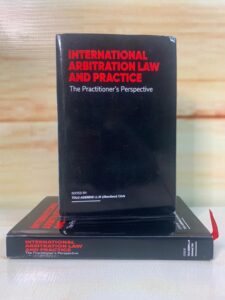 International Arbitration Law & Practice: The Practitioners Perspective, edited by Tolu Aderemi of the firm Perchstone & Graeys https://t.co/D5lxlqe1uR
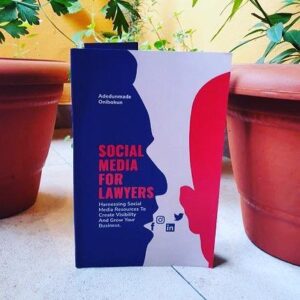 Social Media For Lawyers by Adedunmade Onibokun https://t.co/CM9tabT4AX
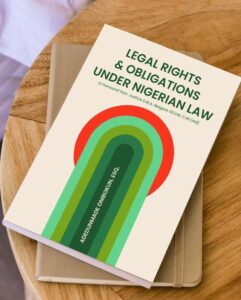 Legal Rights And Obligations Under Nigerian Laws Ebook https://t.co/mWdxjN5Vhr
For enquiries and book placement opportunities for Authors & publishers, kindly send a mail to hello@legalnaija.com
by Legalnaija | Apr 29, 2021 | Uncategorized
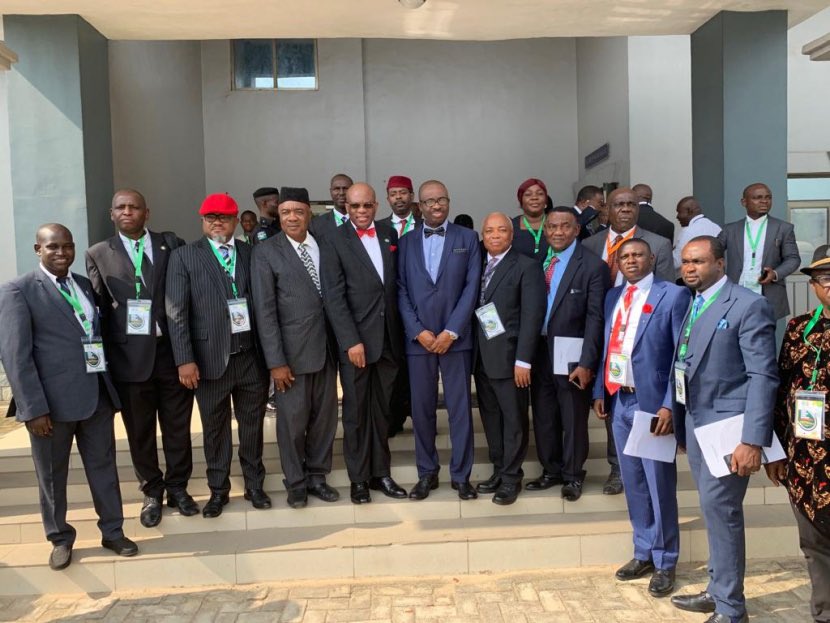
#NBASPIDEL2021: CJN, Governors Makinde, Akeredolu SAN, And Other Special Guests Confirm Attendance
Dear Branch Chairman
It is my pleasure to, on behalf of the NBA Section on Public Interest and Development Law (NBA-SPIDEL), write you and solicit your participation, that of your fellow executives and members of your esteemed Branch in the forthcoming SPIDEL Annual Conference taking place in Ibadan between 23rd and 26th May, 2021.
The theme of the Conference is “The Role of Public Interest in Governance in Nigeria.” Some of the sub-themes are as follows: The Imperatives of Public Interest in Governance in Nigeria; Internal Security: A Prerequisite for National Development; Legality and Efficacy of Public Inquiry Panels by State Governments; Legality and Efficacy of Regional Vigilantes; When the State Truly Defends: assessing the role of the Office the Public Defender Lagos State; Anti-Corruption Model: Assets Declaration and Public Access; Showcase Session for NBA: Public Interest Litigation Committee – Broadening the strategy for NBA’s Intervention in Public Interest Lawyering, and some many others.
The Speakers that have confirmed their attendance and participation include: The Chief Justice of Nigeria, Hon Justice Tanko Muhammad; His Excellency, Engr. Seyi Makinde, Governor of Oyo State; Governor of Ondo State, Rotimi Akeredolu SAN;
Professor Pat Utomi; Professor Festus Emeri SAN; ICPC Chairman, Professor Bolaji Owasanoye SAN; Oyo State Attorney General, Prof. Oyelowo Oyewo SAN; Prof. Chidi Odinkalu; Ogun State Attorney General, Mr. Gbolahan Adeniran; NBA Board of Trustees Chairman, Dr. Olisa Agbakoba SAN; Mr. Austin Alegeh SAN; Mr. Paul Usoro SAN; Dr. Babatunde Ajibade SAN; Chief Bolaji Ayorinde SAN; Mr. Kemi Pinheiro SAN; Mr. Lawal Pedro SAN; Mr Muiz Banire SAN, Mr J.S. Okukpeta SAN, Mr Afam Osigwe SAN, AG of Lagos State, Mr Seun Abimbola SAN, Ms Hafsat Abiola, leading human rights lawyers such as Mr. Femi Falana SAN; Chief Mike Ozekhome SAN; Mr. Jiti Ogunye, and Mr. Ebun Adegboruwa SAN. Others are Aisha Yesufu, Liborous Oshoma, Anthony Ojukwu (Executive Secretary, National Human Rights Commission), and Mr. Opunabo Inko-Fariah. The Legislature is also well represented as follows: Senator Enyinnaya Abaribe, Senator Ike Ekweremadu, Senator Dino Melaye, Rt. Hon. Adebo Ogundoyin (Oyo State House of Assembly Speaker) and his Lagos counterpart, Rt. Hon. Mudasiru Obasa.
Other invited Speakers are Nigeria’s Vice President, Mr. Yemi Osinbajo SAN; Hon Justice Eko Ejembi of the Supreme Court of Nigeria, Speaker of HOR, Mr Femi Gbajabiamila, President of the Senate, Senator Ahmed Lawan Bauchi State Governor, Dr. Bala Mohammed; Ebonyi State Governor, Engr. Dave Umahi; Senator Ibrahim Shekarau and Senator Shehu Sani. The Chief Host is the NBA President, Mr. Olumide Akpata while NBA-SPIDEL Chairman, Prof. Paul Ananaba SAN is the Host.
We have just come back from Ibadan. The ancient city is already wearing a new and beautiful look as a result of the tremendous effort being put by the current administration to deliver the dividends of democracy to the people. Therefore, we are poised to have a beautiful conference in an atmosphere of peace and tranquility. In fact, Governor Makinde has been emphatic in assuring delegates thus: “We will ensure that you have a very good experience.” The Conference venue is the popular Jogor Event Centre which can sit over 3000 guests at once. We will ensure adequate social distancing in strict compliance with Covid-19 protocols. We have also secured top class hotels in the city for our delegates. For those in love with amala, gbegiri, ewedu, ogufe and orisirisi (variety) meats, be rest assured that arrangements are on top gear to satisfy your appetite.
<span;>The Governor of Oyo State, His Excellency Seyi Makinde has also agreed to declare open the conference on 24th May, 2021. To register, please click on this link http://nbaspidel.ng/nba-spidel-conference/.
<span;>To make your stay enjoyable and comfortable in Ibadan, we are partnering with NACO LOGISTICS (08069206814) to facilitate lodging arrangements for delegates. Members and conferees are encouraged to make early hotel reservations. Our partner hotels are as follows:
<span;>1. Kakanfo Inn and Conference Center
<span;>Address: 1 Nihinlola street, off Ring Road, Ibadan.
<span;>Regular room: 35,300
<span;>Signature-48,900
<span;>Suite: 53,000
<span;>Flat rate: 20,000 with breakfast (more than 50% discount)
<span;>No of rooms: 80
<span;>2. Mahogany Hotel and Suite
<span;>Address: 4 Remi Alabi street, by all saints church, Jericho Ibadan
<span;>Deluxe Room: 36,000
<span;>Royal Room: 55,000
<span;>Flat rate: N33,000 with buffet breakfast (40% discount)
<span;>No of rooms: 30
<span;>3. Queen’sway Resort
<span;>Address: 21 Adekoyejo Avenue, Iyaganku GRA, Ibadan.
<span;>Queens Executive: 12,000
<span;>Queens platinum: 16,500
<span;>Queens palace: 18,000
<span;>Queens Blue: 20,000
<span;>*Flat rate: 13,000.* With break fast
<span;>*12,000* without breakfast
<span;>*No of rooms*: 30
<span;>4. Grand Serene Hotel
<span;>Address: Iyaganku, off Ring road Ibadan
<span;>Executive Room: 14,000
<span;>Superior Room: 15,500
<span;>Deluxe suite:20,000
<span;>*Flat Rate: 13,000*(30% discount)
<span;> *No of rooms*: 30
<span;>5. Fawzy Hotel
<span;>Block 7 Adewumi layout, off Akinyemi way, Ring road, ibadan
<span;>Deluxe Room:27,500
<span;> *Discounted Rate: 22,000* with breakfast (20% discount)
<span;>*No of rooms:* 15
<span;>6. Bayse Hotel one place
<span;>Address: plot 14/16 Akinola Maja street opp 3sc/shooting stars FC office, Jericho
<span;>Executive Room: 18,000
<span;>Super Deluxe: 25,000
<span;>*Flat rate*:15,000 without breakfast(25% )
<span;>*No of rooms*: 20
<span;>(7) Joybam Hotel
<span;> Address: off ring road, Osasami Behind liberty stadium complex, Oke Ado Ibadan
<span;>Super royal: 10,000
<span;> *Discounted rate* 9,000 without breakfast
<span;>Executive: 14,000
<span;>*No of rooms: 26*
<span;> (8) Academy Suite
<span;>Address: Osasami Road, near Ibadan Central Hospital
<span;>Standard Deluxe Room: 14,000
<span;>Super deluxe Room
<span;> *Flat rate: 12,000* without breakfast(25% discounted rate)
<span;>**No of room:* 40
<span;>(9) Best Western plus hotel
<span;>Address: 25, Jibowu crescent, GRA Ibadan
<span;>Deluxe Room: 50,000
<span;>Discounted rate: 42,000 with buffet breakfast(18%discount)
<span;>*No of rooms* 40
<span;>(10) Classic Hotel
<span;>*Address:*
<span;>MKO Abiola Way, Ring Road, Ibadan
<span;>Deluxe room: 8,000
<span;>No discount:
<span;> *No of rooms:* 13
<span;>(11) Capital Inn Plus
<span;>*Address:* 8-10 7th Avenue, Oluyole Estate, Ring road
<span;>Diplomatic room: 30,000
<span;>Discounted rate: 22,000 without breakfast.
<span;>25,000 with buffet breakfast(20%discount)
<span;>*No of rooms*
<span;>(12) La Maison Hotel
<span;> *Address:* 23 Jibowu Road, Iyaganku, GRA, Ibadan
<span;>Premium room: 17,500
<span;>Discounted rate: 17,000
<span;> *No of room* 20
<span;>(13) Ashosh Hotel
<span;>*Address:* Ashosh 1st Avenue Iyaganku GRA
<span;>Standard room: 15,000
<span;>Executive room: 21,500
<span;> *Flat rate:* 14,000 without break fast
<span;>(30% discount)
<span;>*No of room* 10
<span;>(14) Rendezvous Hotel
<span;>Address: off Foodco Supermarket, Jericho, Ibadan
<span;>Standard Room: 15,000
<span;>Discounted rate: 14,000
<span;>Deluxe room: 25,000
<span;>Classic room: 27,000
<span;>Executive Room: 30,000
<span;> *Flat rate: 23,000* without breakfast
<span;>*No of room* : 30
<span;>(15) Golden Tulip Hotel
<span;>*Address:* Qtr 781 GRA Jericho Ibadan
<span;>Deluxe room: 48,500
<span;>Executive room: 89,500 with buffet breakfast.
<span;>No discount
<span;> *No of rooms* 40
<span;>NOTE:
<span;>Reservations should be made through NACO LOGISTICS LTD(08069206814) Reservations cannot be confirmed unless a deposit of the first night is made. All payments must be made at least two weeks before the conference which commences on the 23rd of May, 2021. All payments only for the first night should be made to NACO LOGISTICS with the account details below: 0422942749 (GTB), NACO LOGISTICS LTD.
<span;>Contact: LOC/SPIDEL PUBLICITY SUB-COMMITTEE
<span;>If you desire to be a member of SPIDEL, here below are information for your membership.
<span;>Payment of the Section’s Annual Dues
<span;>a. Section Membership above 10years post call – N10,000
<span;>b. Section Membership from 6-10years – N5,000
<span;>c. Section Membership from 0-5years post call – N3,000
<span;>METHOD OF PAYMENT
<span;>Pay all Section dues into the bank account listed below
<span;>BANK: Access Bank PLC;
<span;>ACCOUNT NUMBER: 0775676671
<span;>ACCOUNT NAME: Nigerian Bar Association (SPIDEL ACCOUNT)
<span;>Evidence of payment should be sent to: Edidiong Peter, NBA Programme Officer, Section on Public Interest and Development Law via E-mail: nbaspidel@nigerianbar.org.ng Peter.Edidiong@nigerianbar.org.ng. Tel: 08003331111. Prospective exhibitors are also invited to showcase their products. Please contact Mr. Edidiong Peter (08003331111) or the Local Orgaising Committee (Mr. Olayinka Esan, 08033261598).
<span;>Gentlemen, Ibadan is ready for us. I hereby invite you, your fellow executives and the entire membership of your branch to come to Ibadan to experience the beautiful scenery and the tourist attractions of this ancient city. Trust me, it shall be a memorable experience for everyone who honours this invitation and participates in the conference.
Your Obedient Servant,
Onyekachi Ubani Esq. (MOU)
Chairman, Conference Planning Committee
NBA-SPIDEL Annual Conference ubangwa@gmail.com
by Legalnaija | Apr 27, 2021 | Uncategorized
Oyo State Governor, Engr. ‘Seyi Makinde has promised that the state will host a memorable annual conference of the Nigerian Bar Association Section on Public Interest and Development Law (NBA-SPIDEL) in Ibadan from May 23 to 26.
Speaking while receiving a delegation of NBA-SPIDEL at Government House, Agodi, Ibadan, Makinde assured that the state would also provide a safe environment for the delegates.
He said: “I am glad that you are bringing the conference here because that is what we want to see. We want people to come around and experience what we are trying to do here. We will support you.”
According to Makinde, “We will provide a safe and secure environment for the annual conference. We will ensure that you have a very good experience.”
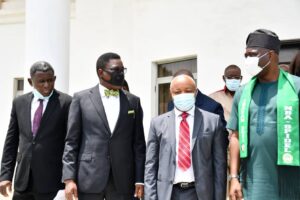
The Oyo State Governor, who promised to personally declare open the annual conference, also observed that the conference would boost the state’s economy, noting that “some of the money to be spent by the 2000 delegates will trickle down to the business sector.”
Noting that NBA-SPIDEL has a special place in his heart, Makinde said: “The Section on Public Interest is something that is very interesting to us because I always tell people that this government was put in place by the people themselves.
“We did not come in through any godfather. We did not come in because we had federal might. We did not even have local might when we were about to get elected. So, we can only run a government that is sensitive to the yearnings of our people. If we are hosting a conference of Nigeria Bar Association Section on Public Interest and Development Law, we think this is an appropriate place for that to happen.”
According to a statement by a member of the delegation and Head of Media & Publicity for the conference, Mr. Emeka Nwadioke, Makinde expressed worry at the rising unemployment in the country as well as the over-dependence on the Federal Government for allocations, urging lawyers to “let your voices be heard” in resolving the crises of federalism and nation-building.
He said: “My Commissioner for Finance is in Abuja now for FAAC. If we don’t have it, the whole place will probably collapse. But why should that be? If it is a federation, why are we all running to Abuja every month to look for federal allocation? Those are some of the challenges that I know when legal minds come together, they can assist the country on. You can weigh in and let your voices be heard.”
In his welcome address, the Oyo State Attorney-General & Commissioner for Justice, Prof. Oyelowo Oyewo (SAN) said that the annual conference “could not have come at a better time,” adding that the state is noted as a pacesetter which hosts the oldest Ministry of Justice in the country.
The NBA-SPIDEL Chairman, Prof. Paul Ananaba (SAN) in his address said that about 2,000 delegates would attend the annual conference tagged “Ibadan 2021” to brainstorm on issues that border on public interest and development.
He noted the developmental strides of the administration, adding that the fact that a majority of the Cabinet members are lawyers must have contributed positively to Makinde’s success. Ananaba also commended the government for displaying public interest by relocating displaced traders instead of abandoning them.
He stated that the annual conference would hold from May 23 to 26 this year, adding that a surfeit of leading human rights and other speakers have committed to attend the conference to tackle the theme, “The role of public interest in governance in Nigeria.”
The NBA-SPIDEL delegation included former NBA General Secretary and Chairman of Oyo State Independent Electoral Commission (OSIEC), Mr. Abiola Olagunju (SAN); human rights activist and Chairman of the Conference Planning Committee (CPC), Mr. Monday Ubani, and NBA Ibadan Branch Chairman, Mr. Olayinka Esan. The delegation was received by Governor Makinde alongside the Secretary to the State Government, Mrs. Olubanwo Adeosun; Chief of Staff, Chief Oyebisi Ilaka and five commissioners including Prof. Oyewo; Mr. Olasunkanmi Olaleye (Education, Science & Technology); Mr. Adeniyi Farinto (Budget & Planning); Mr. Seun Ashamu (Energy) and Mr. Rahman AbdulRaheem (Lands) as well as the Director General of Due Process, Tara Adefowopo.
by Legalnaija | Apr 26, 2021 | Uncategorized
The Grant Of Bail And Suretyship: The Legality Of Recurring Insistence For A Cicil Servant Above Grade12.
Bail is a conditional right guaranteed under Section 35 of the 1999 5⅚no hfsConstitution of the Federal Republic of Nigeria (as amended) (“Constitution”). Elementarily, bail is the temporary release of a defendant pending investigation or trial except for offences punishable by death which require proof of special conditions and circumstances.
The Nigerian criminal justice system recognizes three instances where a defendant can be admitted to bail and they include:
• a suspect may be granted bail by the police at the police station (administrative)
• a defendant may be granted bail by the court pending trial, and
• a convict may be granted bail pending the determination of his appeal.
This conditional release of an accused is anchored on the constitutional acclamation that any person charged with a criminal offence is presumed innocent until otherwise proven guilty. See: Section 36 (5) of the 1999 Constitution of the Federal Republic of Nigeria (as amended).
Bail may be granted by the court, the police or other enforcement agencies where a suspect or defendant is brought before it. Both the Court and the Police have the power to release a suspect or a defendant on bail under the various Administration of Criminal Justice Laws (ACJL) applicable in the South and the Nigerian Criminal Procedure Code (CPC) applicable in the North.
As a condition for the grant of bail, a suspect or a defendant may be required to enter into an undertaking that he will be present anytime he is required to do so at the Police Station or whenever his case comes up in court based on self-recognizance, or to provide a surety for his temporal release.
The Black’s Law Dictionary 11th Edition defines “Surety” as: A person who is primarily liable for the payment of another’s debt or the performance of another’s obligation.
In the case of a bail, the surety undertakes to provide security for the release of the defendant on the promise that the defendant will honor the terms of the bail agreement by appearing in court or the police station as at when required.
It is needless to say that the role of a surety is very important in a bail process because of the risk associated with a defendant being set free or at large while his case is pending. It is therefore very important to have credible surety to stand as a guarantor that the defendant will attend court after he is released on bail. This will mitigate the risk that the defendant will escape prosecution by “jumping bail”.
2
Courts and Security agencies have over the years adopted the practice of imposing stringent requirements in relation to status and qualifications of persons who are eligible to stand as sureties to a suspect or a defendant in criminal matters. For example, they often require that sureties must be high ranking Federal or State Civil Servant. This practice is not in conformity with our extant laws, and in particular, the Constitution.
A careful perusal of all laws guiding the prosecution of a defendant particularly the Sections which covers (Bail & Recognizances) of the Criminal Justice Law of each States, leads to the inevitable conclusion that there are no provisions in the Laws that mandates or requires a surety to be a Civil Servant of any grade level in a Federal or State Ministry.
This strange requirement that a surety must be a Federal or State Civil Servant mostly above Grade level 12 in any Ministry has led to the unwarranted and continuous detention of defendants in correctional facilities and in some cases led to untimely death without proper prosecution.
Over the years, Nigerian Correctional Facilities have become congested as a result of many defendant’s inability to perfect their bail due to these stringent conditions.
It is necessary to state clearly, that a grant of Bail to a defendant is not an escape from Justice, but affords the defendant an opportunity to have access to necessary facilities for the preparation of his defence against the petition/charge proffered against him, giving cognizance to Section 36 (5) of the 1999 Constitution of the Federal Republic of Nigeria.
It is settled in plethora of cases, with the most recent being Dasuki v. Director General State Security & Ors (2019) LPELR-48113 (CA) wherein the Court of Appeal set aside the conditions of bail granted to the defendant for being too excessive and stringent.
Generally, it is against the spirit of the Constitution to impose excessive and stringent conditions for bail such as imposing Federal or State Civil Servant mostly above Grade level 12 in any Ministry, as this will be tantamount to refusal of bail.
In conclusion, the trial courts, Police and other enforcement agencies are enjoined to be liberal in their approach to grant of bail and the conditions thereof in non-capital offences. They are thus to grant bail on favorable and affordable conditions as this conforms with the principles of fair hearing, presumption of innocence and this will decongest Nigerian Correctional Facilities.
 Adewale Lawal, Esq.
(Managing Partner)
Adewale Lawal & Co.
Adewale Lawal is a graduate of Olabisi Onabanjo University, Ago-Iwoye, Ogun State and the Managing Partner of Adewale Lawal & Co. Adewale has consistently demonstrated a passion for law practice. His exceptional understanding of legal issues reflects in his output in and out of Court. A passionate thinker and writer, his articles on a wide range of legal issues have been published in reputable local law journals.

by Legalnaija | Apr 26, 2021 | Uncategorized
Social media can help your business to:
- attract clients, get client feedback and build customer loyalty
- reduce marketing costs
- increase revenue by building client networks and advertising
- develop your brand
- exchange ideas to improve the way you do business
- increase traffic to your website and improve its search engine ranking
And much more.
Give your business a boost, hire a social media expert today.
Call 09029755663
Or
Mail lawlexisinternational@gmail.com
@lawlexis.intl

by Legalnaija | Apr 26, 2021 | Uncategorized
Introduction:
I have often wondered which would be superior in the coming years, Human Intelligence or Artificial Intelligence, and a key contemplation on this subject is which would take control over the other? We have heard experts repeatedly talk about how Artificial Intelligence has significantly been integrated into our daily lives, and any attempt by us to thwart this integration, if at all remotely possible, would be akin to reversion to the dark ages again.
To give us a glimpse of what we could expect, a lot of movies have stretched our imagination on the extent to which this technology is going to affect everything and anything. A recent movie that is quite related to this subject is the Hollywood blockbuster; Godzilla Vs Kong. The movie which was directed by Adam Wingard illustrates a battle for supremacy between two Alpha mythical beings called “Titans”. A group called APEX in a bid to prove that humans must remain superior created a giant robot (Mechagodzilla) to battle these titans and we know how the robot fared in the end.
The boggling questions then are; are we superior? If yes, can we stay superior? If no, how can we come back on top? In all these, a critical role amongst key stakeholders that must not be overlooked and cannot be overstressed is the role of Regulators.
This piece critically discusses the concepts of intelligence vis-a-vis the meanings of both artificial and human intelligence, the interconnection that underlies their functionality in the general scale of our existence, the grapple for supremacy and what it portends for the future, as well as the indispensable role of regulators in finding a workable balance between them.
What is Intelligence?
Biologically speaking, a narrow and simplistic way to define Intelligence is that it is the ability to think, to learn from experience, to solve problems, and adapt to new situations. Think about our world and the several unique creatures in it. We can agree, unbiased, that humans are the most complexly intelligent creatures currently roaming this planet. We have even figured out a way to measure our intelligence, including that of other animals just to prove that we are more intelligent. There are significant gaps, in terms of intelligence and complexity between the brains of a worm, a chicken, an ape, and an adult human. However, in recent times we see a potential contender — Artificial Intelligence (AI).
What is Artificial Intelligence (AI)?
AI just like every concept is devoid of a uniform definition. However, in simple terms, Investopedia concisely expressed it to mean “the simulation of human intelligence in machines that are programmed to think like humans and mimic their actions.” Let’s agree for our purpose that “Intelligence” is purely about information processing and the faster and more efficiently an entity can process information to give a precise result, the more intelligent that entity is.
An undeniable attribute of this human creation called Artificial Intelligence is that it is already performing more highly efficient and accurate specific operations than humans can perform, and we are certain that these specific creations, pieced together, will very soon surpass human intelligence. We simply are working on the tools that will create a foundation for the (true, “Super Intelligent”) AI.
For a comprehensive understanding, in terms of complexity, there are different forms of AI.
These different forms are either Strong AI or Weak AI. The results of creating software and algorithms under these categories have brought about categorising AI as Reactive Machines, Limited Memory, Theory of Mind, Self-aware, Artificial Narrow Intelligence (where we currently are), Artificial General Intelligence, and Artificial Superintelligence.
I will not argue whether or not we are at the brink of an “Age of Ultron” scenario, I would however agree that we are slowly reaching the level of creating such an intricately mesmerising entity. With Machine Learning at its full potential, we will witness AI on a seamless autopilot. But before we get there, our imaginations can only run wild on the extra opium fed to it by Hollywood Thriller movies.
Limiting our experience to what we have today, mostly Artificial Narrow Intelligence, we see our computers increasingly perform simple tasks better than we normally would. Take for instance your Google Maps, it practically knows every street name, how to get there and approximately how long it would take to get there. Relying on a similar information database are self-driving cars and semi-autonomous drones, these technologies have in some cases proven to make better judgements than their human counterparts.
We must not fail to mention AlphaGo — the highlight of AI development history. AlphaGo, a Google DeepMind project is an AI agent that is specialized to play Go (a Chinese strategy board game) against human competitors. In a test, after 72 hours of supervised learning, the AI beat the human world champion, Kie Jie. The next even more significant move was the creation of AlphaGo Zero. This AI was capable of teaching itself to play the game and after much practise against itself, beat its predecessor.
Another significant example of this type of AI is Sophia. Sophia is a realistic humanoid robot capable of displaying human-like expressions and interacting with people. While a few writers have oversimplified its existence to be like a chatbot with a face, it truly is a wonder to observe. It is even a citizen of Saudi Arabia. I like to call it the marriage between AI and Robotics [maybe a pre-evolved Ultron].
Perhaps the most significant development in this AI form is OpenAI’s GPT-3. GPT-3 is a creation of OpenAI, a research business co-founded by Elon Musk and has been described as the most important and useful advance in AI for years. This AI is capable of generating an essay in a few seconds, answering any question, generating music, creating designs, and building software components, translating to and from a variety of languages, knows billions of words, and is even capable of coding! Because of all the data GPT-3 has at hand, it requires no further training to fulfil language tasks.[1] Put simply; it’s an AI that is better at creating content that has a language structure – human or machine language – than anything that has come before it.[2]
The Risks and Control Mechanisms
Stephen Hawking and Elon Musk share similar thoughts on Superintelligent AI being the greatest feat man could ever attain, however, it could be the ultimate cause of our extinction if not properly checked and managed.
As Elon Musk puts it, “AI will be the best or worst thing ever for humanity.” The reassuring thing about the level of AI development we have today is that it is currently not capable of engineering itself and it is nowhere near human intelligence. And while we are still far away from what would potentially evolve into Artificial Super Intelligence, what we have today is only narrow, can only process huge amounts of data and provide results on specific tasks with little or no human intervention. Consequently, I believe the technology is at its incubation. It is then imperative that this technology along with its infinite possibilities be properly understood and in the best way, regulated so as to prevent the risks of a rogue or runaway Super Intelligence. In other words, control it from its infancy.
On preventing the technology from eventually causing our extinction, several solutions have been theorised. One of such solutions is to isolate the technology and keep it confined in a “box”. This could mean isolating it from accessing the internet, limiting its contact with the outside world. The problem this would inevitably birth is a great reduction of its ability to perform the functions for which it was created.
Another solution is to design a “theoretical containment algorithm” to ensure that an artificial intelligence “cannot harm people under any circumstances.” However, an analysis of the current computing paradigm showed that no such singular algorithm can be created. Another one that is radical but seems to be working is implanting this technology in human brains. This will facilitate an efficient control of the technology.
Regulations and the Roles of Regulators
Whichever way we decide to solve this problem, one key aspect must not be overlooked — the role of Regulators. We have seen good attempts by various jurisdictions to keep up with regulating the emerging trends in technology and more particularly, Artificial Intelligence. Some countries have managed to develop regulations and guidelines targeted towards ensuring that the wide haze of AI is kept under close watch while still adapting it to meet the crucial and ever-expanding human needs as the world dives into the future.
In June 2018 the European Commission set up the independent High-Level Expert Group on AI to provide guidelines on how AI can achieve a unique degree of reliability.
In light of the guidelines, the Commission has since published its own ‘White Paper on Artificial Intelligence – A European approach to excellence and trust – on 19 February 2020. The Commission’s White Paper outlined that the most alarming risks to be addressed concerning AI are those it poses to the landscape of fundamental rights, the privacy of data, safety and effective performance, and liability identification. The Commission insists that the optimal method of regulation should be risk-based to ensure that reactions to AI development are commensurate with and do not stifle innovation.
In place of proposing regulations at this level, the Commission has laid out some legal requirements which must be captured by any regulatory framework to ensure that AI continues to be dependable, and subjective to the values and principles of the European Union.
Following this White Paper, the EU recently projected that its draft regulation will be released on 21 April 2021.
On 21 April 2021, the European Commission adopted a proposal for a regulation of AI Systems, one which it describes as “the first-ever legal framework on AI.” The AI Regulation will impose significant obligations impacting businesses across many, if not all, sectors of the economy. The AI Regulation will prove controversial, touching off a legislative battle lasting at least until 2022.
The proposed AI Regulation will join other ambitious EU initiatives in the digital sector, such as the Data Governance Act, Digital Services Act and Digital Markets Act, currently working their way through the EU legislative process, as well as the forthcoming Data Act and the ongoing reform of EU antitrust policy. Some of the AI Regulation provisions read across to related provisions in other measures – for example, the practices prohibited for all AI systems (see below) are related to the Digital Services Act measures to combat harmful content on the Internet.
The AI Regulation defines “AI systems” broadly and imposes tailored obligations on actors at different parts of the value chain, from “providers” of AI systems to manufacturers, importers, distributors and users. The AI Regulation imposes especially strict obligations concerning “high-risk AI systems.”

On the other hand, the AI Regulation includes several provisions intended to promote the development and uptake of AI systems in the European Union (EU). The AI Regulation also creates a new regulatory framework, with a European Artificial Intelligence Board overseeing and coordinating enforcement. The AI Regulation envisages a two-year period for application following adoption and publication of the final regulation, meaning that the new requirements could apply as early as 2024.[3]
United States lawmakers and regulators have mainly pursued AI in the area of autonomous or self-driving vehicles. The Department of Transportation is investigating what elements must be considered in drafting regulations for the use of such vehicles, including multi-vehicle convoys, and several states have adopted legislation and regulations allowing for the testing of autonomous vehicles. Also, recent federal legislation has tasked part of the Department of Defense with the responsibility of crafting policies for the development and deployment of AI systems as they concern national defence.
In the 115th Congress, thirty-nine bills have been introduced that have the phrase “artificial intelligence” in the text of the bill. Four of these bills have been enacted into law. Section 238 of the John S. McCain National Defense Authorization Act for Fiscal Year 2019 directs the Department of Defense to undertake several activities regarding AI.[4]
General Discussions on regulation of AI in the United States have included topics such as the timeliness of regulating AI, the nature of the federal regulatory framework to govern and promote AI, including what agency should lead, the regulatory and governing powers of that agency, and how to update regulations in the face of rapidly changing technology, as well as the roles of state governments and courts.
In January 2019, following an Executive Order on Maintaining American Leadership in Artificial Intelligence, the White House’s Office of Science and Technology Policy released a draft Guidance for Regulation of Artificial Intelligence Applications, which includes ten principles for United States agencies when deciding whether and how to regulate AI.[5]
In May 2018, the Trump Administration held a summit on AI technologies for industry, academia and government participants. At this conference, White House officials outlined the following four core goals of the U.S. government concerning AI technologies: (i) maintaining American AI leadership; (ii) supporting American workers; (iii) an increased focus on research and development; and (iv) removing barriers to innovation. In February 2019, President Trump followed up on these previously stated goals by signing an executive order to create the “American AI Initiative”, which, amongst other things, directs heads of federal agencies to budget an “appropriate” amount of funding for AI research and development.[6]
Australia has been and remains a leading participator in the ongoing discourse on the regulation of AI, attracting different bodies seeking to provide comments as to the optimal model to AI regulation:
The Australian Human Rights Commission equally published a White Paper in 2019 calling for comments on the proposed method of regulation. The paper proposes that a separate regulatory body be established, either out of an existing organisation or an entirely new body, to be known as a ‘Responsible Innovation Organisation’. This body would be saddled with the mandate of guiding the approach to AI and likely be conferred with enforcement powers to see to it that AI is put to appropriate use, in line with Australian law and some vital governing principles
As it stands, however, Australia has also no specific regulatory framework for the development and use of AI and therefore placing heavy reliance on the existing legislation and standards pending when new standards will be birthed. It appears that given the depth of discussion papers and the existence of a current set of AI principles, Australia may not be a long way off an AI-specific regulatory cum legislative instrument.
The UK has queued up in taking an affirmative step to the development of AI, with a concentration on the encouragement of innovation in the sector.
In February 2020, the Committee on Standards in Public Life published ‘Artificial Intelligence and Public Standards’ commenting on the role of public standards in the AI sector. According to the Committee, the current tools and principles established in the UK are sufficient to encapsulate the risks that come with AI development. It is not a matter of establishing new regulatory bodies and laws but instead clarifying and tweaking current laws and standards so they can be more clearly applied to circumstances involving AI.
The UK government recently established the Centre for Data Ethics and Innovation (CDEI) as a specific statutory body aimed at researching issues of AI and its regulation. The CDEI often publishes papers and reports on the status of AI regulation within the UK on their website.
In July 2017, China’s State Council released the Next Generation Artificial Intelligence Development Plan (Development Plan). The Development Plan sets forth long-term strategic goals for AI development in China, concluding in 2030. It contains “guarantee measures,” such as developing a regulatory system and strengthening intellectual property protection, in promoting AI development. Regulation of the issues of ethical and legal support for the development of AI is nascent, but policy ensures state control of Chinese companies and over valuable data, including storage of data on Chinese users within the country and the mandatory use of People’s Republic of China’s national standards for AI, including over big data, cloud computing, and industrial software. The Development Plan comprises three stages, concluding in 2020, 2025, and 2030, respectively, and sets forth goals concerning building a regulatory framework and ethics framework for each stage. [7]

An in-depth analysis exposes an interaction between Artificial Intelligence in Nigeria and the Copyright Act. AI-related applications will usually run on software. However, it is important to note that there are no provisions for the protection of software under the Copyright Act in Nigeria.
Copyright protection arguably only extends to the original documented expression of the software. This original expression does not extend to the functionality of the software. It is only limited to the blueprint either in audio, written or any other form permissible by the Copyright Act as being protectable thereunder.
Any sufficiently transformative technology is going to require new laws. This, therefore, means that the rapidly advancing area of artificial intelligence will require a new field of law and new regulations. Artificial development is developing fast and needs to be regulated, as it is, there is little or nothing on the regulation of AI in the world and Nigeria particularly. As stated in the previous section efforts are being made by the European Union to ensure that a new category of persons ‘electronic persons’ are created to cater for artificial intelligence and robots. This is laudable as it will create a platform to attribute rights and obligations to AI systems and robots. The application of Artificial Intelligence in Nigeria is still at an infancy stage and the deployment of AI in the administration of Intellectual Property and other spheres of law in Nigeria in a few years may happen sooner than we think. These may be centred around the Law of Torts to handle liabilities arising out of wrongful acts of these machines, fundamental rights, contracts law, Data Protection, Anti-Terrorism and Technology Law among others.
But like any other technology, AI is a double-edged sword. According to futurist Ray Kurzweil, “if the technological singularity happens, then there won’t be a machine takeover. Instead, we’ll be able to co-exist with AI in a world where machines reinforce human abilities”. While speaking on AI’s Existential threat to humanity, Elon Musk said, “AI is a rare case where I think we need to be proactive in regulation than be reactive.” And again. “I am not normally an advocate of regulation and oversight…I think one should generally err on the side of minimizing those things…but this is a case where you have a very serious danger to the public.”
Though we are years away from ASI, researchers predict that the leap from AGI to ASI will be a short one. No one knows when the first sentient computer life form is going to arrive. But as Narrow AI gets increasingly sophisticated and capable, we can begin to envision a future that is driven by both machines and humans; one in which we are much more intelligent, conscious, and self-aware.[8]
CONCLUSION
In my opinion, one way to move forward in terms of regulating AI to ultimately prevent it from causing harm to man is for us to proactively create comprehensive regulations both locally and globally to control the creation and application of this technology. The key control issue is responsibility. We cannot always count on expert groups to stay responsible with their creations. As a result, we must timeously create regulations that will balance the interest of the public and innovators. A globally agreed set of rules cannot be overlooked also. We can have an international body where all countries can be represented and this body will be responsible for creating rules that will strike a balance between the interests of the public and innovators, the ultimate goal being to keep us in control of our creation.
[1] Clockwise Software, “GPT-3 Is Only the Beginning: Intro to Language Model’s Capabilities” (Clockwise Software, December 2020) <https://clockwise.software/blog/what-is-gpt-3/> Last accessed 14 April 2021
[2] Bernard Marr, “What is GPT-3 and why is it revolutionising Artificial Intelligence?” (Forbes, October 2020) <https://www.forbes.com/sites/bernardmarr/2020/10/05/what-is-gpt-3-and-why-is-it-revolutionizing-artificial-intelligence/?sh=1fd1c3f7481a> Last accessed 15 April 2020
[3] Norton Rose Fulbright, “EU proposes new Artificial Intelligence Regulation” (Norton Rose Fulbright, April 2021) <https://www.nortonrosefulbright.com/en/knowledge/publications/fdfc4c27/eu-to-propose-new-artificial-intelligence-regulation> Last Accessed 23 April 2021
[4] Library of Congress, “Regulation of Artificial Intelligence: The Americas and the Caribbean” (LOC, December 2020) <https://www.loc.gov/law/help/artificial-intelligence/americas.php#_ftn67> Last Accessed 17 April 2021
[5] Lee Tiedrich, “AI Update: White House Issues 10 Principles for Artificial Intelligence Regulation” (Inside Tech Media, January 2020) <https://www.insidetechmedia.com/2020/01/14/ai-update-white-house-issues-10-principles-for-artificial-intelligence-regulation> Last accessed 17 April 2021
[6] Nathan Greene, David Higbee, Brett Schlossberg, “Ai, Machine Learning & Big Data 2020 | USA” (Global Legal Insights, 2020) <https://www.globallegalinsights.com/practice-areas/ai-machine-learning-and-big-data-laws-and-regulations/usa> Last accessed 17 April 2021
[7] The Library of Congress, “Regulation of Artificial Intelligence: East/South Asia and the Pacific” (LOC, December 2020) <https://www.loc.gov/law/help/artificial-intelligence/asia-pacific.php#_ftn30> Last accessed 17 April 2021
[8] Tanya D. Jajal “Distinguishing between Narrow AI, General AI and Super AI” (Medium, May 2018) <https://medium.com/mapping-out-2050/distinguishing-between-narrow-ai-general-ai-and-super-ai-a4bc44172e22> Last accessed 17 April 2021