IS YOUR LAW FIRM “THE ONE”? by Barb McGivern

IS YOUR LAW FIRM “THE ONE”? by Barb McGivern

Are you doing all you can to make sure your law firm is irresistible to potential clients? Because when it comes to legal consumers, it seems that love at first sight really does exist.
FindLaw’s 2014 U.S. Consumer Legal Needs Surveyasked respondents how many attorneys they contacted or seriously considered before making a selection, and the answer was astonishing: 72% replied, “one.” Either legal consumers are extremely open to positive first impressions, or they’re doing an excellent job of finding legal representation that matches their needs. (To be honest, it’s probably a bit of both.)

It begs the question: What are you doing to ensure that you are “The One” consumers are looking for? In a romantic context, advice for finding a good match would go something like: put yourself out there, be yourself and focus on the other person. Obviously, dating and legal marketing aren’t exactly analogous, but there’s something to be said about those tips:
  • Putting yourself out there is about being in the right place at the right time. For law firms, it means having a well-designed website, strongsocial media presence, and enough activity to ensure you get noticed in relevant circles and search results.
  • With that done, the advice of, “Just be yourself” is the easiest of all. Legal consumers desire resolution of their cases. By presenting yourexpertise and practice areas in a clear manner, you’ll help potential clients understand who you are, and how you can help.
  • Focusing on the other person makes them feel like they’re being heard and eventually leads to trust. Use the right language online to highlight your empathy, understanding and ability to advocate for your clients.
Remember that none of these tips are about beating the system. Good attorney/client relationships aren’t built on manipulation. And legal marketing isn’t about playing the field. It’s about finding the right match. After all, a client who views your firm as “The One” can have a positive impact on your business for years to come.
Think about that number again: Nearly three out of four legal consumers select the first attorney they contact. Clearly online tools and old-fashioned word-of-mouth referrals can have a huge influence over your potential clients. Make sure you’re using them to your advantage. By focusing on meeting the right clients and presenting your best self online and in-person, you’ll up your odds of becoming “The One.”
Source – http://www.lawyermarketing.com
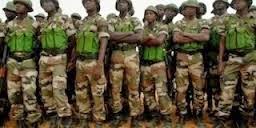
INSURBODINATE BEHAVIOUR IN THE MILITARY

INSURBODINATE BEHAVIOUR IN THE MILITARY


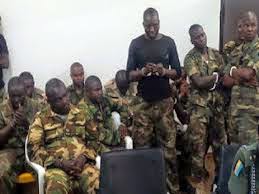
Credits – sunnewsonline.com

This is the 3rd
article in a series of posts relating to offences under the Nigerian Armed
Forces Act, the first was an article on the law on “Mutiny
under the Armed Forces Act
” while the second was about “Disorderly
behaviour among Soldiers/Service men
”.
If you have
ever lived in a military barracks, attended a military school or know a thing or
two about the military, you will know the rule that the chain of command is
unbreakable and anyone who breaks it, gets broken, lol. The chain of command or
respect to seniority is sacred and it’s a big deal. Now imagine if a service
man strikes his superior officer, wow, make we just talk say him own don end
 such soldier will definitely be
disciplined. 
I attended a military
high school, Nigerian navy to be precise and I remember a day I was beating for
no reason by a senior student, I was so sure I didn’t deserve the treatment I
got and angrily walked off to report the senior student to one of the military
officers on deck. The military officer listened and asked me to go call the wicked
senior, he berated the senior for beating me for no apparent reason and asked
me to give the said senior 6 strokes from a horse whip. Oboy, did I gladly lash
the senior’s buttocks. After acting out my vengeance, the military officer asked
the senior to get up and said “this boy could come and report you to me because
you did not beat him well enough, now take him away”.
Immediately I
heard those words, I knew it was time to draw up a will and last testament, I was
definitely going to die, the senior student just looked and said “follow me” as
he walked off to the senior dormitory. 

I didn’t die
that day, obviously, else I won’t be typing this article many years after but
let’s just say, I have never forgotten that experience and I doubt if I ever
will. If my secondary school could be that devoted to the chain of command
without minding if a senior student had killed me that day, imagine what it
must mean to actually strike a superior officer in the military, serious
gbege i am sure
.
Imagine a
scenario where a Major barks orders at a Sergeant to carry out a directive,
only for the Sergeant to slap the Major because the Major is his younger
cousin. Obviously, that will happen only in a Nollywood movie because Insubordinate
behaviour is completely frowned upon by the military; Section 54 of the Armed
Forces Act states that-
“Any person subject to service law
who strikes or otherwise uses violence to, or offers violence to, his superior
officer; or uses threatening or insubordinate language to his superior officer,
is guilty of an offence under this section and liable, on conviction by a court
– martial, to imprisonment for a term not exceeding two years or any less
punishment provided by the Act
”
.
It states further in subsection 2
that a person convicted for the offence stated above shall only be liable to be
imprisoned for no more than two years if the offence was committed on active
service or involved the striking or other use of violence, to the superior
officer exercising authority as such. A superior officer means an officer, a
warrant officer or its equivalent in rank, non – commissioned officer subject
to service law under the Act of superior rank, and includes an officer, a
warrant officer or its equivalent rank,or non – commissioned officer so subject
of equal rank but greater seniority while exercising authority as that person’s
superior. 
Adedunmade Onibokun
@adedunmade
HOW TO BE A MORE EFFECTIVE LAWYER  by Simon Harper

HOW TO BE A MORE EFFECTIVE LAWYER by Simon Harper

Lawyers need to squeeze every drop of personal fulfilment they can out of their working day, says Simon Harper of Lawyers on Demand.
This week I was in a roomful of lawyers when we were asked when was the last time we’d got lost in the moment.  When were we so absorbed in a task that we didn’t notice anything or anyone around us? Answers were fascinated and varied – playing football, sketching, building Lego and even contract drafting.  (By the way the occasion was not just a spontaneous group overshare but the LOD-hosted Life With Law, the latest in a series of talks on how to live a more fulfilling life whilst practising law. This time the topic was mindfulness and flow.) 

“Flow”, the speaker and flow expert Dr. Kate Hefferon advised, is the formal expression of what we might describe as being in “the zone”.  We all seem to love being in the zone, when we are at our most focussed and at the top of our game.  We like its aftermath too, when we feel fulfilled and happy  The key to flow seems to be (sorry Kate for the layperson interpretation) balancing skill and challenge so that we are at once absorbed and stretched by a task at hand.  
We’re apparently more likely to be “in flow” when we are doing sports or physical activity, studying, being creative and, yes, working too.  The key steps for fostering flow at work, Kate explained, were providing autonomy, clear goals and feedback, as well as creating elements of challenge and using a variety of skills.  
This got me thinking about how we lawyers can get more flow in our lives.  After all we spend so much of our lives working we owe it to ourselves to squeeze every last drop of personal fulfilment out of our working day. lawySo, here goes:
1) Focus on one activity at a time: forget about multi-tasking, it’s a myth.  “Continuous partial attention” (as multi-tasking has been described more accurately) is not aspirational. Allow yourself to be drawn into a particular task or project and immerse yourself completely without distraction (whilst writing this I’ve closed my inbox and it feels good).
2) Create challenge every day: one of the lawyers present at Life With Law spoke about how he set himself stretch goals and interesting work-arounds to help him get satisfaction from even the most mundane drafting.  I sometimes set an imaginary word count on written documents to help me focus.  The end result is more succinct and powerful and I’ve enjoyed the challenge of saying more with less.
3) Increase your autonomy (and that of your team): autonomy is frequently cited as a key factor in work satisfaction and it seems that it’s also integral to operating at your peak.  Where you can, take ownership of how, when and where you work, and give the same privilege to others.
4) Set yourself clear goals: whether that’s what you want to achieve in the next 10 minutes, the next day or the next week.   Don’t just look at what you think has to be done, think about what you want to do and how you want to get it done.  I try to spend half an hour on a Monday morning mapping my week and always feel better for it.
5) Tap into a range of your skills: just because you are a lawyer doesn’t mean you have to stay chained to your Word documents.  If you enjoy drawing, problem solve with a blank page and a marker pen instead of your keyboard.   If you love running, think through a tricky issue when you are pounding the streets.
Hopefully by making these small “flow hacks” (as Buzzfeed might put it) we can be better lawyers too.
Simon Harper is Co-Founder of Lawyers On Demand, the UK’s original alternative legal service. For more information about Lawyers On Demand visit www.lod.co.uk.

Source:- globallegalpost.com 
COPYRIGHT INFRINGEMENT AND PLAGIARISM

COPYRIGHT INFRINGEMENT AND PLAGIARISM


credits: slideshare.net
With the recent brouhaha following Linda Ikeji’s blog being
temporarily shut down by Blogger, many writers/bloggers/online content marketers
are frantically praying searching for information regarding copyright
infringement in order to ensure the devil does not send a MrAyedee into
their life
they don’t run fowl of the law and also have their blogs shut
down. While copyright laws regarding the internet are well established in
foreign jurisdictions, in Nigeria we jus dey open eye, blogging just
blew up in Nigeria a little over 5 years ago. But you can always catch our blog
post on copyright
laws.
 
People tend to get a little
protective of their stuff because there are many unscrupulous people out there
who take content and pass it off as their own. Having done all that hard work
with none of the credit is totally not cool!

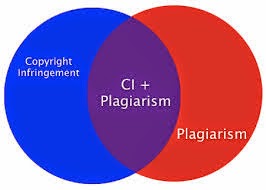
Copyright
infringement occurs when any person uses any of your work – no matter how small
it is – for any of his/her personal benefits irrespective of whether or not he
gives you the attribution, unless that person has a written permission from you
. Content could
be in many forms such as text, artwork, sound and video (including animations),
ideas, inventions or symbols.
Once your work is published – irrespective of
whether on paper or digital media – you own the sole rights to: use the work;
allow reuse; allow derivatives and allow others make profit from your work.
 If you are
the copyright holder
, it means that ONLY YOU are allowed to make copies
of the work and should you wish – others and only the ones to whom you give
written permission can use the work. At this point it is important to note that
the saying “because it’s posted on the
internet, then it’s free
” is totally misleading and untrue. 
credits- dearauthor.com
Plagiarism on the other hand is “the use of another’s
information, language, or writing, when done without proper acknowledgment of
the original source.” However, the critical element of it is the final part.
The one thing that ties all plagiarism together is going beyond merely
duplicating the work, but also not crediting the source and thus taking the
material for yourself. However, not all incidents of plagiarism are considered
copyright infringement. Plagiarizing works in the public domain, though
unethical, is not considered copyright infringement.
Plagiarism is an ethical concern that may have other elements
of intellectual property theft tied with it. Copyright infringement, on the
other hand, is illegal and carries with it potentially significant
consequences. Plagiarism can be avoided by providing attribution and giving credit,
copyright infringement cannot. So how can one be sure not to plagiarize or
infringe on another’s work? Simple: 

  • If you took the photo or created the graphic and are not
    subject to a Work For Hire agreement, then you own it. Taking another person’s
    image or graphic and giving them a “shout out,” linkback, or any other type of
    attribution does not negate copyright infringement. Copyright law gives the
    copyright holder the right to decide where their work is published and maybe
    they don’t want their work on your site, in your book, included in your
    newsletter or distributed to your social media network.
  • Ask people for the rights to use their work, it is either
    they say yes or no. It may be acceptable to use an image, as is, on your blog,
    but you may not have the right to use that same image in a paid newsletter,
    book, video or other type of work. Unless the image is in the public domain or
    you are the copyright holder, you have to consider the use(s) granted by the
    copyright holder or license. A copyright holder may be agreeable to certain
    uses but not to others. Also when you take part of a person’s written/published
    work, it is important that you write the reference properly in other to avoid
    plagiarism allegations. 
     

 Adedunmade Onibokun
@adedunmade
DISORDERLY BEHAVIOUR FOR SOLDIERS/SERVICE MEN

DISORDERLY BEHAVIOUR FOR SOLDIERS/SERVICE MEN

Credit- bioreports.net 

This blog post is the second of a
series relating to crimes and punishment under the Armed Forces Act, Cap C20, Laws
of the Federal Republic of Nigeria (2004). Last time, I wrote a piece on the
offence of Mutiny
under the Armed Forces Act
. 

Scenario 1
Philip is in a big hurry to get to his interview, he has been invited by a
busy CEO to come in at 12, for a personal interview and he is stepping on the
accelerator, heading fast to Victoria island on the 3rd mainland bridge,  when suddenly, the commercial bus – driver in front of him makes an unexpected
swerve into his lane, he tries to avoid a collision, steps on his breaks and
drives straight into the Peugeot 206 on the left lane. Philips looks ahead at
the badly damaged 206 through his cracked windscreen and is quietly giving
thanks for being alive, when 4 kacki dressed soldiers jump out of the 206,
before he can say Jack Robinson, 2 soldiers are beside his window, one dishes
him a hot slap while the other drags him out through the window, Philip begins
to shake and stammer , he knows he is in big trouble.   
Scenario 2
Two area boys beat – up a soldier while others cheer in the Onitsha motor-park
because he slapped one of them who had earlier driven his commercial bus into
the soldier’s Toyota Camry,  he angrily speeds
off towards the barracks and 15 minutes later, two trucks carrying about 40
soldiers drive into the park, solders disembark quickly and  horse-whips begin to crack on the backs of any
and all bus drivers/park touts in the garage. 
Today’s post is on disorderly behaviour
among the ranks of the Armed forces or persons subject to service law (service
law means the Armed Forces Act and it includes the military, naval, or air-force
laws of any allied forces.  Members of
the armed forces are required to be of lawful and responsible behaviour always.
Incidents involving vandalism, street fighting and acts of public nuisance are strictly
under the purview of area boys and touts, not for our highly trained, highly
skilled and honourable service men. 
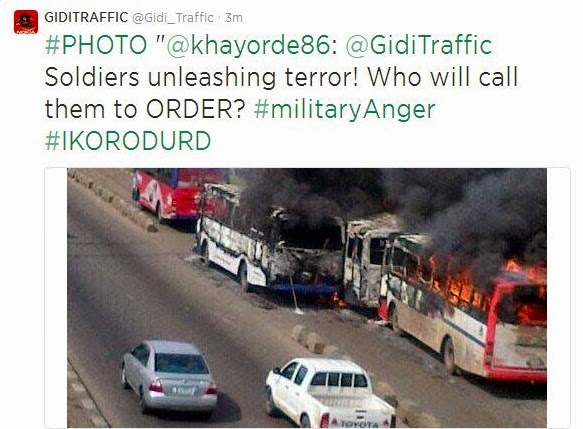
In the past, we have had instances
where soldiers behaved unruly in public, a recent incident happened on Ikorodu
road in Lagos where it was reported that soldiers burnt a Lagos owned BRT
commercial bus and allegedly beat a few BRT drivers/ members of the public,
though military authorities denied the involvement of soldiers in the mayhem.
If you have lived in Nigeria for a while, it’s kind of a default attitude to
life to stay out of the way of service men, there is an aura around them that
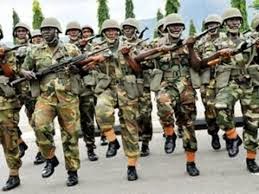
oozes “you don’t want to mess with me”, LOL. Especially, if you run into a
military convoy on the road with menacing looking solders holding machine guys,
swinging kobokos horse whips chasing you out of the way. 
Credit- Bellanaija.com 

Fighting, quarrelling and disorderly
behaviour is provided for under Section 55 of the Armed Forces Act, it states
that: A person subject to service law under the Act who –

  • Fights, quarrels or behaves in a disorderly manner with any other person,
    whether subject to service law under this Act or not, or

  • Uses threatening, abusive, insulting or provocative words or behavior
    likely to cause a disturbance,

Is guilty of an offence under this section and liable, on conviction by a
Court- Martial, to imprisonment for a term not exceeding two years or any less
punishment provided by the Act. 
This must be an eye – opener for most
people, service men breaking the above mentioned law is not a new thing, ask
the danfo-drivers and motorists who have been victims of severe beatings and
bullying by service men. Though, i know sometimes the motorists could be at
fault, inflicting physical pain on them in my opinion is an abuse of power.
Next time, you happen to be around when another person is getting bullied or
beat-up by any service man, let them know they are in breach of the law. There are
always exceptions though, for example in instances where service men are
ordered to restore the peace during a riot or where jihadist and oil bunkering
thieves are being challenged, now that’s a different ball game altogether. 
 Adedunmade Onibokun, Esq
@adedunmade
Adedunmade is a legal practitioner in Lagos, Nigeria and publishes the
law blog “Legalnaija”.
MUTINY UNDER THE ARMED FORCES ACT

MUTINY UNDER THE ARMED FORCES ACT


Scenario
Its 4am at the military base in the northern part of Borno
state, the camp commander has just received intelligence that heavily armed
insurgents have been spotted advancing into a neighbouring town. The commander immediately
rallies the troops and orders an immediate assault on the convoy of insurgents.
However, several soldiers in the battalion refuse to engage the enemy because
they believe the insurgents have superior fire power and refuse to obey the commander’s
orders. Tempers flare, a brawl ensues among the troops and the commander is
shot at by a junior officer spear heading the conflict. The military police
have however calmed the situation and the officer who shot the pistol during
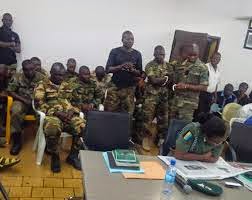
the brawl has been arrested and will be facing a Court-Martial.
THE LAW
This blog post is the first of a series relating to crimes
and punishment under the Armed Forces Act, Cap C20, Laws of the Federal Republic
of Nigeria (2004).  Currently, over 200
Military personnel are undergoing a Court-Martial for several offences including
mutiny, assault, misconduct and tampering with military property. Though some
are being tried for lesser offences, about 12 have been found guilty of the act
of mutiny and sentenced to life imprisonment, a punishment that was commuted
from the initial death sentence handed down for shooting at a vehicle conveying
their commander.
     

     Mutiny is provided for
under Section 52 of the Armed Forces Act. According to the law mutiny means a
combination between 2 persons who are subject to service law to

  • Overthrow
    or resist lawful authority in the Federation.
  • Disobey
    authority in such circumstances as to make the disobedience subversive of
    discipline, or with the object of avoiding any duty or service against, or in
    connection with operations against the enemy; or 
  • Impede
    the performance of any duty or service in the Federation or in any arm of
    service of the Armed Forces or in any force cooperating with the armed forces
    or in any part of the armed forces.
The law further provides in the same section that any person
who takes part in a mutiny involving the use of violence or the threat of the
use of violence or having as its object or one of its objects the refusal or
avoidance of any duty or service against, or in connection with operations
against the enemy, or the impeding of the performance of that duty or service
or anyone who incites other persons who are also subject to service law to take
part in a mutiny, whether actual or intended is guilty of an offence under the
law and liable on conviction by a Court-Martial to suffer death.
Furthermore, any person not falling under the above, who
takes part in a mutiny, or incites any person subject to service law to take
part in a mutiny, whether actual or intended is guilty of an offence and liable
on conviction to life in prison. 
Adedunmade Onibokun, Esq
@adedunmade  
WHO IS AFRAID OF BEING DEFAMED by Collins Arikor

WHO IS AFRAID OF BEING DEFAMED by Collins Arikor

Man hates (despises) the truth because it exposes him for what he is and it troubles what still remains of his conscience.”-Paul Washer.

Abiding by elements in the perceptual manifold, our country is in a bad-news default mode. In giving systematic judgements to daily events, each breaking of the sun brings us with yet another ‘new’ problem and issue to deal with, which sadly, we can’t seem to confront, thus, compounding our woes.
The grave situation of the Nigerian polity and the graver and darker consequential character awaiting its socio-political shorelines forecast by many regarding its guaranteed existence as an indivisible entity continue to hedge closer towards fruition. Political transactions, as of late have all contributed in no small account to the veritable stance that the country is more than fast sloping down the hill of crisis and meltdown. Yet, time after time, we have found it hard to boldly face and tackle our problems, not because we couldn’t do such or lacked the requisite will to do it, but because we are always afraid of rising up and facing our problems with the intent to at least frontally confront or fight them. Needless to say, corruption has found its strongest potency to deeply thrive in the Nigerian atmosphere. It is no longer news that politics and the rule of law are dead in Nigeria. In their place we now have blatant money laundering, large-scale looting, outright stealing and outrageous illegality. The befetting requisite appendage of the country would therefore be ‘The World Capital of Lawlessness’. Due process is now an alien and scare commodity in the country. At every yearly rating by Transparency International (TI), Nigeria finds herself ‘proudly’ jostling top positions with other corrupt countries in the world. Successive Governments of the day would boast of how far good and well they’ve been able to fight corruption, but the evident truth remains that their efforts can be compared to trying to stay clean in a muddy pool while engaged in fierce fighting with your staunch enemy. Enough being said about the grave situation of the Nigerian polity. But it certainly needs no saying, verification or validity that Nigeria is corrupt, and most Nigerians are corrupt. This clearly cannot amount to defamation.
The tort of defamation arises where an individual’s reputation or image is being tarnished by another. That is to say, where one person through the instrumentality of words uttered or words written reduces or ridicules the worth of another before right-thinking members of society, such person has committed the tortious  act known as defamation, and consequently has incurred some tortious liability on himself. The redress by law given to a defamed individual is awarding monetary damages to such defamed individual from the pockets of the defaulting party, in so much as such damages seek to restore the defamed party to his former high-ranking position and standing in society. However, surrounding factors come into play when accessing the claim that an individual has been defamed by another. That said, who then can be defamed? Of course, every member of the society can be defamed. For everybody has a right to protect his good name, whenever he feels his name is being dragged into the mud.
Thus, applying an objective and simple understanding of the tortious act of defamation through a psychological investigation to the overt manifestations of our leaders or as can be inferred from their implicit thought-processes, can it be said without a cloud of controversy that any person who therefore pronounces that our leaders are corrupt is defaming them? First of, who is afraid of being defamed? From earlier established findings, only the one who has an upright and unblemished reputation can be afraid of the reward of defamation hanging over his head. Where a leader has resorted to, after careful consideration, align himself with lawlessness and perversity, what reputation is there to protect when somebody else decides to point it out? Better put, what ‘good’ image and name is there to protect, starting from the Presidency, down to most of our Governors, Local Government Chairmen and Councillors? It is quite common knowledge a present-day Nigerian politician is incompatible with a good name and reputation. After leaving office, if a former public officer fails to be rich in falsely-acquired real estates and  looted wealth, I am sorry to say, that such official was outrightly stupid! To give an outstanding example, former Delta state Governor James Ibori, is currently serving jail term in the UK for money laundering committed while in office as Governor. Could the prosecuting lawyer in the Ibori case be said to have defamed Ibori when he called Ibori a common thief? 
The Abacha family were reported to have shamelessly declared that should the Nigerian government recover all their (Abacha’ family) stolen loot, they would never be as poor as Dangote! In the same unsavoury manner, Rt.Gen. T.Y Danjuma, a former military Chief of Staff ingloriously uttered, probably in a state of stupor, that he was so rich and was bereft of what to do with money! Perhaps, these people were prompted to make those declarations by that indifferent silence particular of the Nigerian arena. The disinterestedness of many Nigerians towards political happenstances has made political office in the country a ‘loot-as-you-like’ affair. Not surprisingly though, Nigerians are still living in silence as to the whereabouts of the fuel subsidy loot, the CBN’s missing #20 billion (or is it #10 billion, as they later admitted), the Aviation Ministry’s #225 million used for procuring bullet proof cars, the unaccounted-for amount realised from the Immigration Exam Scam, and many other similar scenarios of monumental sums missing from government coffers…meanwhile, millions of the half-interred Nigerian populace don’t even have the slightest intimation of where their next meal might come from. Could anybody who portrays this truth be then said to have defamed the ‘vested interests’ concerned?
Truthfully, however, there is no exclusivity to the fact that the Nigerian society is bipolarized into the corrupt few and docile majority. That of course, is coming on the heels of the glaringly-unfact that the country has sadly been balkanized along the lines of religious zealotry and bigotry. On many occasions than necessary, the high and mighty in society had exhibited acts which brazenly negate the rule of law, but all that could ever be gotten from Nigerians was silence. Would those who choose not to remain silent by pointing out such ‘vested interests’ then be said to have defamed such ‘vested interests’? Judge for yourself. The un-peculiarity and incoherence that characterizes the momumental corruption resident within public service in the country defies any attempt at adequate description or precise classification. But, this attempt at classifying the decay in Nigerian political office is achieved at the price of the over-simplified word: ‘corruption’. And in a vaguer perception, corruption in the country has gradually and consistently become purposive without purpose. The wide and unlimited realm of corruption in the country has now made it even difficult to mentally conceptualize the antinomy called corruption.        
The crux of this piece would chiefly then appear thus: since Providence had been at least gracious to hand down the natural law that, ‘reactions must follow actions’, it is only probable and conceivable that when some ‘high and mighty’ in the society choose to poison our spirits by engaging in irregular, illegal and unlawful acts, those of us who have chosen not to remain silent- not withholding our imperfections-will have no option than to spew up defamatory words (if they so view it). For one should not be afraid to spit out ‘poisoned’ words (and in the process, offend others), how much more when shit is forced into our mouths? He who has no skeleton in his cupboard would not be apprehensive at the mere mention of skeletons, and as such, should not be afraid of being defamed. 

OPINION: MY ISSUES FOR 2015

OPINION: MY ISSUES FOR 2015

I attended a professional event
about three weeks ago and during lunch we were all encouraged to network and
get to know one another, most people in the room were lawyers anyway and we were
all able to get along fine. Until I ran into a politician who is a PDP card
carrying member, not that I belong to any political party neither do I favour
one over the other even though we were having lunch in an APC governed State
because I believe all Nigerian political parties lack ideology and their
members are just in whichever party that best serves their private gains at the
moment, a look at how quick they cross from one platform to the other is proof
of same.

Coincidentally, earlier in our
discussions that day, we treated a scenario where one of the parties was
labelled a PDP fixer and Mr. PDP was all too glad to tell me how APC was the
party of fixers and  PDP will save Lagos
State from BRF whom he believed was a failure. Now, having lived in Nigeria and
witnessed a PDP led national government I was not going to agree with him.
Moreover, the blind can see and the deaf can hear about the successes of BRF in
Lagos so I was quick to ask my new acquaintance why he felt so strongly.

“See my friend, Fashola has not tried at all, APC is sharing 60 % of
Lagos State revenue between its party leaders
”, but you do not have proof
of how 60% of the money made in Lagos is paid into private accounts I said,
your statement is based on conjecture and rumours, what about the development of
road infrastructure in Lagos I replied.

“That’s even worse” quipped Mr.PDP “Fashola has not done anything, I know a street in Maryland where the
road is soo bad, you will wonder if we had a government in this state
”. “So
you will judge BRF as a failure because one road in Maryland has pot-holes I
said?” At this point, Mr PDP went on and on about how PDP will construct better
roads bla bla bla and right then it occurred to me that as we approach 2015 and
after 54 years of existence, some of our national and local politicians are
completely unaware of what the country needs at this time.

Fellow Nigerians, woe to the
politician who preaches about roads, water and stomach politrics. Who believes
that he can play the same old script used in 1999 elections for Nigerians in
2015 and get away with it. As an expo to any willing public servant contesting for
any political office in the coming elections, here are a list of issues which I
believe are of importance to our Nation in this day and age, you can feel free
to add others to the list;
1.       The
recognition that Nigeria’s greatest resource is not oil and fertile land but
rather the human capital that is left untapped in our over 150 million people, how
the beautiful minds of our youth and younger generations will be equipped to
take on the challenges that face us as a people.
2.       How
Nigeria can take its rightful place among the comity of Nations as a global
leader.
3.       How
jobs can be outsourced from the Western countries into Nigeria, a classic
example of countries which have achieved this are India and Pakistan where their
techies are being employed from countries like the UK and the USA to perform IT
related jobs like building websites to other income generating opportunities.

4.       How
to promote unity and foster cooperation among the warring factions in the
country.
5.       A
well thought out plan to tackling terrorism and insurgency.
6.       How
to mentally, materially and physically empower our security operatives in other
to provide adequate security for the nation.
7.       A
game plan for uprooting corruption from the hearts and minds of Nigerians.
8.       The
reformation and enforcement of the rule of law.
9.       Economic
policies that support entrepreneurship and wealth creation.
10.   Writing
and promoting the Nigerian dream, the ideology that will bind all Nigerians in sincerity
of purpose.
11.   Social
welfare and legal aid.
12.   30%
of youth inclusion when distributing government responsibilities and
portfolios.

I excluded
roads and power generation from the list because we must not allow mediocre
politicians to bamboozle us with what is our right, good roads are our rights
as Nigerians and not a campaign promise which we must thank the politicians
for. If a politician cannot grasp and share how he intends to tackle the above
mentioned issues, then he or she is not equipped to rule a dynamic country like
Nigeria.

Please feel
free to include any other thing you believe should be on the list and let’s put
these political office seekers to the test. May the best man win.
Adedunmade
Onibokun, Esq
@adedunmade   

Domestic Violence in Nigeria by Biola Adimula

Domestic Violence in Nigeria by Biola Adimula

Nigeria has one of the highest rates of domestic violence in Africa.
More than two thirds of Nigerian women are believed to experience physical, sexual and psychological abuse at the hands of their husbands.

A small-scale study conducted in the Lagos and Oyo states revealed that nearly 65 percent of educated women said they had been beaten by a partner, boyfriend or husband, while 56 percent of lower-income market women experienced similar violence.
In Nigeria, the social context of violence against women is based on the traditional patriarchal structure that defines gender. It is the belief in Nigeria that when a woman is married, she surrenders to her husband. She is required to provide “sex and obedience” to her husband according to a development report produced by Amnesty International. According to the African Journal of Reproductive Health in 2005, a husband has the liberty to “violate and batter” his wife if he feels she has not adequately fulfilled her obligations.
Amnesty International calls Nigeria’s rate of domestic violence “shocking,” and has called on the local governments to do something to stem the violence.
“On a daily basis, Nigerian women are beaten, raped and even murdered by members of their family for supposed transgressions, which can range from not having meals ready on time to visiting family members without their husband’s permission,” says Stephane Mikala of Amnesty International. “Tragically, husbands, partners and fathers are responsible for most of the violence against these women.”

Domestic violence in Nigeria is neither against the law, nor do the victims receive full legal support, as many prefer to stay in abusive relationships than leave and face the ridicule of living outside wedlock. There is no government or charitable funding in Nigeria to support this area of work and raise awareness.

Women and Child Watch Initiative (WOCWI)

WOCWI is a not for profit organisation based in Nigeria which works with vulnerable women and children who experience violence, forced marriages, trafficking, HIV and other severe social problems. The organisation became an official partner of The Haven Wolverhampton in October 2011.

WOCWI strives to initiate, foster and promote activities that will enhance the welfare of women and children for the overall progress of society.

The Haven Wolverhampton has hosted visitors from WOCWI through the Commonwealth Fellowship Programme since 2010.

In September 2010 Barrister Biola Ruth Adimula and Chief Nursing Officer Deborah Afolabi who work on behalf of WOCWI visited The Haven Wolverhampton. During their time in Wolverhampton Ruth and Deborah Biola hoped to acquire knowledge in order to strengthen counselling services for victims of Domestic Violence in Nigeria, taking inspiration from the Haven, and extending their services to incorporate a 24 hour telephone service.

Other areas of development included defending the rights of victims, supporting pressure groups on advocating the passing of law against Domestic Violence, organising training programmes for Women Lawyers in Nigeria to strengthen their support for women experiencing Domestic Violence and engaging the victims awareness training. 

Download the evaluation report of the Commonwealth Professional Fellow’s Programme at The Haven Wolverhampton 2010 written by Biola Adimula here.

In September 2011 Oluwatoyin Opawoye (Nursing Officer), Benjamin Adekunle Okeowo (Journalist) and Edetan Olanike Folashade (Scientist) visited The Haven Wolverhampton as part of the second Commonwealth Fellowship Programme visit in conjunction with WOCWI. 

As well as meeting with Haven staff and external service providers, our visitors also had the opportunity to meet The Haven Wolverhampton’s Daphne Project partners. Download the evaluation report of the Commonwealth Professional Fellow’s Programme 2011 written by Edetan Olanike Folashade here.
Source: http://www.havenrefuge.org.uk