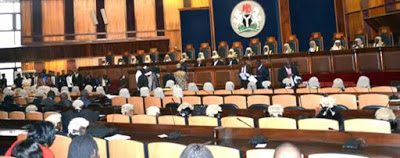

Time Has Come To Open Up Our Railway Sector To Private Sector Participation- Senator Gbenga B. Ashafa.

Time Has Come To Open Up Our Railway Sector To Private Sector Participation- Senator Gbenga B. Ashafa.


Senator Gbenga B. Ashafa
representing Lagos East Senatorial District at the 8th Senate, is
the Chairman Senate Committee on Land Transport. Through this feature, he
renders his opinion on how to transform the Nigerian Railway Sector and a
report on the efforts of the Senate Committee on Land Transport towards
ensuring a transformed railway Sector beneficial to all Nigerians. 

“The Nigerian Railway
Corporation traces its history to the year 1898, when the first railroad in
Nigeria was constructed by the British colonial government. On October 3, 1912
the Lagos Government Railway and the Baro-Kano Railway were amalgamated,
starting nationwide rail service under the name Government Department of
Railways. With the passing of the Nigerian Railway Corporation Act of 1955, the
company gained its current name as well as the exclusive legal right to
construct and operate rail service in Nigeria. The rail network reached its
maximum extent shortly after Nigerian independence, in 1964. Shortly after
that, the NRC entered a long period of decline, inept management, and
eventually a complete lack of maintenance of rail and locomotive assets. In
1988, NRC declared bankruptcy, and all rail traffic stopped for six months.
After that, trains resumed, where the tracks were usable. By 2002, passenger
service was again discontinued altogether. Starting in 2006, plans were made to
restore the rail lines and add new locomotives with foreign assistance. In
December 2012 regular, scheduled passenger service was restored on the Lagos to
Kano line.”– Wikepedia
I have chosen to start
this article with the foregoing quote from Wikepedia to give you all a
background of the history of the Nigerian Railway Corporation and by extension
the Nigerian Rail Sector. This quote will also put in proper perspective the
urgent need to open up our railway sector to Public/Private Sector
Participation. 
In the recent past,
Nigeria particularly has learnt that private participation drives effectiveness
and Accountability in most service/utility sectors. We have learnt that the
Government cannot carry the burden of delivering every service or utility.
Successive governments in Nigeria have over the years burdened itself with the
task of providing power, water, a National Carrier, Telecommunications,
Railways etc.
What we have experienced
till recently has been a steady decline in the functionality of Government-run
social utility services. This has led to the change in disposition of
Government towards extending a hand of partnership to the private sector to
come and invest in some of these sectors. Sectors that have benefitted from the
Private Sector Participation in Government Business include the
Telecommunications Sector and the Power Sector.
Since the introduction of
private sector participation in the Telecommunications Sector, the service has
become more affordable, effective and accessible to every single Nigerian. The
Telecommunications value chain also employs Millions of Nigerians with
investment in the Sector set at about $32 Billion as at the first quarter of
2016.
Till the Telecoms sector
was opened up in 2001, it was an untapped gold mine with unfathomable
potential. It is this same quantum of potential that we seek to replicate by
introducing the requisite CHANGE into the Nigerian Railway Sector.
Now, to achieve this
change in disposition of any critical sector, there has to be a critical change
in the Legislation that drives the Sector. Legislation forms the fulcrum of
human, government and business interrelationship in every society. Hence what
we need to and seek to do is to drastically change the legislation that guides
the Nigerian Rail Sector to ensure that we maximize the full yet untapped
potential inherent therein. For the sake of emphasis, the legislation that
guides the Nigerian Railway Corporation was promulgated in 1955 (61 years ago).
Till now, you will agree
with me that the country has focused primarily on road transportation in
ferrying persons, goods and services from one point to the other. What this has
led to over the years has been an influx of cars, congested roads,
over-burdened road infrastructure, loss of lives to accidents and reduction in
the productivity of manpower due to unending hours spent in traffic jams.
Government after
government has invested even more in road expansion projects. The result as can
be observed in the case of Lagos and Abuja has been a gradual occupation of the
expanded roads with more cars. This is attributable to rural-urban migration as
well as population explosion across the nation.
Mass transit remains a
very pivotal aspect of the development of any city. It plays a critical role in
enhancing productivity of the state by ensuring the movement of the largest
number of people from point A to Point B within the shortest possible time. It
also reflects the quality of life and the value placed on the unit citizen by
any responsible government.
You will agree with me
that the most effective means of transporting large quantities of humans, goods
and services within any country is via rail. This is why whenever the topic of
mass transit is discussed; rail transportation must be given its pride of
place.
In the light of the
foregoing, When I was appointed the Chairman of the Senate Committee on Land
Transport, my humble self and committee members held interactive sessions with
the Ministry of Transport and the Nigerian Railway Corporation to listen to the
challenges facing the rail sector. We also at other different fora interfaced
with stakeholders in the Rail Sector to feel their pulse on what needs to
change to enable the Sector thrive. Our intention was to ascertaining how we as
legislators could be of assistance to the Federal Government and fellow
Nigerians through creating an enabling environment to revamp the rail sector
through the instrumentality of legislation.
Upon our interaction with
the Stakeholders, we discovered that there is an urgent need to open up the
Sector to active private participation, predicated upon both State and Private
Sector Participation on a level playing field.  To achieve this, we zeroed-in
an urgent need to amend or repeal the existing Nigerian Railway
Corporation Act, 1955
, which does not contemplate private participation in
the rail sector. I am therefore convinced that the time has come for us to open
up our railway sector to private sector participation.
Just in good time, the
Senate at Plenary forwarded the Nigerian Railway Corporation Repeal and
Reenactment Bill 2015, sponsored by Distinguished Senator Andy Uba to the
Senate Committee on Land Transport. Shortly after that, the National Transport
commission Bill 2016 was equally forwarded to the Committee on Land
Transport. 
With regard to the
Nigerian Railway Corporation Repeal and Reenactment bill, the Senate Committee
on Land Transport successfully held a public hearing, which had in attendance
all the important stakeholders in the sector. This culminated in the setting up
of a technical committee made up of stakeholders with the legal and technical
expertise to further advise the Senate committee on the desirable disposition
of the proposed legislation. On Wednesday, 24th May, 2015, the
report of the technical committee was submitted to us and I had the privilege
of presenting the said report to His Excellency, the President of the 8th Senate,
Dr. Abubakar Bukola Saraki on the same date.
Based on the
recommendation of both the Senate Committee on Land Transport and the Technical
Committee on the Nigerian Railway Corporation Act Repeal and Reenactment Bill
2015, it was agreed that due to the extensive recommended changes, the tittle of
the Bill should be changed to the Nigerian Railway bill, 2016.
Consideration of the
report of the Senate committee on Land Transport with regard to the said Bill
has equally commenced before the Senate at plenary. The Third and Final Reading
of the Bill, which will include the line-by-line consideration of the committee
recommendations with regard to the Bill will be completed upon the resumption
of the Senate from its recess. With regard to the National Transport Commission
Bill, preparations are currently in full gear to hold a public hearing as
well. 
It is very important to
note that up until 1993, the British also ran a state model of ownership and
operation of the Railways and they faced similar challenges in funding and
efficiency of the service. In a speech titled Rail growth through
competition: the success of the UK model delivered by 
The
Rt Hon Patrick McLoughlin MP
 on 12 November 2013 at the European Rail
Congress, McLoughling pointed out as follows: “In fact the
Railways Act came into effect on November 5 1993, breaking up the state-run
British Rail, and transforming the face of our railway for ever. Nobody back
then could have predicted the extraordinary changes that have taken place over
the subsequent 2 decades.”
McLoughling stated further
that “Rail travel had dwindled to such an extent that most
people thought the private train operators would manage a decline in both
passenger and freight traffic. How wrong they were. Privatisation sparked a
railway renaissance. Since 1993, passenger journeys have doubled in the UK to a
level not seen since the 1920s. On a network roughly the same size as 15 years
ago, today our railway is running 4,000 more services a day. And rail freight
has grown by 60%. Revenue is up more than £3 billion since privatisation,
almost all of it due to higher passenger numbers rather than fare rises Safety
levels are at an all time high. Punctuality is at near record levels. And passenger
satisfaction is up by 10% over the past decade. None of this would have
happened without privatization, without competition, without franchises
investing in better services. Without an industry structure promoting
accountability and incentivising growth.”
What we seek to achieve by
these legislations is to replicate in Nigeria what started in the United
Kingdom a bit over 20 years ago and as succinctly captured by the quotes from
McLoughlin MP, just above. 
This radical departure
from the norm will make the sector more attractive to investors, by separating
the roles of the operators and the regulator. A whole lot of investors have
over time complained about the role of the Nigerian Railway Corporation as both
the operator and the regulator in the sector. With the
upcoming legislation, we expect to see a completely re-positioned Rail
Transport Sector, open to private sector participation.
Once the rail sector is
opened up to Private Sector Participation, we would have achieved two principal
things, which are; Creation of Millions of jobs on one hand and also we would
have successfully solved the challenge of inter/intra city mass transit.
Further more, in respect
to Public Private Partnerships in the Rail Sector, the World Bank Group’s
Public-Private-Partnership in Infrastructure Resource Center has also
recommended the shared infrastructure model, which the upcoming legislation
proposes when it stated that, “PPPs in railways can bring
opportunities for investment, operating efficiency and modern and clean
technology. PPP railway projects providing for shared use of rail tracks may
lead to efficiency gains
and
an increased revenue basis for states
Having said these, I must
thoroughly commend the effort of the Muhammadu Buhari led APC Government through
the Ministry of Transportation headed by H.E Rt. Hon Rotimi Amaechi in
consolidating the infrastructure relevant to drive our renewed rail sector, the
Senate President who ab-initio showed interest in this vital sector by
convening the National Assembly Business Environment Roundtable for the first
time. I also commend the various states that have begun laudable intra-city
rail lines, of particular note is the Government of Lagos State ably led by H.E
Governor Akinwunmi Ambode. The Nigerian Railway Bill 2016 will essentially
become the Bill that will bring all these brilliant initiatives by the Federal
government and soon- to- be investors together to ease the Mass Transportation
challenges across the Nation and as such help to increase the collective
productivity of our work force.
In the same vein, I would
like to seize this opportunity to commend all those who have worked tirelessly
and pro-bono with the Senate Committee on Land transport, particularly the
members of the Technical Committee on the Railway bill, ably chaired by
Engineer C.C Okoye, the Chairman Body of Fellows, Nigerian Society of
Engineers, the Nigerian Infrastructure Advisory Fund, Nigerian Economic Summit
Group, Ministry of Transport, Office of the Senate President, the Nigerian Railway
Corporation and all those who time and space would not allow me to mention
here. We are indeed grateful.
It is our earnest hope,
that these laws garner support across board and that upon the passage of these
new legislations by this 8th National Assembly, we would have
contributed in no small measure in opening up the rail sector, thereby
attracting both Local and Foreign investments, creating millions of jobs and
also establish a beneficial platform for the transportation of humans, goods
and services alike.
The formation of Group Company, Holding Company and Consortium in Nigeria

The formation of Group Company, Holding Company and Consortium in Nigeria


By: Teingo Inko-Tariah

Introduction
There are certain business
structures that could be created to foster easier operations and management, or
to accomplish some other agreed specific purpose. Businesses can be structured
in the form of a group, holding or consortium to achieve the aforementioned
goals. It is imperative to note here that a single company cannot be structured
using any of these methods because there must be a minimum of two companies in
existence before any of these structures can be adopted. The procedure for
registration of each of these will now be considered in turn.

Group of Companies
A group of companies
comprises of a minimum of three companies that all have common shareholders and
similar names. These companies will in turn become the shareholders of the
Group Company. An example of a Group Company in Nigeria is Dangote Group.
Its associate companies include Dangote Sugar, Dangote Flour, & Dangote
Cement. The law prohibits the use of the word ‘Group’ in the name of a company.
Accordingly, appropriate consent must be obtained from the Registrar-General of
the Corporate Affairs Commission (CAC) before the word can be used. Before
consent can be obtained to use the word ‘Group’ in the name of a company, the
following requirements must be met in the process of registration of a Group
Company:
1.    
Payment of a non-refundable application for
consent fee.
2.    
Formal application for consent to use the
word ‘Group’.
3.    
Evidence of not less than three associate
companies to form the proposed Group company which will be a distinct entity.
4.    
Similar names of associate companies and
evidence of similar ownership or shareholdings of the associate companies.
5.    
Resolution of the associate companies
indicating consent to the ‘Group’ relationship
6.    
Updated annual returns of all associate
companies.
7.    
Evidence of Company secretary of associate
companies.
8.  Statement by the majority of the directors
of the proposed Group company that the share capital shall not be less than the
highest share capital amongst the associate companies. For an illustration of
this point, let us assume that there are 4 associate companies as follows:
Divine Nigeria Limited with share capital of N1m, Divine Farms Ltd with share
capital of N1m, Divine Global Resources Ltd with share capital of N2m and
Divine Travels Ltd with share capital of N5m. The share capital of the Group –
Divine Group of companies cannot be less than N5m.
9. Evidence of compliance with S.553 CAMA
where applicable. This applies to banks, insurance firms, deposit, provident or
benefit societies.
10. 
After consent is successfully obtained for
the use of the word ‘Group’, the new entity which is the Parent/Group Company
can then be registered in accordance with the usual company registration
procedure.
Holding Company
A holding company is a
parent company that has more than half (50%) of the shares in another company
in order to control its policies and management. The main purpose of holding
company is to control the ‘daughter’ company. Where the parent company owns
100% of the shares of a daughter company, it is called a ‘wholly owned
subsidiary’. An example of a Holding company in Nigeria is First Bank
Holding Company Nigeria Plc
. The subsidiaries include FBN Bank (UK) Ltd,
FBN Bank Ghana, FBN Bank Guinea, & FBN Merchant Bank. Like the Group
company, the law also prohibits the use of the word ‘Holding’. Accordingly,
requisite consent must be obtained from the Registrar-General of the CAC before
the word can be included in the name of a company. The procedure for
registration of a holding company is as follows:
1.    
Payment of non-refundable application for
consent fee.
2.    
Formal application for consent to use the
word ‘Holding’.
3.    
Evidence of not less than 2 subsidiary
companies.
4.    
Statement by majority of the directors of
the proposed holding company that the company shall acquire more than half in
the nominal value of the share capital of each of the subsidiaries within 90
days of incorporation.
5.    
Evidence of updated annual returns of all
subsidiary companies
6.    
Evidence of appointment of company
secretary of each subsidiary company.
7.    
Evidence of compliance with S.553 CAMA
where applicable. This applies to banks, insurance firms, deposit, provident or
benefit societies.
8.    
After consent is successfully obtained for
the use of the word ‘Holding’, the new entity which is the parent company can
then be registered in accordance with the usual company registration procedure.
Consortium
A consortium refers to a
corporate entity composed of different companies that agree to collaborate for
the achievement of certain agreed objectives. Each component entity is only
responsible to the consortium to the extent of its obligations as set out in
the consortium agreement. Thus the component entities are independent and can
carry on their normal operations without interference so long as it has nothing
to do with the operations related to the consortium. An example of a consortium
in Nigeria is 4power Consortium which comprises of Taleveras Group of
Companies Ltd, Paradise Powers Nig. Ltd, Bayelsa Electricity Company Ltd,
Skyview Power Technologies Ltd etc. 4Power Consortium has majority ownership in
Port-Harcourt Electricity Distribution Company (PHEDC). Again, like the case of
‘Group’ and ‘Holding’, the word ‘Consortium’ is also prohibited and so requires
consent of the Registrar General of CAC before the word can be used as part of
the name of a company. The procedure for consent is the first step in the
registration of a consortium and this requires:
1.    
Payment of non-refundable application for
consent fee.
2.    
Formal application for consent to use the
word ‘Consortium’.
3.    
Evidence of not less than 3 companies
forming the consortium.
4.    
Evidence of registration in home country,
in the case of a foreign company
5.    
Resolution of each company in the
consortium indicating consent to the consortium arrangement and stating the
object of the consortium.
6.    
Statutory declaration to wind up the
consortium in accordance with the provision of CAMA upon completion of the
object of the consortium.
7.    
Statement of the object of the consortium
in the memorandum of association.
8.    
Inclusion of a clause to wind up the
consortium in the articles of association.
9.    
Evidence of updated annual returns of
component companies
10.                       
Evidence of appointment of company
secretary of component companies.
11.                       
Evidence of compliance with S.553 CAMA
where applicable. This applies to banks, insurance firms, deposit, provident or
benefit societies.
12.                       
After consent is successfully obtained for
the use of the word ‘Consortium’, the new entity which is the parent company
can then be registered in accordance with the usual company registration
procedure.
Conclusion
The type of structure to
be adopted is based on the purpose sought to be achieved. Business owners,
promoters and entrepreneurs need to consider which of the structures above best
addresses the need. It should not be seen as a status affair to boast of owning
a group of companies as the registration of an additional company brings with
it additional compliance obligations and thus the formation ought to be
justified.
*Please note that adequate
professional guidance should be sought as this does not constitute legal
advice and is solely for enlightenment purposes.

Teingo Inko-Tariah

Teingo Inko-Tariah is
a Corporate Governance & Anti-money laundering practitioner as well as
a consumer protection enthusiast. She is a Partner at Accord
Legal
, a law firm based in Port-Harcourt, Nigeria.


 Ed’s Note: This article was originally posted here.
What you should know before signing a contract (Part 1)

What you should know before signing a contract (Part 1)


This is the first post from
a series of articles on Contracts; other articles will follow as the weeks
progress.
A contract is defined by
L.B Curzon’s “A Dictionary of Law” to be a legally binding agreement. In other
words, it is an agreement between 2 or more parties which the law/court will
honour. For instance, a building contract, an employment contract or a loan
agreement and so on. 

For a contract to be recognized
by law, it must have been entered freely and voluntarily i.e. there must have
been no form of undue influence while negotiating the contract. For instance,
an agreement for the sale of an hotel when the seller is held at gun point by the
buyer will not be recognized by law if such circumstances are brought to the
knowledge of the court. 
Contracts can be in
different forms depending on the nature of the agreement. For example,
contracts for the sale of land are “contracts under seal” and can also be
called deeds. Such contracts are usually required to be in writing, signed, sealed
and delivered. Simple contracts on the other hand include oral contracts and
contracts which include some little writing. Implied contracts arise from the
assumed intentions of the parties. While, contracts of record, arise from
obligations imposed by a court’s decision. 
A contract evolves in
stages beginning from the offer to the acceptance of that offer and finally to its
execution/ termination. These stages must be supported by consensus among the
parties; a genuine intention to enter contractual relations; valuable
consideration and the legal capacity of the parties to enter into the
agreement. 
Please note, that illegal
contracts will not be recognized by law. This means any contract that involves
any illegality will not be honoured by the courts. As an illustration, in
Nigeria, an agreement to buy or sell stolen property will not be recognized by
law because dealing in stolen property is in itself a crime and an illegality. 
It is recommended that
before you sign an agreement, you evaluate if the terms constitute a valid
contract and all parties are clear of their respective duties and obligations
under the contract. Also, do not hesitate to seek counsel from a legal
practitioner if you need to. 
Dunmade Onibokun Esq.
+2349095635314
 dunmadeo@yahoo.com 
Adedunmade’s legal
practice focuses on corporate and commercial law, regulatory compliance, due
diligence, corporate advice and commercial transactions.  He is the Managing Partner of Adedunmade
Onibokun & Co.
LegalNaija: Blogging clarity into Nigeria’s legal jumble by @forakin

LegalNaija: Blogging clarity into Nigeria’s legal jumble by @forakin


Trust but verify
Maybe there is a case for
becoming a bit bookish about knowing how to live and work in Nigeria. Possibly
making your decisions based on something more concrete than what you heard
someone say and that idea has been through so many revisions before it got to
you with no semblance to the original thought or import. Rumours should not
equate to fact, even if eventually proven true.
If accosted, in a country
rife with the abuse of rights and process, would you know your rights enough to
fight your corner through the system and expect not to have been persecuted and
prosecuted unfairly?

Much as we can be
religious and leave much to chance, gut feeling or the sentiment of belief or
clan, the many times we have entered into arrangements that fall through
because the detail necessary to make binding agreements were not pored over
with the necessity such requires.
This blog began on a whim
as I asked on Twitter what I should write about and @LegalNaija challenged me to write
something about their blog.
Taking you through the
minutiae
LegalNaija
is hosted at http://www.legalnaija.com/ 
and they have been active since 2012, they provide a disclaimer on their front
page that reads, “Posts and comments by the publishers of this blog do not
constitute legal advice or create an attorney-client relationship.
” 
However, the kind of
information you can glean from the many things they write about can give
insight into how to ride through much of the Nigerian bureaucracy which at the
best of times can be a haunting nightmare, leaving you out of pocket and with
nothing to show for it.
Simple things like reading and vetting
your contracts
before you sign anything; as if we should be told, but in
many cases, we rarely ready the small print, it is sometimes suffused with
indecipherable legalese leading in unexpected pitfalls when things fall apart.
Nothing wrong in reminding us of such simple things.
A tip, an insight or an
idea
On the blog, you have
explainers on fundamental rights, operating businesses, seeking legal redress,
bills enacted, laws and much else that a blog like mine cannot begin to cover.
However, I can introduce
you to LegalNaija and ask that you
follow their Twitter account @LegalNaija,
there is no telling what snippet of information can be that insight or idea to
ensure you don’t end up in a needless and expensive legal wrangle – and I tell
you, Nigeria is one legal minefield even to the savviest of legal experts. I
commend them.

By: Akin Akintayo 
Ed’s Note- This article was originally published here
Mowunmi Abdulkareem: ICT/IT-Legal Issues

Mowunmi Abdulkareem: ICT/IT-Legal Issues


Information and
Communication Technology
Information and
Communication technology law is the field of law that makes available the legal
framework for collecting, storing, and disseminating electronic information in
the in both local and international marketplace. A lawyer who specializes in
this area of the law represents individuals and businesses from all different
sectors. They structure and construct ICT/ IT-related transactions in a way
that maximizes the client’s economic benefit and ensure regulatory compliance.
Attention is always given to anticipating potential sources of dispute between
the parties to a transaction, and crafting agreements that address these fears,
and hence reducing the risk of litigation.

Sometimes disputes arise
in this field of law and surely it is a lawyer specializing in these types of
cases can prove a powerful advocate compared to a general legal practitioner.
Such a lawyer is more effective at explaining technical concepts to the Court;
and will likely have contacts within the industry that make finding consultants
and expert witnesses less difficult. Clearly, information technology law is a
forte practice. 
Software Licensing Issues
It is not in doubt that
businesses often change or update their operating software in an effort to keep
pace with technology. Switching software programs can lead to greater
profitability, but it can also present any number of legal pitfalls for unsuspecting
business managers. For example, a typical software licensing contract will
contain provisions relating to performance warranties, installation and
troubleshooting, user training, limited liability and indemnification of the
vendor, infringement disclaimers, payment and finance terms, and more. Despite
the complexity of these agreements, some software company representatives
purposefully wait to provide a copy until shortly before the sale closes. 
Owners and managers who
find themselves presented with a licensing agreement that they do not
completely understand should resist pressure from the sales representative to
sign the document with little or no time for meaningful review. Any “deadline”
imposed by the vendor is likely nothing more than a high pressure sales tactic.
There is simply too much at stake in the event the software fails to meet the
needs of the business. The wisest course of action is to demand additional
time, and hire an information technology lawyer to analyze and explain the contract
and to point out terms that should be inserted or removed.

Data Privacy and Security

Much of the litigation
that occurs in this field of law results from enterprises failing to keep
customer and employee information secure. Now that it is primarily stored in
digital format, sensitive information is prone to theft on a scale unimaginable
in previous generations. Hackers and other cyber criminals routinely target
financial institutions, e-commerce websites, and ordinary businesses, sometimes
gaining access to thousands of customers’ data all at once. This can lead to
various legal claims, from government enforcement actions to class action
consumer lawsuits.
Companies that have any
presence on the internet should act proactively to avoid these problems. Information
technology lawyers are available to audit security systems and policies, and to
recommend any necessary changes; and defend against civil litigation brought by
private parties. Data privacy and security issues can arise at any time. To
succeed in today’s business environment, it is critical to stay ahead of the
curve and make safeguarding digital information a priority. 
Electronic Signature
Another growing cause of
concern for many businesses involves electronic signatures. Like digital
storage, electronic signature software has the potential to dramatically
streamline operations for businesses willing to embrace new technology. At the
same time, care must be taken to avoid compromising sensitive customer data
and/or violating government regulations on the subject. It is pertinent to
mention at this juncture that the Electronic Transactions Bill 2015 which is
currently awaiting presidential assent represent giant strides in the
facilitation of electronic transactions and recognition of electronic signatures
in Nigeria. The Bill, if passed into law, could help to address certain issues
affecting electronic transactions in Nigeria and (also to a large extent)
prevent against some inequities that occur in several electronic transactions.
The Bill will also allow
companies to replace traditional paper signature documents with electronic
forms. By virtue of the said Bill (if passed to law) the Customers will be able
to agree to contractual terms with the click of a computer mouse, speeding up
the turnaround time for a transaction considerably as long the electronic
signatures comply with rules relating to customer consent disclosures, record
retention, and document reproduction capabilities. Again, engaging a lawyer to
conduct a compliance review in this area is highly recommended.

ICT/IT Lawyers

If you conduct any type of
business activity online and you care to know whether your current practices
are exposing your business to potential liability; or you are about enter into
any ICT/IT-related transaction, contact an information Communication technology
lawyer today.
By  OMOWUNMI
ABDULKAREEM ESQ
ASSOCIATE
ABIODUN ADESANYA & CO.
BOOKSHOP HOUSE (2ND FLOOR)
50/52 BROAD STREET,
LAGOS

Ed’s Note: This article was originally published here.
Magnus Amudi: Shareholders Resolutions: Matters Requiring Special Resolutions

Magnus Amudi: Shareholders Resolutions: Matters Requiring Special Resolutions


Under the Companies and
Allied Matters Act, Chapter C20, Laws of the Federation of Nigeria, 2004 (CAMA)
a resolution may be passed as ordinary or special resolution. An ordinary
resolution is one passed by at least 50% of the votes plus one while a special
resolution is one passed by at least 75% of the votes. The CAMA provides that a
company may, by its articles, provide that any matter not required by the
articles or by the CAMA to be passed by a special resolution shall be passed by
ordinary resolution. As such, all matters can be passed by ordinary resolutions
except the following:

1.     Alteration
of the memorandum of association (section 46(1) CAMA).
2.     Alteration
of articles of association (section 48(1) CAMA).
3.     Changing
the name of the company (section 31(3) CAMA).
4.     Reduction
in authorized share capital (section 106 (1) CAMA).
5.     Making
liability of directors unlimited (section 289 CAMA).
6.     Resolution
that the company be wound up by the court (section 408(a) CAMA).
7.     Resolution
that the company be wound up voluntarily (section 457(b) CAMA).
8.     Authorizing
the liquidator on the sale of undertaking of company to receive shares,
policies, or similar interests as consideration for distribution among members
(section 538 CAMA).
9.     Re-registration
of unlimited company as company limited by shares (section 52(1) CAMA).
10.  Re-registration of a company limited by
shares as unlimited company (section 51(5) and 46(1) CAMA).
11.  Re-registration of private company as
public company (section 50(1) CAMA).
12.Re-registration of public company as a
private company (section 53(1) CAMA).
13.A resolution for a scheme proposed for a
compromise, arrangement or reconstruction or merger between it and another
company (section 539 CAMA).
14.A resolution by the company to pay interest
on equity capital raised to defray the expenses of certain infrastructure
projects which cannot be made profitable for a long period (section 113 CAMA).
15.  
A resolution to determine that any portion
of the company’s share capital which has not been already called up shall not
be capable of being called up except in the event and for the purposes of the
company being wound up (section 134 CAMA).
16. A resolution of the holders of a class of
shares to vary the rights attached to that class of shares (section 141 CAMA).
17. A resolution to alter remuneration of
directors fixed by articles of association (section 267 CAMA).
18.In a member’s voluntary winding up, a
resolution, on or after the appointment of a liquidator, that the accounts of
the company shall not be audited prior to its being laid before the general
meeting (section 470(6).
19.In a members voluntary winding up a
resolution to authorise the liquidator to pay any classes of creditors in full;
to make any compromise or arrangement with creditors; to compromise all calls,
and liabilities to calls, debts and liabilities (section 481).
By:
Magnus Amudi
Magnus Amudi is an
Associate Attorney at Aelex. His major areas of practice are
Corporate/Commercial Law, Energy and Natural Resources, Company
Secretarial/Compliance, Labour and Employment Law
.
Ed’s Note: This article was originally published here.
Magnus Amudi – New guidelines for the operation of the Nigerian Inter-Bank FX Market

Magnus Amudi – New guidelines for the operation of the Nigerian Inter-Bank FX Market


1.0 Introduction
In line with the
objectives of enhancing efficiency and facilitating a liquid and transparent,
Foreign Exchange (FX) market, the Central Bank of Nigeria (CBN) hereby releases
the revised guidelines on the operations of the Nigerian Inter-Bank FX market
towards the liberalisation of the market.

2.0 Guidelines
The CBN shall operate a
single market structure through the autonomous/inter-bank market i.e. the
Inter-Bank Foreign Exchange Market with the CBN participating in the FX market
through interventions (i.e. CBN Interventions) directly in the inter-bank
market or through dynamic “Secondary Market Intervention Mechanisms”.
Furthermore, to promote
the global competitiveness of the market, the inter-bank FX market will be
supported by the introduction of additional risk management products offered by
the CBN and Authorised Dealers to further deepen the FX market, boost liquidity
and promote financial security in the market.
Additionally, to further
improve the dynamics of the market, the CBN shall introduce FX Primary Dealers
(FXPDs). These shall be registered Authorised Dealers designated to deal with
the CBN on large trade sizes on a two-way quote basis. amongst other
obligations as stated in the FXPD Guidelines – (Guidelines for Primary
Dealership in FX Products). The FXPDs shall operate with other Authorised
Dealers (non-FXPDs) in the Inter-bank market.
 
2.1 Inter-bank Foreign
Exchange
Market 2.1.1
Participants in the
inter-bank FX market shall include Authorised Dealers, Authorised Buyers, Oil
Companies, Oil Service Companies, Exporters, End-users and any other entity the
CBN may designate from time to time.
2.1.2Authorised
Dealers shall buy and sell FX among themselves on a two-way quote basis via the
FMDQ Thomson Reuters FX Trading Systems (TRFXT Conversational Dealing), or any
other system approved by the CBN.
2.1.3 Authorised
Dealers may offer one-way quotes (bid or offer) on all products and on request
to other Authorised participants via the FMDQ Thomson Reuters FX Trading System
(FMDQ TRFXT – Order Book System), or any other system approved by the CBN.
2.1.4 The
maximum spread between the bid and offer rates in the inter-bank market shall
be determined by FMDQ OTC Securities Exchange (FMDQ) via its market
organisation activities with the Financial Market Dealers Association (FMDA).
2.1.5 Proceeds
of Foreign Investment Inflows and International Money Transfers shall be
purchased by Authorised Dealers at the inter-bank rate.
2.2 HEDGING PRODUCTS
2.2.1To further deepen the
FX market, in addition to the already approved hedging products referenced in
the CBN “Guidelines for FX Derivatives and Modalities for CBN FX Forwards”,
Authorised Dealers are now permitted to offer Naira-settled
non-deliverable overthe-counter (OTC) FX Futures.
2.2.2 OTC
FX Futures’ transactions shall be nonstandardised with fixed tenors and bespoke
maturity dates.
2.2.3 OTC
FX Futures sold by Authorised Dealers to endusers must be backed by trade
transactions (visible and invisible) or evidenced investments.
2.2.4 FMDQ
will provide the appropriate benchmarks for the valuation and settlement of the
OTC FX Futures and other FX derivatives.
2.2.5 FX
OTC Futures and Forwards will count as part of the FX positions of Authorised
Dealers.
2.2.6 To
promote market liquidity, Authorised Dealers may apply FX Spot transactions to
hedge Outright Forwards, OTC FX Futures and FX Options etc.
2.2.7 Settlement
amounts on OTC FX Futures may be externalised for Foreign Portfolio Investors
(FPIs) with Certificates of Capital Importation. Such settlement amounts shall
be evidenced by an FMDQ OTC FX Futures Settlement Advice.
2.2.8 Furthermore,
FMDQ will be developing detailed registration and operational regulation on FX
Options and will drive, with the market, the development of other risk
management products and attendant guidelines.
2.3 Foreign Currency
Trading Position
2.3.1 Further
to the CBN Circular Ref: TED/FEM/FPC/GEN/01/001 dated 12th January 2015,
Authorised Dealers, (FXPDs and non-FXPDs) are hereby notified of a review in
the daily Foreign Currency Trading Positions of banks. Consequently, Authorised
Dealers shall have maximum limits of +0.5%/-10% of their Shareholders’ Funds
unimpaired by losses as Foreign Currency Trading Position Limits to support
their obligations as liquidity providers at the close of each business day.
2.3.2 Where
an Authorised Dealer requires a higher position limit to accommodate a customer
trade, the Authorised Dealer shall contact the Director, Financial Markets
Department. Where the request is assessed as valid, the Director shall
communicate immediate approval by text or email to the Authorised Dealer.
Thereafter, the Authorised Dealer must, with 24 hours, write to the Director,
Financial Markets Department who will thereafter communicate an approval in
writing. The Director, FMD shall exercise discretion on the duration of the
temporary position limit depending on the estimated defeasance period of the
transaction size.
2.3.3 Returns
on the purchases and sales of FX shall be rendered daily to the CBN by
Authorised Dealers.
2.3.4 Inter-bank
funds shall NOT be sold to Bureaux-deChange.
2.3.5 The
forty-one (41) items classified as “Not Valid for Foreign Exchange” as detailed
in the CBN Circular Ref: TED/FEM/FPC/GEN/01/010, remain inadmissible in the
Nigerian FX market. 2.3.6Applicable exchange rate for the purpose of import
duty payments shall be the daily inter-bank FX closing rate as published on the
CBN website.
2.4 CBN INTERVENTIONS
2.4.1 Participation
in the FX market by the CBN shall be via: i. The Inter-Bank FX Market ii.
Secondary Market Intervention Sales (SMIS)
2.4.2 Intervention
Through the Inter-Bank FX Market
1.    
The CBN reserves the right to intervene in
the inter-bank market to either buy or sell FX Spot upon the receipt of valid
two-way quotes on the standard amount as defined from time to time in the FXPD
Guidelines.
2.    
CBN may also intervene in the inter-bank
market by placing orders for non-standard amounts in the FMDQ TRFXT – Order
Book System., or any other system as approved by the CBN.
  • There shall be no predetermined spread
    on FX Spot transactions executed through CBN intervention with the FXPDs.
1.    
The CBN reserves the right to intervene in
the inter-bank market to either buy or sell FX Forwards upon the receipt of
valid two-way quotes on the standard amount as defined from time to time in the
FXPD Guidelines.
2.    
To enhance liquidity, CBN shall also offer
nondeliverable OTC FX Futures (bid or offer) daily on the FMDQ OTC FX Futures
Trading & Reporting System.
3.    
The OTC FX Futures shall be in non-standardised
amounts and different fixed tenors which may be sold on any date thereby giving
bespoke maturity dates.
  • FXPDs may purchase OTC FX Futures for
    their own accounts or sell to other Authorised Dealers and end-users.
    viii. There shall be no maximum spread on the sale of the Forwards and OTC
    FX Futures purchased from CBN by FXPDs to Authorised Dealers and endusers
2.4.3 Secondary Market
Intervention Sales (SMIS)
1.    
The CBN may, at its discretion, intervene
in the FX market through the sale of FX to Authorised Dealers (wholesale) or to
end-users through Authorised Dealers (retail) via a multiple-price book
building process using the FMDQ-Thomson Reuters FX Auction Systems, or any
other system approved by the CBN. All SMIS bids shall be submitted to the CBN
through the FXPDs.
SMIS – Wholesale:
  • All FX Spot purchased by Authorised
    Dealers are transferable in the inter-bank FX market.
  • CBN may offer long-tenored FX Forwards
    of 6 – 12 months or any tenor to Authorised Dealers. o Sale of FX Forwards
    by Authorised Dealers to end-users must be tradebacked. There shall be no
    predetermined spread.
  • FX Forwards purchased by Authorised
    Dealers are transferable in the inter-bank FX market.
SMIS – Retail:
  • All FX Spot purchased by Authorised
    Dealers for end-users shall be for eligible transactions only upon the
    provision of appropriate documentation.
  • FX Spot sold to any particular
    end-user shall not exceed 1% of the overall available funds on offer at
    each SMIS session.
  • CBN may offer FX Forwards to endusers
    through Authorised Dealers and may limit the amount sold to an individual
    end-user o All FX Forwards sales to end-users must be trade-backed.
  • There shall be no maximum spread on
    the sale of FX Forwards by Authorised Dealers to end-users.
3.0 Execution and
Reporting
2.5 To ensure effective
monitoring of the FX market, all Authorised Dealers and end-users are required
to trade only on FMDQ-advised FX Trading System(s). All transactions not
executed on the Trading Systems shall be voice reported on the Trading Systems.
2.6 All FX transactions by
Authorised Dealers are to be reported to FMDQ via the FMDQ-advised FX Reporting
System. CBN will be granted access to this system.
4.0 Sanctions
Authorised Dealers are
enjoined to comply with the provisions of these Guidelines, failing which
appropriate sanctions shall be imposed, including suspension of the FXPD,
Authorised Representatives of the Authorised Dealer, suspension of Authorised
Dealer from the FX market and/or withdrawal of the Authorised Dealership
Licence.
For the avoidance of
doubt, all Authorised Dealers are to refer policy issues in respect of which
they are in doubt to the Director, Financial Markets Department, Central Bank
of Nigeria for clarification.
5.0. Primacy of the
Guidelines
These Guidelines
supersede:
1.    
Circular Ref: TED/FEM/FPC/GEN/01/020 dates
October 28, 2014 titled “Guidelines on the Operation of CBN Interventions in
the Inter-Bank Market through the Two Way Quote System”.
2.    
All other prior Circulars and Guidelines on
the subject matter. Please be guided

By: Magnus Amudi
Magnus Amudi is an Associate
Attorney at Aelex. His major areas of practice are Corporate/Commercial Law,
Energy and Natural Resources, Company Secretarial/Compliance, Labour and
Employment Law.
Ed’s Note: This article was originally published here