
The Role Of Civil Society In Decongesting Prisons And Reducing Crimes In Lagos State

The Role Of Civil Society In Decongesting Prisons And Reducing Crimes In Lagos State


It
is not in doubt that Prisons in Lagos state are overcrowded and that the prison
population increases on a daily, which presupposes that crimes are on the
increase. As at March this year the number of inmates at the 1,700 capacity Kirikiri
Medium prison was 3,051, as at 16th May of the same year, the number has
increased to 3331. The female prison with a capacity of 211 had 273 inmates in
March 2017 and as at 17th May of the same year, the number has increased to 325.
If this trend continues, we are in for some serious problems.


I was asked in a recent
interview on TVC about how the prisoners whose release we have secured are
fairing, my answer was, “some are thriving, some are struggling and others
are back in Prison”. In August 2012 our NGO secured the release of eight  inmates, and I had cause to follow up on their
families on how they are coping with life after Prison, the mother of one
Godwin Johnson told me his son is back in Prison for taking part in an armed robbery. I was told that another one has gone ahead to
join a criminal gang and no one knew where he was. In 2013 after securing the
release of five inmates, I suspected one of them who told me he was going to Ibadan
when he was heading towards a completely opposite direction. When I confronted
him, he confessed he was linked up from prison with an armed robbery kingpin
who had escaped from Ikeja High Court during his trial”.

To be modest, over 40% of
Prisoners I have come across are innocent of the charges levied against them by
law enforcement agents. They were forced to sign statements they never made and
content of which they were not aware of. The real Criminals most times never
get to the Prison, they have either bought their way out of the station; hire
very brilliant lawyers who know how to get their way out of very difficult
situations; or got killed during operations or in
SARS cells. A lot of the real Criminals roam the street.

The innocent ones who are
unfortunate to spend time in prison get initiated in prison by hardened
criminals and after a while they lose their innocence and get corrupted. They
become hardened criminals upon release. The society also compound their
problems by stigmatizing and ostracizing them, we tend to forget that we are
the victims of the crimes they commit, be it stealing, robbery and in worst
cases murder.

How do we ensure we don’t
have inmates who go back to crimes after release? How do we ensure we have
inmates who would be gainfully employed and who would employ others after
leaving Prison? What can we do as responsible citizens to ensure that Prisoners
are reformed and not deformed? How do we ensure they are productive upon
release and not liabilities or threats to our collective existence?

What
is the role of civil society in decongesting prisons and reducing crimes in
lagos state?

In
answering this question, I will use some of the activities carried out by
Prisoners’ Rights advocacy Initiative as an example of how to ensure
decongestion of prisons and reduction of crimes.

PRAI has represented & defended a lot
of inmates who can’t afford to pay a lawyer and has secured the release of over
100 inmates and presently handling a handful of cases free of charge at various
levels of courts across Nigeria.

Some
of the approaches used in securing the release of the inmates and ensuring that
prisons are decongested are:

·       
Fundamental rights enforcement proceedings.
(e.g Mamman Keita V. A.G Lagos and Anor- The court ordered the release of the
applicant having spent 10 years in prison without trial and awarded 7 million
naira damages against Lagos state and the police jointly and severally).

· Filing habeas corpus proceedings against
the government ( e.g. Ariyo Osisanya & 105 Ors V. A.G Lagos & Anor –
The court released 90 of the Applicants who had spent between 4 and 12 years in
prison without trial).
·       
Representing inmates at their trials (State
of Lagos V. Saliu Abara- We filed a fundamental rights application for the
defendant, the Lagos state government hurriedly charged. The case went to trial
and defendant was discharged and acquitted).

·     Through administrative actions. (We took up
the case of under aged boys and girls who were unjustly sentenced to 390 days
in prison and kept with hardened criminals in Kirikiri Medium and Maximum
Prison. Upon our insistence and after a joint visit 12 of them were released in
October 2013 ).
·       
Urging the Judiciary to adopt non-custodial
sentencing where minor offences have been committed.
·       
Using the press to pressure to achieve our
just ideals.(Most cases we handle).
When
we noticed that some of the inmates were returning to crime and getting back
into prison, we had to start looking into rehabilitation and reintegration  seriously. We are presently using a
multi-pronged approach to tackle recidivism. Some of the approaches we are
adopting are:
1.    
Skills Acquisition, Business Development
and Value Reorientation Workshop. 321 inmates from the Ikoyi and Kirikiri
Female Prison have benefitted from this programme where we taught them
different skills such as Ankara Craft(bags, wallets, key holder, bow tie and
jewellery) household products( Perfume, Air Freshener, Liquid Soap,
Disinfectant, Hair Cream and Germicide). Some of them will be given support or
employed by established entrepreneurs upon release.
2.    
We are in partnership with ABROT Farms, a
farm willing to employ ex-inmates and provide accommodation, feeding and
salary. The farm also operates an out-goers scheme where ex-prisoners will be
given a large expanse to farm on and provided seeds and technical supports.
After harvest, the farm will purchase the products from the ex-prisoners.
3.    
We are in partnership with IntelSpecs an
ICT company that will be providing software training to inmates of the Kirikiri
Female Prison. Computers have been ordered and very soon it will be deployed to
the Prison for commencement of training. Hopefully, some of the participants
will be able to get employment or start providing software solutions to clients
upon release.
4.    
We shall in partnership with leading
entrepreneurs be conducting a skills upgrade program in the prison’s shoe
making factory, tailoring factory and farms. So as to keep the prisoners up to
speed with the latest trends in these fields.
All
the above interventions are to ensure that when inmates come out of prison they
stay away from crimes and stay out of prison for good.
How
can civil society organizations also ensure that those who are fortunate not to
have passed through the prison stay out crime? The Civil Society must
continually engage the populace, particularly the youths in developmental
activities such as sports, vocational skills training, academic programs and
value-reorientation programs. For instance, PRAI has a sister organization,
Q-MADI Taekwondo club where underprivileged street children are transformed
into responsible champions. The Club has through its ‘Street to Podium’
initiative transformed the lives of vulnerable street children who were
hitherto viewed as thugs and never do wells. The club has produced a
commonwealth champion, numerous national and state champions. The club has
amassed more than 250 medals in three years and many of the kids are now
‘stars’ in their schools and s are working very hard believing that one day
they will conquer the world and make their country and community proud.
In
conclusion our approaches to tackling the menace of prison congestion and
increase in crime in Lagos state are advocacy, representation, rehabilitation
and reintegration. We are employing partnerships at various levels for
efficiency and wider coverage. We urge other civil societies to adopt similar
multi-pronged approach in carrying out their activities.

Ahmed Adetola-Kazeem
Director, Prisoners’ Rights Advocacy Initiative (PRAI)
18th
May 2017

The NICN Revolution – A Curse Or Blessing? | Busayo Adedeji

The NICN Revolution – A Curse Or Blessing? | Busayo Adedeji


The Supreme Court is expected on June 30,
2017 to rule on the finality of the decisions of the National Industrial Court
of Nigeria (“NICN”).
  The apex court will
be making this decision in the cases of
 Mainstreet
Bank Ltd (now Skye Bank Limited) vs Victor Anaemen Iwu and Coca-Cola Nigeria
Limited vs Mrs. Titilayo Akinsanya which are currently before the court.

There is no gain saying the fact the third alteration
to the 1999 Constitution of  the Federal
Republic of Nigeria (CFRN 1999) has started a revolution at the NICN which has
given all stakeholders (judges, lawyers and litigants alike) an interesting
topic to debate on. Though the scope of our discuss will be limited to the
appealability of the decisions of the NICN, other areas in which the said
revolution has been witnessed are:
1. Jurisdiction: the court now has
exclusive jurisdiction in civil causes and matters relating   to   or   connected
  with
  industrial
  relations
  and
  matters
  arising
  from
workplace, the conditions of service and safety of workers and including
welfare of labour and matters incidental thereto or connected therewith; and
2. The   court   has   now   been   empowered
  to
  apply
  international
  labour
  treaties,
conventions and protocols and international practices in Labour.
As   earlier   stated   the   essence
  of
our   discuss will   be   limited
  to
 appealability   of   the decisions
of the NICN. By  virtue  of the Third  Alteration Act,  decisions of  the  NICN
 in  civil  suits
 that it  has original jurisdiction are  final. Appeals may only lie to the Court of Appeal
on issues bordering on fundamental human rights as provided for in chapter IV
of the CFRN 1999.
The court of Appeal has already interpreted
the law as it concerns this alteration. In Coca-cola Nig. Ltd. & 2 Ors v.
Mrs. Titilayo Akinsanya, the Court observed and held as follows:
“It is my considered view clear from the
positions reproduced above; that
the lower court though a superior court of
record is not in the same league
with the Federal High Court or State High
Courts against the backdrop of
appeals.   The   lower   court   is   clearly
  the
  only
  superior
  court
  of
  record
created   by   the   Constitution   whose   decisions
  can
  never
  be
  tested
  on
appeal  in the Supreme Court.”
The result of the foregoing  is  that
it  has created a  myriad of diverse opinions, with criticisms
here and there, especially as it concerns the right of an aggrieved person to appeal
the decision of court if dissatisfied.
NEED
FOR URGENCY IN LABOUR DISPUTES
There is no gainsaying the fact labour
matters ought to be finished with dispatch. It is often said that “there must
be an end to litigation” and the emphasis of this saying cannot be
overemphasized in labour matters. Labour matters often a involve former employee
whose daily earning is an issue central to the suit on the one side and an employer
whose management wants to dispense with the issues as soon as possible in order
to avoid the distraction often associated with litigation.
In Nigeria (prior to the third alteration)
there has been cases of retirees who sued their former employers for failure to
pay pensions, it is sad to say that a host of these senior citizens who mostly
fall within 65-75 years either die or are too old to enjoy the benefits of the
pension if eventually ordered to be paid by the court. The reason for this is
not farfetched, the matters are often tied on appeals (sometimes all the way to
the supreme court). The average case litigated from the High Court to the
Supreme Court in Nigeria
can take as long as 7-10 years.
COMPARATIVE
ANALYSIS WITH OTHER JURISDICTIONS (SOUTH AFRICA)
In   south  Africa  The
Labour   Court 
(which   is   similar   to  the   NICN),   deals   with labour law and   the
relationship  between  employer,  employee  and  trade  union,
in  particular cases arising under the Basic
Conditions of Employment Act (South Africa) the Labour
Relations Act and the Employment Equity Act.
Appeals from the Labour Court lie to the Labour
Appeal Court which has a status similar to the Supreme Court of Appeal. There
is no further appeal except on constitutional matters, in which case appeals
may be heard by the Constitutional Court, which is the final court in the land.
CONCLUSION
What is clear from the foregoing is the
fact the world is changing in terms of settlement of Labour and Industrial
disputes. Countries around the world have since realized the need   for   labour   matters
  to
  be
  completed
  with
  dispatch
  and
  have
  since
  created
specialized labour court with exclusive jurisdiction to handle labour and
employment related matters, with limited right of appeal.
Perhaps will one day have a NICN court of
appeal in Nigeria.

Busayo Adedeji 

Busayo
Adedeji 
is
an Associate in the corporate and commercial, corporate immigration, employment
and labour, banking and corporate finance practice group of Bloomfield Law
Practice; and advises multinational and local clients on matters such as
regulatory compliance, trade unions, labour and employment, dispute resolution
etc.

Photo Credit – www.appanie.com 
Constitutional Provision for vacancy in the Presidency| Adedunmade Onibokun

Constitutional Provision for vacancy in the Presidency| Adedunmade Onibokun

On
the 5th of May, 2010, President Musa Yar’adua passed-on, thereby
leaving the office of the President of the Federal Republic of Nigeria vacant. Shortly
after, President Goodluck Jonathan, the Vice President at the time, was sworn in
as the President of the Federal republic of Nigeria. This action was in line with
the constitutional provision to that effect.


Upon
vacancy in the office of the President by virtue of any of the instances cited
in the constitution, the law provides for succession.  The relevant provision of the constitution which
refers to the above can be found in Section 146.

The
provisions of Section 146 (1) of the Constitution of the Federal Republic of Nigeria
(1999) states that;
(1)  
The
Vice-President shall hold the office of President if the office of President
becomes vacant by reason of death or resignation, impeachment, permanent
incapacity or the removal of the President from office for any other reason in
accordance with section 143 of this Constitution
.
The above provision of the Constitution seeks to
ensure continuity of government upon the unwelcome demise of a sitting
president. Such as, the aforementioned, untimely death of President Musa Yur’adua
in 2010.  In this spirit, the Constitution
also provides for instances when the position of Vice President may also become
vacant. Sub-section (2) provides that;

(2) Where
any vacancy occurs in the circumstances mentioned in subsection (1) of this
section during a period when the office of Vice-President is also vacant, the
President of the Senate shall hold the office of President for a period of not
more than three months, during which there shall be an election of a new
President, who shall hold office for the unexpired term of office of the last
holder of the office
.
Furthermore,
the constitution provides for instances when the office of the Vice President
is vacant, however, the office of the President is occupied.

(3) Where
the office of Vice-President becomes vacant:-
(a) by
reason of death or resignation, impeachment, permanent incapacity or removal in
accordance with section 143 or 144 of this Constitution;
(b) by
his assumption of the office of President in accordance with subsection (1) of
this section; or
(c) for
any other reason,
the
President shall nominate and, with the approval of each House of the National
Assembly, appoint a new Vice-President.
As
stated by the Supreme Court in Bakare
v. L.S.C.S.C (1992) 10 SCNJ 173
;  “the constitution is the source of our
Nigerian laws. The right, privileges and the protection of the citizen are
derived from its provisions. The regulations and rules governing the tenure and
rights of the public officer derive their authority and validity from the
constitution”.

Though, President Yar’adua
is the only Nigerian civilian president to pass away while in office, other
heads of states include Major General Aguiyi-Ironsi, General Murtala Mohammed
and General Sani Abacha. 

Adedunmade Onibokun

Photo Credit – www.newsreelonline.com
Senator Ashafa calls for Legislative Support on Rails

Senator Ashafa calls for Legislative Support on Rails


The Senator representing Lagos East
Senatorial District in the National Assembly, Senator Gbenga Ashafa on Tuesday,
16th May 2017 vehemently urged his colleagues to ensure that
the National Assembly passes the loan request from executive arm with which to
fund the Lagos to Kano and Calabar to Lagos Standard Gauge Rail Projects.

The Senator made the call while
contributing to a motion sponsored by Senator Eyinnaya Abaribe (Abia South) on
the “Outright Omission of the Eastern Corridor Rail line in the request for
approval of Federal Government 2016 to 2018 External Borrowing Plan.
You would recall that on the 26th of
April 2017, the Federal Government laid before the National Assembly a request
seeking an approval for a loan of $5,851 Billion from China Exim Bank to
execute the Modernisation of Lagos to Kano, Kano to Kaduna, Lagos to Ibadan and
Lagos to Calabar rail segment.
Senator Abaribe had observed with dismay
that the segments for which the Federal Government sought the loans covered
only a section of the country while the South Eastern to North Eastern parts of
the rail line had been completely excluded. The senator therefore urged the
Senate to Suspend consideration of the loan request of any guise until the
correction of this apparent oversight of the eastern parts of the country and
invite the Minister of Transport to appear and explain the reason for the
oversight of the east.
While contributing to the motion, Ashafa
who is also the Chairman of the Senate Committee on Land Transport stated his
support for all the Geo Political Zones to benefit from the Governments Rail
Infrastructure programs. Speaking further, the Senator however urged his
colleagues not to throw away the baby with the bathwater by suspending the
consideration of the loan request on the grounds canvassed in the motion. He
stated that the Lagos to Kano and Calabar to Lagos Standard Gauge Projects
would cut across the entire country with all Geo Political Zones including the
South East benefitting immensely from the project.
Ashafa stated that “for instance, the
Calabar to Lagos Coastal Rail would pass through: Obudu Cattle
Ranch-Calabar-Uyo-Aba-PH- Yenagoa-Otuoke-Yenagoa-Ughelli-Sapele-Benin-Agbor-Asaba-Onitsha-Benin-Ijebu
Ode- Ore-Sagamu-Lagos Seaports; and the Lagos-Kano:
Lagos-Ibadan-Ilorin-Minna-Kaduna-Kano.” Hence it can be seen that the project
touches at least Two Major States in the South East being Anambra (Onitsha) and
Abia State (Aba) respectively.
On his part, Senate President Dr. Abubakar
Bukola Saraki stated that the leadership of the National Assembly had already
met with the Presidency on the issue and that they had received assurances that
all parts of the country would benefit from the standard gauge rail
modernisation project of the Federal Government.

In conclusion, Senator Abaribe withdrew the
first prayer of the motion urging the Senate to suspend consideration of the
loan request until the correction of the oversight of the eastern parts of the
country. While the Second prayer on the motion paper seeking to invite the
Minister of Transport to appear before the relevant committee of the senate in
order to clear the air was passed.
Mini Grids; Does the new regulation depict a bright future for Nigeria | Okezi Okah-Avae

Mini Grids; Does the new regulation depict a bright future for Nigeria | Okezi Okah-Avae

Introduction
The
Federal Government of Nigeria (“FG”) has long since declared its
intention to solve the country’s perennial electricity problem. However, the
conclusion of the first phase of the privatization of the power sector in
November 2013 has not exactly led to the uninterrupted supply of power once
promised to the populace. Between 50-55% of approximately 180 million Nigerians
do not have access to grid electricity, while the 45-50% of Nigerians who are actually
connected to the grid especially in urban locations, are largely in darkness. Furthermore,
not only are these Nigerians enduring crazy, unrealistic bills but also have no
choice other than to spend excessive amounts on electricity generation sets.


Nigeria
would require more than 160,000MW to achieve its desired electricity generation
capacity. The FG estimates that by the year 2020, the country’s generation
capacity would be in excess of 40GW (40,000MW), and the energy mix will
constitute 69% thermal generation; 17% hydro; 10% coal; and about 4% of
renewable.

The on-grid
challenge
On-grid
generation refers to a system of power generation evacuated through the
national grid to off-takers which may be the Nigerian Bulk Electricity Trading
Company Plc (“NBET”) who through vesting contracts supplies the power to
the power distribution companies (“Discos”); or directly to Eligible
Customers, as may be declared by the Minister of Power, Works and Housing,
Babatunde Fashola.

However
due to certain challenges highlighted below, Nigeria has witnessed an alarming
rate of frequent collapse of the power grid. It is gathered that the most
recent system collapse was due to frequency constraints on the grid. Figures by
the Transmission Company of Nigeria showed that power generation dropped
significantly from 3,222.5 MW on April 26, 2017 to 113.6 MW on April 27, 2017.
This, according to industry sources, is despite the increased gas supply to the
power plants following the ‘stability’ in the Niger Delta region.

Further,
it was reported in early April 20
17 that there was a prior collapse of the
national power grid on April 9, 2017 resulting in the drop in generation from
3,069.5MW to just 108.7MW. However, this moved up marginally to 240MW the next
day. Heavy rainfall at three transmission stations is ascribed to have led to
load reduction which prompted high frequency in the system, subsequently
triggering the collapse of the electricity grid.

Most
of the power consumed by Nigerians is actually on-grid power which the Discos supply
to these consumers. In addition to the above stated reasons for the collapse of
the power grid, on-grid power generation has had other (and notable)
constraints, some of which are identified below:

   a)   
Unavailability of Gas: About 85% of installed generation capacity is
thermal. Despite Nigeria’s large gas reserves, production has been
significantly low. Gas constraints is said to reduce the power generation
capacity by 1,995MW, and reasons for this include uneconomical gas prices; gas
pipeline vandalism; insufficient gas infrastructure; and uncertainty in
regulation and fiscal policy for gas, amongst others.
    b)   
Inadequate Transmission Infrastructure:
Out of a total installed capacity of 12,522MW, the
existing transmission system is only capable of delivering about 5,300MW. A
major reason for this is Nigeria’s current weak transmission infrastructure
which is mostly radial. This means that it’s a single path of transmission with
a power source at one end. Thus any fault in the path could potentially lead to
a collapse of the transmission network. The Transmission Company of Nigeria
plans to upgrade the transmission system to a capacity of 11,000MW by 2020
(subject to adequate funding and completion of projects planned for
implementation); however, the transmission infrastructure in its current state is
unable to accommodate the estimated increase in generation by 2020.

c. Liquidity Issues: Since
the privatization of the power sector in November 2013, the Nigerian Electricity
Supply Industry has faced with liquidity issues resulting from non-cost reflective
tariffs. The Discos have found it difficult collecting sufficient revenue to
pay their power bills which should sustain the rest of the value chain that
includes the Gencos, gas suppliers and service providers. This has led to a cash
crunch in the market and a clear disincentive to investment in additional
generation or capital expenditure for the Discos.

d. Nigerian Integrated Power Project (NIPP)
Privatisation
: The privatization process of NIPP plants should have had
the capacity to add close to 4,775MW to the grid. Unfortunately, issues such as
non-availability of gas; non-completion of some of the NIPP plants; and
inadequate gas and transmission infrastructure had hampered this development. Furthermore,
the current liquidity issues, and the lack of government credit enhancements in
the present circumstances, have not given potential investors the confidence to
invest in the acquisition of the assets. Access to funds from Nigerian Banks is
limited, and the alternative is international funding which would be subject to
more scrutiny by international banks.
Given
the above, it is imperative that whilst the issues are being resolved, we
should look at viable solutions for increasing generation that would hopefully
be somewhat isolated from some of the issues raised above.

Mini-Grid Solutions
In
recent years, Nigeria has been at the forefront of promoting a cleaner and more
modern energy in Africa. The regulatory space around solar power investments in
Nigeria has also seen some transformation, which has served as an incentive for
the recent growth in both off grid and on grid solar power developments. However,
there is still so much to achieve in this space but the willingness of the FG
and policy makers to further develop the space is evident and noted.

It
should be noted that off-grid technological solutions mainly mini-grids that
can power communities without access to electricity (unserved), as well as
provide reliable power supply to under-served urban centers, metropolis and
housing are being blocked by regulations that seem to place them and the
Nigerian consumers, at the mercies of Discos.

According
to the Nigerian Electricity Regulatory Commission (“NERC”), power
distribution firms, otherwise known as Discos, will soon begin the development
of mini-grids to augment electricity supply to households, businesses and
institutions in the country.

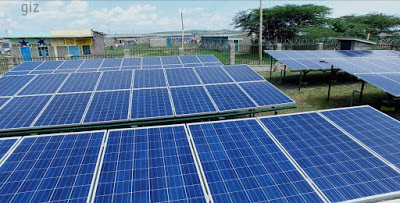
A
mini-grid is any electricity supply system with its own power generation
capacity, supplying electricity to more than one customer and which can operate
in isolation from or be connected to a distribution licensee’s network.
Within
the regulations, the term mini-grid is used for any isolated or interconnected
mini-grid generating between zero kilowatt and one megawatt of generation
capacity.
In accordance
with its power to make regulations, the NERC is currently working on a new
mini-grid regulation with the main objective of accelerating electrification in
areas without existing distribution network (also known as unserved areas) and
areas with an existing but poorly electrified or non-functional distribution
grid (also known as underserved areas) by attracting participation of private
sector, communities and non-governmental organizations in achieving nationwide
electrification. It is imperative to point out that the NERC intends to use the
draft Mini Grid Regulation to attract investments into mini-grids without
hampering the operational successes of the Discos. After a comprehensive review
of the draft Mini Grid Regulation, the question of whether the proposed
regulation shall work for investors’ spring to the mind of the writer of this
article. 

The Mini Grid
Regulations & Some of its Technical Issues
The
proposed regulation will provide massive investment opportunities for current
and potential mini grid power providers, solar power companies in particular,
as Nigeria has a serious resource advantage in that area. According to industry
experts, the regulation shall sought to minimize major risks associated with
mini-grid investments such as sudden tariff changes and stranded mini-grid
operator investments due to extension of main grid.
Engr.
Chinedum Ukabiala, the Deputy General Manager at NERC and the Head of Renewable
Research and Development (RRD), suggested that the strategic gains of the Mini
Grids Regulation to market players are that there is the opportunity to start a
small business in electricity generation and distribution and then expand to
bigger utility companies with the expected benefits of improved revenues and
returns. He believes that it is easier and simpler to start a small business
than large scale businesses in the electricity industry and this is more so
when the regulation will be light-handed.

Late
2015, NERC invited inputs from the general public whilst preparing the first
draft of the Mini Grid Regulation. Subsequently, NERC issued a statement which
said “The regulation seeks to minimize
major risks associated with Mini-Grid investments such as: (1) Sudden tariff
changes, as tariffs would have been agreed in advance by the relevant parties;
and (2) Stranded Mini-Grid operator investments due to extension of main grid
(into mini grid geographical locations). In such cases, a fair compensation
mechanism would be applied for Mini-Grid operators that choose to exit
.” 

It
is expected that the Mini Grid Regulations should aid in the improvement of the
state of power access in rural Nigeria while simultaneously providing an
opportunity to deploy more renewables such as solar instead of fossil-sourced
power. Additionally, the possibility of having these mini grid projects
completed in record time, relative to delays in main grid expansion also
provides an opportunity for rapid power-induced economic
development/industrialization in rural areas. Licensing burdens would
predictably also be reduced drastically or completely removed. Further, a
flexible tariff structure that is not over-regulated but would guarantee
returns on investment would be implemented. The Mini Grid provides a policy
also make recommendations to the Federal Government of Nigeria for specific
incentives and, especially, for Solar. It will remove exclusivity to the
geographical area of the (current) distribution companies.

The
manufacturing sector in Nigeria, which has long suffered due to lack of steady
power supply from the grid, should be a key benefactor of this Regulation.
Already many manufacturing hubs and organizations in Nigeria have been reliant
in one way or another on a certain form of mini grids, for example a shared
power plant and/or on-premise captive sources. However, the economics of
procuring power from these sources cannot be as advantageous as commercial and
third-party controlled distributed sources, where power providers will benefit
from the economies of scale in supplying several consumers, as well as the
improved efficiencies of hybrid mini grid systems (such as Solar/Diesel
hybrids). These and several other incentives will be cascaded to the connected
mini grid consumers. Thus as the regulation for mini grid owners/power
suppliers become better, consumers in turn receive more reliable and affordable
power.

In
spite of this and several other already completed reforms in the solar space in
Nigeria, there seems to be calls for more to be done, especially when one
compares Nigeria with some other solar markets in Africa. For example, while
the importation of solar panels enjoys free import tariff in Nigeria, to bring
in other components such as batteries used in setting up a solar power plant is
subject to an unfair tariff and Value Added Tax (VAT). Kenya is a good example
where the Energy Regulatory Commission (ERC) has zero-rated the import duty and
removed Value Added Tax (VAT) on renewable energy equipment and accessories
including solar.

The
Mini-Grid Regulation would drive new and improved investments in energy supply
solutions to rural communities in Nigeria. Apart from achieving deployment of
renewable energy sources, this regulation would help cut deficit in power
supplies in rural communities. At the time of writing this article, the new
regulation is still undergoing public consultation.

According
to the regulation, a mini-grid developer who intends to distribute power larger
than 100kW from the isolated mini-grid is required to apply for a mandatory
permit through NERC. However, if the generation capacity of the power station
installed is larger than 1MW, the plant is not a mini-grid under the proposed
regulation and other regulations apply. In order to encourage mini-grid
development in Nigeria, it is imperative that cost-reflective retail tariffs
should be utilized which is the intention of the regulation. It is the aim of
the tariffs to be higher than current electricity distribution company’s retail
tariffs.

Private
sector funding will play a key role in closing power supply gaps in the country
and this will not come unless the private investors are sure of favorable
return on their investment. NERC intends that the regulation takes measures to
de-risk investment in power supply infrastructure to attract necessary
financing.
The NERC‘s strategy is to use regulatory instruments to
promote not only the conventional sources but also all options for
sustainability including: energy efficiency, renewable energy, clean coal
technology, rural electrification, mini grid and distributed generation.

However, in spite of NERC’s intentions to put in a
regulatory framework to attract renewable energy based power and promote
sustainable energy economic growth, the proposed mini-grid regulation puts
mini-grid operators at the mercies of Discos, while ignoring and denying the
Nigerian customers the choice to access reliable power supply. For instance, Section
7(1)(b) of the Regulation requires that there must be confirmation of the
Disco’s expansion plans which have to be approved by NERC to ensure that the
mini-grid activities will not interfere with the expansion plans into the
designated Unserved Area of the Disco before a permit to construct an isolated
mini-grid can be granted.
There is need to clarify that the
mini-grid developer does not need to seek the confirmation of the distribution
licensee’s expansion plan; rather, they have to simply obtain the approval of
NERC. The Regulation should clarify the frequency and protocol for the
Distribution Licensees to submit their expansion plans to the NERC. This writer
further recommends that the Regulation should clarify the frequency and
protocol with which the Distribution Licenses are required to submit their expansion
plans to NERC as it is assumed that the Regulation assumes that Discos would
submit their expansion plans on their own volition. The Regulation does not ensure
that the Distribution Licensee has the resources to back up its expansion plan
and does not deprive a community their inalienable right to power supply that
could have been met by a mini-grid developer. Alternatively, the Regulation
should stipulate stringent penalties for a Distribution Licensee that does not
deliver on its published expansion plans.

Furthermore, according to Section 7(1) (c) of the
Regulation, the applicant must obtain a written consent of the Disco of the
intended area where the operational period of the mini-grid developer within
the five year expansion plans of the Disco.

It is the opinion of the
writer of this article that according to both Sections 7(1) (b) and (c), in
order for the end user (either underserved or unserved) to have access to
reliable electricity, via the mini-grid, they must not only have a written
consent from Discs approving this, but they must also have access to the five
(5) year expansion plans of the Discos, which must have been approved by NERC.

The writer envisages some
likely problems which may arise a direct result of the foregoing. Firstly, what
exactly are the expansion plans of the Discos? In a situation where the Discos
have come up with these plans, it would be helpful if these plans have already
been delivered to NERC for its approval. Further, if indeed the expansion plans
are with NERC, then why is NERC not making their plans public and taking full
responsibility for its implementation, so that the Nigerian public can know when
they can realistically expect access to steady electricity?

In addition, one wonders
what would happen if the Discos are unable to execute their plans after five
years having denied Nigerians access to electricity as well as the intended
investments by the mini-grid operator; as the new regulation neglected to
provide any sanction or penalty for such failure. It should be recalled that the
disclosure of the expansion plans of the Discos was a part of the criteria
during the handover of the Discos to the successor companies. However, till
date Nigerians are yet to see the plans.

It is suggested that Section
7(1) c should clarify that a written consent from the Distribution Licensee is
only necessary if a mini-grid developer chooses to develop in a location that
is already part of the published expansion plans of a Distribution Licensee. In
addition, where a mini-grid developer needs to seek the consent of a
Distribution Licensee, the regulation should make it clear that the latter has
to respond to the consent request within 30 days. The mini-grid developer may
assume consent in the event that the consent is not received within the
stipulated period.

Further to Section 7(1) (d) of the proposed regulation
electricity consumers in underserved areas cannot independently chose to set-up
their own isolated mini-grids. For example, an estate would not be able to
decide on its own to seek isolated mini-grids for supply of electricity in
place of an incapacitated Disco due to the fact that the estate is in an
unserved area (i.e. off-grid).

According to Section 7(1)
(g) of the Regulation, Mini-Grid developers are expected to ensure that “all
necessary land for construction and installation of all assets has been
acquired and all necessary permits have been granted to the Mini-Grid
Developer”. This provision assumes that the investor would have acquired all
the land and assets prior to securing the approvals. Although it is
understandable for NERC to insist on screening out investors who may not have
the prerequisite technical and financial capacities, it is important that it
does not douse the interest of potential investors. It is advisable for NERC to
balance the need to select credible investors with realistic demands from
investors. A number of the investors may need to first secure the approvals to
unlock the resources required to acquire the land and other assets. Many of the
financial investors may not wish to expend significant resources if there is a
risk that the approvals may not be obtained. NERC should issue the approval
once the investor is able to demonstrate their financial and technical
capabilities. For instance, in lieu of full payment for the land, NERC may
accept evidence of an option on the land and assets. The Regulation should
require investors to show that they have acquired land rights.
Section 17 (1) provides for
compliance to all existing environmental laws by Mini-Grid Operators. The Regulation
does not state explicitly if an Environmental Impact Assessment (EIA) is
necessary for all scales of mini-grid operations especially considering the
cost of these studies. It is the opinion of the writer of this article that to
safeguard against environmental hazards (such as improper solar battery
disposal), there should be a requirement for Mini-Grid developers to register
with the Federal Ministry of Environment. Furthermore, the FG should stipulate
and enforce the product standards for the various components used in the mini-grids
(batteries, panels, wires, etc.) and enforce a disposal programme that
safeguards the environment.

Pursuant to Section 10(2)
of the Regulation NERC is required to issue a permit pursuant to Section 7 or
Section 8 or approve a Tripartite Contract pursuant to Section 9 to an
applicant within a maximum period of 30 days from the date of receipt of
complete documentation. This Regulation fails to provide for any stipulations
(or penalties) to ensure NERC meets the 30-day timeline. It is recommended that
should a response not be received from NERC within the prescribed 30 day
period, the integrated mini-grid developer should deem the tripartite contract
approved.

Regarding inspection of
accounts, Section 13(7) and Section 13(8) of the Regulation pertains to the inspection
of accounts for the purpose of adjustment of tariffs and ascertaining
depreciated value as request by Mini-Grid Operator and inspection of accounts
for the purpose of adjustment of tariffs and ascertaining depreciated value as
requested by the Community. Both sections suffer from lack of clarity as to how
the amount referred to in Section 13(7) shall be computed and as to how NERC
shall pay the Community a fee in the event of the Community requesting to
inspect the accounts. It is suggested that the requisite clarity should be
provided in the aforementioned sections to eliminate any future disputes or
misunderstanding amongst stakeholders.

Another attempt at prevention
of dispute can be found in Section 20 (2) which pertains to determination of Tariffs
and Other Usage Charges. Here the Regulation stipulates that interconnected
mini-grid operators shall pay the Distribution Licensee a usage charge that
shall be agreed upon between both parties and NERC. However, where the
Interconnected Mini-Grid Operator and the Distribution Licensee are unable to
agree on the usage charges, the methodology described in Annex 8 shall be
applied as a guideline. The next logical question is whether Annex 8 provides
clarity on the methodology for calculating usage charges for interconnected
min-grids or if such could lead to disputes? The Regulation should be more
explicit (preferably with a formula) on how the usage charges should be
determined. Lack of clarity may likely result in disputes. Furthermore, Annex 8
should provide clarity on how disputes should be resolved in a cost and time
efficient manner.

Although the opportunity for mini-grids to come to
fruition is commendable, it is important that NERC provides policies, laws and
regulations that would protect and improve the lives of Nigerian citizens.
There should be avenue for increased competition and innovation to achieve
this. There should provisions in the proposed regulation that would compel the
Discos to disclose publically their five (5) years expansion plans, as well as
review the mini-grid regulation to reflect the interest of the Nigerian electricity
consumer at the core. This is can only be guaranteed when the Nigerian energy
consumers are availed the opportunity of choice.

It is encouraging to note that the Regulation already
seeks to minimize major risks associated with mini-grid investments such as
sudden tariff changes and stranded mini-grid operator investments due to
extension of the main grid to cover the mini-grid area. This basically permits
a fair compensation mechanism that may be applied for mini-grid operators that
choose to exit at any time.

The 2016 Mini-Grid
Regulation adds to the growing list of draft and approved policies and plans
for the renewable energy market in Nigeria. The increased activities in the
off-grid renewable energy market (signaled by the increase in policy documents)
are encouraging; however, investors need clarity on the approved policies and
plans for the sector. There is need for an integrated and comprehensive
national electrification plan that harmonizes the various plans. The national
electrification plan should consider the various regions viable for mini-grids.
It should delineate the areas that are best served by on-grid distributors.
Several factors should be considered in creating this plan including cost
effectiveness, natural resource availability, and the infrastructure capacities
of the Discos. Furthermore, the plan should integrate the various resource
plans that have been developed by Discos, government and development agencies
in the power sector. The resource should be public and easily accessible.

Conclusion
The Draft 2016 Mini-Grid
Regulation lays the groundwork to the emerging frontier in Nigeria’s
electricity supply industry. Given the current state of grid power in Nigeria,
an alternative is needed to provide electricity to the over 100 million
Nigerians who do not have access to grid power. Mini grids have revolutionised
other smaller countries in Africa, Asia, and South America and there are
promises and lessons to be learned from those experiences.
At the time of writing this article, NERC has
reiterated its
optimism that the draft Mini Grid Regulation
will become law in the first quarter of 2017. Stakeholders’ views have been
taken and deliberated upon. It is the wish of the writer of this article that
NERC may consider the recommendations made here in to achieve the progress and
development of Nigeria’s power sector.


OKEZI OKAH-AVAE 

Okezi is an Energy
& Natural Resources, Senior Associate at Bloomfield Law Practice

 Photo Credit – www.youtube.com 
Lawyer Profile – Babatunde Fagbohunlu, SAN

Lawyer Profile – Babatunde Fagbohunlu, SAN


Tunde Fagbohunlu SAN is a Partner and
heads of Litigation, Arbitration and ADR Practice Group. Tunde joined the
firm of Aluko & Oyebode (Barristers & Solicitors) in 1993. 

He specializes in commercial litigation and
has litigated on extensive range of issues, including that pertaining to oil
and gas, maritime, intellectual property, telecommunications, taxation, finance
and banking, contracts, receiverships and insolvency, commercial law
transactions and general litigation both at trial and appellate levels. 
Tunde has represented various clients
including oil companies, telecommunication companies and banks both in
litigation and arbitration proceedings. He renders legal advice on a wide range
of commercial transactions.
He regularly represents Nigerian as well as
foreign and multinational clients in ad hoc arbitrations and arbitrations
administered by arbitral institutions such as the International Court of
Arbitration of the ICC. 
Tunde was a member of the national
committee on the Reform and Harmonization of Arbitration/ADR Laws in Nigeria.
In Chambers Global 2013 legal rankings he
was described as “hard-working and thorough”respected by
peers for his litigation skills, and is also increasingly involved in
arbitration.
Tunde’s expertise has also been recognised
in publications such as Who’s Who Legal Nigeria 2010 and 2012. Where he was
described as a “fantastic litigator” and (2012), he was noted for his
“craftsmanship” in constructing legal arguments when representing international
entities in arbitration proceedings. 
Tunde obtained a Bachelor’s degree in law
(LLB honors) from the University of Ife, Ile Ife, Nigeria, and an LLM from the
University of Lagos, Nigeria, in 1987 and 1991 respectively. He is a barrister
and solicitor of the Supreme Court of Nigeria (admitted 1988).
In December 2008, Tunde was conferred with
the rank of Senior Advocate of Nigeria (SAN) by the Nigerian Legal
Practitioners Privileges Committee. A Nigerian equivalent of the Queen’s
Counsel.
Tunde participated in the International
Arbitration Seminar: Transnational Arbitration Issues in Emerging Markets
(jointly organized by Aluko & Oyebode and Clyde & Co) Lagos, Nigeria
(February 2011). He was also a speaker at the ICC, UK Annual Arbitration 
Practitioners’ Symposium, London, England (July 2010).
Education
·        
1991
– University of Lagos, LLM
·        
1988
– Nigerian Law School, BL
·        
1987
– University of Ife, LLB

Provision of the Constitution on Acting President | Adedunmade Onibokun

Provision of the Constitution on Acting President | Adedunmade Onibokun


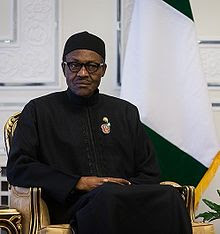
Muhammadu Buhari,
President of the Federal Republic of Nigeria on the 5
th of May,
2017, transmitted a letter to the Senate President, Dr. Bukola Saraki informing
the National Assembly of a Medical follow – up trip to the United Kingdom. In
the said letter, the President further stated that the Vice – President, Prof.
Yemi Osibajo will coordinate the affairs of government while His Excellency is
away.

In
the above mentioned letter, the President stated –
“In compliance with
Section 145 (1) of the 1999 Constitution
(as amended), I wish to inform the distinguished Senate that I will be away for
a scheduled medical follow-up with my doctors in London. The length of my stay
will be determined by the doctor’s advice. ‘‘While I am away, the
Vice-President will coordinate the activities of the government. Please accept,
the distinguished Senate President, the assurances of my highest
consideration.”
This has resulted into debates on many
forums about use of the word “coordinate” by the President and questions have
been asked if the President erred in this regard. This post seeks to enlighten
Nigerians on the provisions of the Constitution as it relates to the above
mentioned scenario.
Many commentators have stated that the transmission
of power to the Vice-President is not clear while other conspiracy theorists
had also began to spin stories of tight grips on power. The Nigerian Senate was
also not left out of the debate as deliberations were made on the floor of the Chamber.
It is important to point out that the
relevant provision of the law is Section
145
of the Nigerian Constitution. It provides thus –
“Whenever
the President transmits to the President of the Senate and the Speaker of the
House of Representatives a written declaration that he is proceeding on
vacation or that he is otherwise unable to discharge the functions of his
office, until he transmits to them a written declaration to the contrary such
functions shall be discharged by the Vice – President as Acting President”.
The above section of the Constitution if
given its literal meaning is clear. It can also be seen from the words of the
law, that it is not mandatory for the President to name the Vice- President as
Acting – President. It is clear that once the President writes to the National
Assembly of his unavailability, the role of Acting President automatically
falls on the Vice – President. Even though the name of the Vice – President is
not specifically mentioned in the letter.
From the above, it is clear that the
President erred in no way and even went further than the letter of the law to
name the Vice-President as the person whom will coordinate the affairs of
government. Which according to the law is just a mere formality.
Adedunmade Onibokun, Esq.  
Principal
Partner
Adedunmade Onibokun & Co.

Photo Credit – www.wikipedia.com 
Police Bail is free or so they say | Adedunmade Onibokun

Police Bail is free or so they say | Adedunmade Onibokun


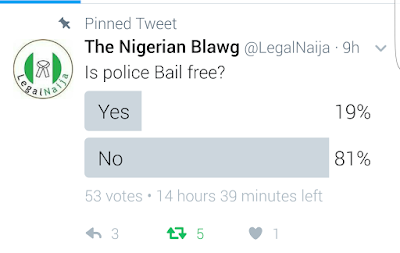
It has been made known time and time again,
that Police bail is free. The words “bail is free” have been recited by
officers of the Nigerian Police on several occasions, so –
 

1.     Why is bail still
collected in Nigerian police stations?
2.     What is the money
collected as bail used for?
On the 2nd of May, 2017, The
Punch Newspapers, broke a story about a 50 year old photographer who died
shortly after being released on bail. The said newspaper article is available here.
The photographer allegedly died as a result of torture in the hands of the
police but that allegation is being investigated and not the purpose of this
article. In this post, I will like to bring to the fore other elements of the
story.
According to the news report by The Punch
Newspaper, Mr. Kola Adeyeye, a photographer had been arrested alongside 4(four)
others. At the time of his arrest, no criminal allegation was made against him
and all he happened to be doing was drinking herbal concoctions at a local spot
where it was sold. Mr. Adeyeye was then taken to a Courtyard, where the head of
the Special Anti-Robbery Squad (SARS) team who made the arrest interviewed
them. The Head of the SARS team cleared them of any wrong doing but ordered
that they pay for bail before they could be released from detention. It was
learnt that while others paid between N25,000
and N40,000 and were set free, Mr.
Adeyeye was remanded because he could not raise the bail sum and was reportedly
kept in detention for 7 (seven) days until his pastor came to bail him with N3,500. N2000
was paid while the deceased’s phone was seized until he came back to pay the
remaining N1,500. Mr. Adeyeye then died
on the motorcycle that was taking him home.
From the above report, I have raised the
following questions that need to be determined;
a.     If bail is free,
how come the head of a Special Anti – Robbery Team could demand for it?
b.    If bail is free,
how come Mr. Adeyeye was not released from detention unconditionally even after
he was cleared of any wrongful act?
c.      If bail is free,
what happened to the monies paid by the other people arrested alongside Mr.
Adeyeye?
d.    If bail is free,
does it mean the Head of the Special Anti – Robbery Squad is himself a robber?
e.     If bail is free,
can the leadership of the Nigerian Police force admit to not knowing that bail
money is still collected in police stations across the country?
f.       If bail is free,
does it mean police officers who demand for bail are part of criminal racketeering
enterprise within the Nigerian police?
I will leave the questions to be answered
by the Inspector – General of Police or Mr. Yomi Shogunle, Assistant Commissioner
of Police, Public Complaints Rapid Response Unit, he can be reached via his
twitter handle @yomishogunle.
However, because bail is free, I will
recommend that if any police officer demands bail from you, please make a
complaint by contacting the Police Complaints Unit via 08057000001 or via the website
npf.gov.ng/complaint/ . Don’t forget,
just the way bail is free in Nigerian police stations, the police is also your
friend.
Adedunmade Onibokun, Esq.

Photo Credit – www.nigeriapolicewatch.com 
Joint Operating Agreements | Onyeka Obidi

Joint Operating Agreements | Onyeka Obidi


(10 years ago *gasp*, I wrote this essay –
which may or may not be terrible – on JOAs back in Aberdeen. Back then, I was
chomping at the bits to be done with my Masters and working in the oil field.
Alas… anyway, I was trawling through essays written back then, way back then
and I came across this one. I chuckled to myself as I read through it, and then
I decided to put it up and see what the public might make of it. Without
tweaking a word or editing – so forgive all typos and structural problems – here’s
my short essay on JOAs)
J

Oil exploration, no matter how rewarding it
is on the chance of said exploration being successful, is fraught with
extremely high risks, costs and liabilities. In order for oil companies,
especially international oil companies to go about exploring, developing and
producing hydrocarbon reserves, it is crucial and more advantageous for said
companies to pool their resources together thereby minimizing the risks, high
costs and liabilities that go hand in hand with petroleum exploration as well
as realizing maximum rewards. This is especially crucial due to the fact that
these companies will be based in different countries all over the world thus
increasing said risks and liabilities.


There are different ways via which oil
companies could form a joint venture through which this could be achieved and
the most common of these ventures is the Joint Operating Agreement.[1] This
agreement is viewed as being very beneficial to international oil companies due
to various reasons and the aim of this essay is to describe the key features of
this arrangement as well as highlight its advantages as opposed to other
agreements or types of joint ventures. This will be achieved by stating what a
Joint Operating Agreement is and then describing its key traits and benefits
ergo, explaining why international oil companies prefer to enter into such
arrangements.

A Joint Operating Agreement[2] is
a contractual agreement between two or more parties establishing and setting
out the terms of a joint venture between them under which petroleum
exploration, development and production operations will be conducted.[3] It
is the common means by which businesses come together as a joint venture in
their search for and production of oil and gas both within the United Kingdom
Continental Shelf and internationally. This agreement is regarded as very
important and necessary especially with reference to international oil
companies as the oil and gas industry is a high-risk, high-cost enterprise with
a heavy frontloading of costs.[4]
The JOA is known for its remarkable
features which distinguishes it from other forms of joint ventures. Firstly,
the JOA is not a legal entity. This agreement is purely contractual without the
involvement of any legal entity[5] as
the parties to the contract decide among themselves the manner in which their
joint objectives will be achieved.[6] As
stated by J. Ellison and E. Kling[7], ‘there
exists neither a single body of the United Kingdom law nor a distinct legal
entity dedicated to the formation and operation of joint ventures, neither is
there a dedicated body of law.’ This therefore means that the parties engaged
in this agreement can, in their discretion, agree on how issues like funding,
management etc. can be tackled, amongst other things.

Secondly, the co-venturers have no
authority to bind one another[8] i.e.
an operator or manager is interposed between the parties of the agreement and
the operation itself hence leaving them with no authority to bind one another
as agents.[9] Also,
the co-venturers attempt to create several liabilities.[10] This
is in the sense that there is a lack of mutual liability between the parties as
each co-venturer will be liable for his own acts and omissions in the course of
the arrangement.

Again, co-venturers take the fruits of the
venture separately and in kind[11] i.e.
each party has the right to take its share of petroleum in kind and dispense of
it separately in its own business. This is regarded as a very important feature
as it distinguishes the JOA from other forms of joint venture particularly
legal and/or corporate partnership. This shall be tackled further-on in the
essay.

These are but a few of the key features
which the JOA possesses, and this includes that of co-venturers having the
power to hold their assets in common. Regardless of how beneficial they may
seem, one cannot help but wonder why international oil companies choose to
enter into these agreements as opposed to the other ways via which a joint
venture could be established. This is due to the fact that these other
arrangements also achieve the same purpose of uniting different parties from
all over the world in their common goal of making profit yet reducing risks and
costs. An example of these forms of joint venture is the joint venture company.
This is an arrangement set up for the purpose of said joint venture as well as
acting as the company’s shareholder. It is regarded as the most popular legal
structure for joint ventures and is viewed as a separate legal personality from
the shareholders. This inevitably exposes the company to the financial and
commercial risks involved in the joint venture thereby protecting them from
losses, were the joint venture to fail[12].

Another form of a joint venture is the
partnership joint venture. Under the Partnership Act 1980[13], a
partnership is defined as ‘the relation which subsists between persons carrying
on a business in common with a view of profit.’ According to Kling and Ellison,
the establishment of a partnership gives rise to a vehicle that can be used for
the creation and operation of a jointly owned business.[14] In
this instance, theoretically[15],
a partnership offers the parties an independent identity i.e. the firm operates
under a name that is different from its partners and ‘may open a separate bank
account, may sue or be sued in its own name and may not appear to be affected
by the comings and goings of partners’[16]. This
form of joint venture is described by some[17] as
‘the most suitable form to use in instances where the parties wish to establish
a collaborative structure without the administrative formalities and the
accounting transparency of a corporate vehicle.’

As indicated above, there are different
ways via which international oil companies can go about the oil exploration,
development and producing business, however these companies have a preference
for joint operating agreements regardless of how suitable the other agreements
may seem. This is as a result of a large number of reasons. Firstly, unlike
other types of joint ventures, the JOA structure offers total tax transparency[18]. This
is due to the fact that there is an absence of a joint entity thus the parties
to the contract are able to deal with the tax on their own profit in accordance
with their own circumstances, as well as plan his/her own tax affairs
individually without interference from another party. According to Styles[19], ‘the
unincorporated joint venture has been favoured by the oil industry over other
possible models such as legal partnership or incorporation because of the tax
advantages it provides…which is possible under the JOA’. This is in sharp
contrast with the partnership venture.

Further, international oil companies,
particularly those holding smaller interests will benefit more from a JOA as
this arrangement possesses the unique ‘pass mark trait’. The pass mark is the
‘percentage interest share of votes which must be obtained before the Operating
Committee may make a binding decision[20].’ The
importance of this trait lies in the fact that parties with large interests
inadvertently hold the dominant position if a low pass mark is given and this
leads to those possessing lesser interests to lose out on the making of
important decisions during negotiation. Thus, the pass mark is hardly ever less
than 50 percent as it will inevitably lead to a large interest holder being
dominant. 70 percent is suggested as a common level[21],
although the outcome of agreeing on the exact pass mark depends on the degree
of trust the parties have in each other as well as their contractual strengths[22]. This
lays in sharp contrast to the corporate partnership whereby unanimity is of the
essence in all major decisions. There can be no negotiations between parties as
to a majority of votes. Rather, there has to be a unanimous agreement and this
could lead to time-wasting in decision making as parties might reach a
stalemate if a unanimous vote is not achieved as quickly and efficiently as
possible. As for the joint venture companies, especially under the United Kingdom
legislation, ‘the holder of a 75 percent interest can ensure the passing of a
special resolution…and anyone holding more than 50 percent will be able to
pass ordinary resolutions.’[23] This
suggests that a large interest holder could invariably possess the power to
make ordinary or even ‘special’ resolutions regardless of whether other parties
agree with his decision or not.

Again, the JOA has the advantage of its
formation being relatively easy as well as its mode of operation being informal[24]. With
regards to the former, there is a lack of an independent vehicle or body of law
prescribing formalities that need to be observed thus these arrangements can be
set in place economically and without any unnecessary fuss. This is in contrast
to the formation of a joint venture company as its formation is dictated by the
Companies Act 1985 thus rendering it more complex, time consuming and lastly,
costly. Regarding the latter, the mode of operation in a contractual joint
venture is relatively flexible as there is no joint venture vehicle in which
the parties have an equity interest unlike the joint venture companies and
partnership which are legal entities thus the dictates of the aforementioned
Act require a ‘more formal administrative framework especially in respect of
board meetings, general meetings or directors’ duties.’[25]
Another reason international oil companies
choose to enter into a JOA is due to the distinctive clauses the arrangement is
party to i.e. the sole risk and non-consent clause. With reference to the
former, if one fails to obtain the pass-mark, one could still go ahead with his
decision. As incompatible as this may seem to the idea of a joint venture, it
can be seen as a form of giving every member a chance regardless of whether a
pass mark is obtained or not. This is also evident in the latter (non-consent),
whereby the members who do not intend to participate in a decision agreed upon
by the majority does not do so. This gives everyone a chance to engage in their
own dealings and an opportunity buy themselves back into the engagements they
opted out of regardless of how large the premium could be.

With regards to ways in which joint
ventures could be terminated, JOAs are easier to terminate as they are
prescribed solely by contract and typically address a specific business project
hence they can end the arrangement if decided upon together or once the project
is over. This is unlike other forms of joint ventures like a partnership whereby
statutory rules have to observed before termination can take place e.g. the
Insolvency Act 1986 regarding liquidation and the Partnership Act 1980 on
issues of dissolution[26].

The biggest bone of contention lies within
the thin line between a partnership joint venture and the JOA. Members of the
JOA are adamant about their agreement not being mistaken for a partnership.
This is due to a number of reasons: tax benefits shall be lost if the agreement
is mistaken for a partnership, and minimisation of liability amongst the
parties to a JOA unlike those in a partnership. Again, under the JOA, each
party has the right to take and dispose of separately its share of the
petroleum gained. This clearly emphasises that the common enterprise of the
joint venture is limited to the exploration and production of the oil and gas
which the parties hold in common[27]. This
is different from a partnership whereby there is joint disposal of the product
for mutual profit. This is also similar to profit-making by the parties in a
partnership. As stated in the aforementioned Act[28], a
partnership constitutes of the sharing of profit by its parties and the mode of
taking separate profits in the JOA might be regarded as not being so
indistinguishable from the way profit is shared in a partnership. Although it
has been expressly stated that ‘it is not the purpose or intention of this
Agreement to create, nor shall the same be construed as creating,
any…partnership’,[29] the
courts are of the opinion that regardless of the express denial of any
formation of a partnership by the JOA, ‘if a partnership exists…no concealment
of name, nor verbal equivalent for the ordinary phrases of profit or loss…will
prevent the substance from and reality of the transaction being adjudged to be
a partnership.’[30] This
has led to the argument by G Lewis[31] that
a JOA ‘does not involve the sharing of gross returns,’ however ‘each
participant is entitled to and bound to take in kind its share of the crude or
the gas which is produced’ as well as being able to ‘sell its share for its own
account’. Hence, ‘these arrangements do not amount to a sharing of profits
which the Partnership Act definition requires and in effect the participants
share the expenses of the production, but sell the products separately.’
From all that has been stated above, one
sees that a JOA is extremely vital to ‘such powerful players as international
oil companies’ regardless of the slight confusion that could arise due to
arguments as to whether it is viewed as a partnership or not. The courts are
even deemed to be fairly reluctant to argue against what has been expressly
stated in a contract except if blatantly disregarded. Although other joint
ventures are important in their own ways, the JOA trumps them all as it covers
virtually all bases that international oil companies might view tentatively.
Therefore, it is not surprising in the least for one to be of the opinion that international
oil companies choose to enter into these arrangements.
[1] Also
known as a Contractual Joint Venture
[2] Hereby
referred to as a JOA
[3] T
Winsor and S Tyne, Taylor and Winsor on Joint Operating Agreements (1992), p
xix
[4] Styles
[5] Stephen
Sayer ‘Negotiating and Structuring International Joint Venture Agreements’ Vol
5 of the Dundee University CPML web journal:
http://www.dundee.ac.uk/cepmlp/journal
[6] J
Ellison and E Kling, Joint Ventures in Europe (1997) p 315
[7] supra
[8] G M
D Bean, ‘Fiduciary Obligations and Joint Ventures: the collaborative fiduciary
relationship,’ (1995) p 8
[9] J D
Merrals, “Mining & Petroleum Joint Ventures in Australia: Some basic
concepts,” (1998) p 909
[10] Ibid
G M D Bean
[11] Ibid
J D Merrals
[12] Ibid
Stephen Sayer ‘Negotiating and Structuring International Joint Venture
Agreements’
[13] Section
1
[14] Ibid Ellison
& Kling pg 329
[15] theoretical
because in practice the law does not regard its members as being independent in
English law and even if it was recognised the members themselves are still
party to unlimited liability.
[16] Ibid
Ellison & Kling
[17] Ibid
Stephen Sayer ‘Negotiating and Structuring International Joint Venture
Agreements’
[18] Ibid
Ellison and Kling p 317
[19] Styles
[20] Styles
[21] supra
[22] supra
[23] Dundee
[24] Ibid
Ellison and Kling pp 315-16
[25] supra
[26] Ellison and Kling p 317
[27] Stephen Sayer ‘Negotiating and Structuring
International Joint Venture Agreements’
[28] Partnership Act 1980 Section 1
[29] UKOOA 20th Round Draft Joint JOA, cl
21.2.1
[30] Adam v Newbigging (1888) 13 App Cas 308 at
315
[31] G Lewis, Comment: the Joint Operating
Agreement: Partnership or Not? (1986) 4 JENRL 80-84

Onyeka Obidi
Legal Counsel & Writer
Ed’s Note – This article was first published here
Photo Credit –
1. www.oilandgaslawdigest.com
2.  www.vancourier.com