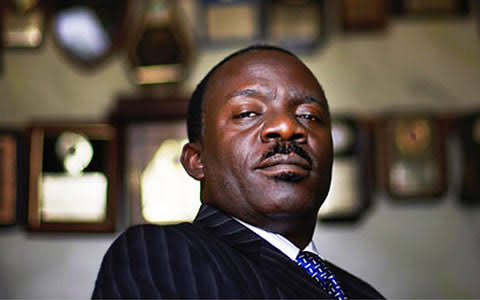
The Proposed NGO Regulation Bill  #NoNGOBillNG | Adedunmade Onibokun

The Proposed NGO Regulation Bill #NoNGOBillNG | Adedunmade Onibokun


“A dynamic and autonomous civil society, able to
operate freely, is one of the fundamental checks and balances necessary for
building a healthy society, and one of the key bridges between governments and
their people. It is therefore crucial that NGOs are able to function properly
in countries in transition, as well as in established democracies,”
Navi Pillay
High Commissioner
for Human Rights
United Nations

Over the past few months, there has been national
uproar over a very controversial Bill currently being debated by the National
Assembly, particularly the House of Representatives. Not only has this Bill
been denounced by Civil Society and other well-meaning Nigerians. The existence
of the Bill in itself is proof of the intention of federal lawmakers to silence
dissent and crush the activities of Civil Society that may seek to differ from Governmental
agenda.
Below are vital portions of the proposed
Bill which should get the attention of all Nigerians and the international
community with a view to forever silencing the Bill and raise our voices
against this Bill of the National Assembly which seeks to deprive Nigerians of
the right to hold government accountable.  
The Bill which is described as an act to
provide for the establishment of the Non-Governmental Organisations Regulatory
Commission for the supervision, co-ordination and monitoring of NGOs and Civil
Society Organisations in Nigeria is sponsored by Hon. Umar Buba Jubril from
Kogi State.
According to Section 7 of the proposed
Bill, the objectives of the commission includes –
a.     To enable the
transparency and accountability of the operations of Non-Governmental Organisations
and Civil Societies to accomplish their missions according to the law.
b.    To ensure the transparency
and accountability of the operations of NGOs and Civil Society.
c.      To supervise NGOs
and Civil Societies to ensure that they operate according to the law.
Furthermore, Section 8 of the proposed Bill
further provides for the functions of the Commission to include –
a.     
To facilitate and coordinate
the work of all national and international NGOs operating in Nigeria.
b.    
To maintain the
register of national  and international
NGOs operating in Nigeria, with the precise sectors, affiliations and locations
of their activities;
c.     
 To receive and discuss the annual reports of
the NGOs
d.    
 To advise the Government on the activities of
the NGOs and their role in development within Nigeria;
e.     
To conduct a
regular review of the register to determine the consistency with the reports
submitted by the NGOs and the council;
f.      
To provide policy guidelines
to the NGOs for harmonizing their activities to the national development plan
for Nigeria;
g.    
To receive, discuss
and approve  the regular reports of the
council and to advise on strategies for efficient planning and co-ordination of
the activities of the NGOs in Nigeria;
h.    
To receive, discuss
and approve the code of conduct prepared by the Council for self-regulation of
the NGOs and activities in Nigeria; and
i.      
Doing all such
things incidental to the foregoing functions which in the opinion of the Board
are calculated to facilitate the carrying on of the duties of the Commission
under this Act.
The
proposed Bill not only seeks to stifle dissent but it also proposes to
duplicate the functions being served by other existing legislations. Such legislation
includes the 1999 Constitution; Companies and Allied Matters Act (CAMA) of
2004; Companies Income Tax Act (CITA) of 2004; Value Added Tax Act of 1993;
FIRS Act; Personal Income Tax Act of 2011 etc. Furthermore, the Bill seeks to
create a commission whose establishment will lead to an increase in government
overhead, at a time when the government is currently spending N165 billion monthly on salaries of
federal civil servants.
The
Bill states in Section 11 that all NGOs shall be registered and shall among
other things state their sources of funding; location of their activities;
average annual budget; national and international affiliations and any other
information as may be prescribed.  However,
all NGOs are already registered by the Corporate Affairs Commission and granted
legal personalities under Part C of the Companies and Allied Matters Act (CAMA).
 The Bill also empowers the Commission to
exempt any NGOs it deems fit from registering. This will allow government to immediately
withdraw the registration of any NGO that dissents or objects to government actions
or policies in any way.
Furthermore,
any NGO which is not registered under the Commission, shall be unable to
operate in Nigeria, despite having attained legal status under the law. Registration
of which must be renewed every 24 (Twenty-Four) Months and can be denied if
seen to be against national interests or terms and conditions for certification
varied.The Commission shall also review and approve work permits for staffs of
NGOs.
The
proponents of the Bill argue that the requirement for CAC registration is not
sufficient for NGOs but this argument is similar to stating that all companies
in Nigeria must be registered by another government agency for the purposes of
monitoring. It is also claimed that the aim of the Bill is to ensure NGOS who
receive donations, do not abuse the funds collected in order not to soil the
image of the country. The Commission shall also issue a Code of Conduct to
regulate the funding and foreign affiliations of NGOs.
Clearly
the true intention of the Bill is to stifle the voice of Civil Society and it
should not see the light of day. Civil society is the conscience of a country
and must not silenced.   
Adedunmade
Onibokun

The Nigerian Worker And Occupational Hazards | Eberechi May Okoh

The Nigerian Worker And Occupational Hazards | Eberechi May Okoh

May 2017 –
Stacey who works in a salon in Port Harcourt was hit by a car while going
across the road to fetch water to wash a customer’s hair. The salon usually has
water facilities but is undergoing a renovation which causes interruptions to
their normal water supply. The accident resulted in a broken bone which has
placed her off work and off earnings. This represents the kind of situations
the Employees Compensation Act was enacted to deal with.

Employees
compensation in Nigeria is governed by the Employees Compensation Act Cap E7A,
LFN 2004 [ECA] and administered by the Nigeria Social Insurance Trust Fund
Management Board [Board]. In countries with a robust legislative framework,
occupational health and safety legislations set the tone for how employers should
make work places safe. With such legislation in place, the occasion for
employee compensation should be minimized. As at today, occupational health and
safety in the work place in Nigeria is regulated by the Factories Act Cap F1,
LFN 2004. This Act has long become moribund with several attempts by erstwhile
National Assemblies to repeal it and enact an Occupational Safety and Health
Act. As at the 9th of March 2017, the Senate read the current Occupational
Health and Safety Bill for the second time and referred it to the Senate
Committee on Labour and Productivity. It remains to be seen if the current
National Assembly will achieve success in repealing the Factories Act and
replacing it with a much-needed Occupational Health and Safety Act.
The crucialness
of occupational health and safety was buttressed at an event held in Abuja in
April to commemorate the 2017 World Day for Safety and Health at Work. Mr.
Dennis Zulu, the Country Director for the Nigerian International Labour
Organization (“ILO”) office represented by Mr. Aly Cisse, the office Chief
Technical Advisor stated that “ILO statistics show that a worker dies every 15
seconds while 153 workers have work-related accidents every 15 seconds
globally”. He further revealed that 6, 300 people die daily as a result of
occupational accidents or work related diseases[1].
The absence of an
occupational health and safety legislation that addresses present day
work-place realities sets the mode for increased cases of employee
compensation.
The ECA which
repealed the Workmen’s Compensation Act has the objective of providing an open
and fair system of guaranteed and adequate compensation for all employees or
their dependents for any death, injury, disease or disability arising out of or
in the course of employment. It provides for a minimum monthly contribution of
one per cent of the total monthly payroll by employers. It is noteworthy that
this contribution is not to be deducted from the remuneration of the employee
and thus constitutes an additional employment cost to employers.
In addition to
accidents occasioned in the workplace, the ECA covers injuries sustained
between the work place and the employee’s residence; the workplace and the
place where the employee usually takes meals; the work place and the place
where remuneration is usually received provided the employer has prior
notification of such place.  
 It also covers injuries sustained
where the employee is required to work both in and out of the workplace or
where the employee has the permission of the employer to work outside the
normal workplace. The Act lists several injuries and diseases and conditions
under which compensation will arise. The percentage of compensation and the
periods of payments are also provided for.
The ECA
anticipates coverage for all workers in Nigeria and defines an employee to
include persons employed under continuous, part-time, temporary, apprenticeship
or casual basis including domestic servants. The definition covers oral and
written contracts of employment. The Act specifically provides that in the case
of independent contractors and sub-contractors, the person or organization
engaging the service and the independent contractor shall be jointly liable for
assessments under the Act relating to that work.
The claims
procedure begins with an injured employee, or in the case of death the deceased
employee’s dependant, informing the employer of the injury or death and the
particulars of the injury within fourteen days of occurrence or receipt of
information of occurrence. The employer in turn has an obligation to make the
report to the Board within seven days of receiving the information. By the
provisions of the law, the application for compensation to the Board ought to
be made within one year after the date of the death, injury or disability.
Failure to make the application within the prescribed time may disentitle the beneficiary
to compensation unless the Board is satisfied that special circumstances
precluded the filing of an application within the first year. In practice,
employees sustaining work related injuries may be treated by their employers
who in turn make claims to the Board for reimbursements with documented
evidence of expenses and proper medical reports. In the case of death, the
Board makes payments directly to the deceased’s dependants.
As earlier
stated, the essence of the ECA is to provide an open and fair system of
guaranteed and adequate compensation for all employees or their dependants for
any death, injury, disease or disability arising out of or in the course of
employment. The question however is:  how do these benefits become
accessible to Stacey and the numerous undocumented workers who get injured
daily?
Clearly, the
current national economy and employment disequilibrium affords little incentive
for an employer of unskilled labour or casual workers to comply with the ECA.
This is further worsened by the fact that most casual workers are completely
undocumented. The employees on the receiving end will also rather keep a job
than worry about a lack of coverage in the event of a work-related injury or
disease. Accordingly, employees such as Stacey for whom remittances are not
made, will never get compensated. Unfortunately, many Nigerian citizens
employed on temporary or permanent basis whose employments are not divulged to
the Board could die while carrying out their works and such deaths will never
be compensated for.


Eberechi May Okoh
Senior Associate at Streamsowers & Kohn
Ed’s Note – This article was first
published here

Who gets paid first when a company goes into liquidation?  | Rosemond Phil-Othihiwa

Who gets paid first when a company goes into liquidation? | Rosemond Phil-Othihiwa

The order in which assets of the company are
to be applied is laid down in both the Companies and Allied Matters Act and the
Companies Winding Up Rules. Certain debts must be paid in priority to all other
debts and they will rank equally among themselves and be paid in full unless
the assets are not sufficient to meet them in which case they will abate in
equal proportions and so far as the assets are insufficient to meet the claims
of creditors, these debts have priority over the other debts and may be paid
out of property subject to a charge.

  
Section 494 of the Companies and
Allied Matters Act C20 LFN, 2004 
states:
(1)                   
In
a winding up there shall be paid in priority to all other debts –
(a) All local rates and
charges due from the company at the relevant date, and having become due and
payable within 12 months next before that date, and all Pay-As-You-Earn tax
deductions, assessed taxes, land tax, property or income tax assessed on or due
from the company up to the annual day of assessment next before the relevant
date, and in the case of Pay-As-You-Earn tax deductions, not exceeding
deductions made in respect of one year of assessment and, ion any other case,
not exceeding in the whole one year’s assessment;
(b) deductions under
the National Provident Fund Act 1961;
(c)  all wages or salary
of any clerk or servant in respect of services rendered to the company;
(d) All wages of any
workman or labourer whether payable for time or for piece work, in respect of
services rendered to the company;
(e)   All accrued holiday remuneration becoming
payable to any clerk, servant, workman or labourer (or in the case of his death
to any other person in his rights) on the termination of his employment before
or by the effect of the winding up order or resolution;
(f)    Unless the company is being wound up
voluntarily merely for the purpose of reconstruction or of amalgamation with
another company or unless the company has at the commencement of the winding up
under such a contract with insurers as is mentioned in section 26 of the
Workmen’s Compensation Decree 1988, rights capable of being transferred to and
vested in the workman, all amounts due in respect of any compensation or
liability for compensation under the Decree aforesaid, accrued before the
relevant date.
 When the liquidator has collected the
assets, and provided for the costs and expenses of winding-up and for the
preferential debts, he will proceed to distribute the assets among other
creditors.
The distribution takes the form of
declaration and payment of dividends so that if there are insufficient assets
to meet all the claims of the creditors, they are paid in proportion to the
amount of their claims.
 493.        In
the winding up of an insolvent company registered in Nigeria the same rules
shall prevail and be observed with regard to the respective rights of
secured and unsecured creditors and to debts provable and to the valuation of
annuities
 and future and contingent liabilities as are in force for
the time being under the law of bankruptcy in Nigeria with respect to the
estates of persons adjudged bankrupt, and all persons who in any such case
would be entitled to prove for and receive dividends out of the assets of the
company may come in under the winding up and make such claims against the
company as they respectively are entitled to by virtue of this section.
Secured Creditors
Any unclaimed share is paid into the
company’s liquidation account and any person entitled may apply to the
Commission which may if the liquidator so certifies, make an order for payment.
 Section 516 CAMA states
thus:
 6) Any person claiming to be
entitled to money paid into the company’s liquidation account in pursuance of
this section may apply to the Commission for payment and the Commission, if the
liquidator certifies the claim, may make an order for payment accordingly.
 Creditors are divided into two
separate categories:
·        
Secured
·        
Unsecured
The question of who gets paid first when
the debtor company becomes insolvent depends on their priority status as a
creditor. The ranking or ‘priority’ of creditors will dictate the dividend in a
winding up of the company or payable under a Deed of Company Arrangement (in
the case of a voluntary administration).
A secured creditor is someone who has a
security interest such as a mortgage or a charge, over some or all of the
company’s assets, to secure a debt owed by the company.
In the event that a company defaults on its
obligations under a security interest, a secured creditor can appoint an
independent, qualified receiver to take control of and realise some or all of
the secured assets to satisfy the secured creditor’s debt. The assets must be
sold at market value (or the best reasonably attainable price) .
A secured creditor is entitled to:
·        
vote
at creditors’ meetings for the amount the company owes them that exceeds the
amount they are likely to receive from realisation of the secured assets;
·        
participate
in any dividend to unsecured creditors on a similar basis.
·        
 
Unsecured Creditors
Unsecured creditors rank lower in priority
than secured creditors as they have no ‘security’ over company assets.
Unsecured creditors may include companies that sold goods or services to the
company, ie, suppliers and the Australian Taxation Office.
If a company goes into liquidation, once a
creditor has lodged a proof of debt, they will need to await the outcome of the
liquidator’s investigations. If there are sufficient funds left in the
liquidation after payment of liquidator’s fees and costs, and payment to
priority creditors (ie, employees and secured creditors), the liquidator will
distribute remaining monies to unsecured creditors as a dividend payment.
Each category of creditor is paid in full
before the next category is paid. If there are insufficient funds to pay a
category in full, the available funds are paid on a pro rata basis (and the
next category or categories will be paid nothing). Unfortunately, there is no
guarantee that creditors will get paid at all – in certain cases, there will be
no money (or only a percentage) left in the pool to satisfy creditor claims.
Contributories
When the claims of the creditors have been
met in full, the court will adjust the right of the contributories among
themselves make an order for distributing any surplus among the contributories
entitled. Section 446 of CAMA provides thus:
“The court shall adjust the rights
of the contributories among themselves, and distribute any surplus among the
persons entitled thereto.”
Priority Unsecured Creditors
So what happens when an employee loses
their job after their employer company becomes insolvent? Facing unemployment
and the unlikely payment of outstanding entitlements is a daunting prospect for
those who have been cast out after a company enters liquidation. Secton 518 of
CAMA provides that upon the winding up of a company, the liquidator may make
any payment which the company has before the commencement of the winding up
under section 566 of CAMA which empowers a company to provide for employees on
cessation or transfer of business.
Employees can, however, take comfort in the
fact that they are a special class of unsecured creditors with priority over
other unsecured creditors to obtain employment entitlements.
 SECTION 518 OF CAMA provides
thus:
  
(1)On the winding up of a company (whether by the court or voluntarily), the
liquidator may, subject to the following provisions of this section, make any
payment which the company has, before the commencement of the winding up,
decided to make under section 566 of this Act.
  (3)         Any
payment which may be made by a company under this section may be made out of
the company’s assets are available to the members on the winding up.
Unclaimed Funds and Undistributed
Assets
All money in the hands or under the
contract of the liquidator representing unclaimed dividends, which for six
months from the date which the dividend became payable have remained in the
hands or under the control of the liquidator, shall forthwith on the expiration
of six months be paid into the company’s liquidation account. See Rule
171 See Rule 171 of the Companies Winding Up Rules.

Associate Counsel at OLATUNDE ADEJUYIGBE
& CO. SAN

Ed’s Note – Article was first published here
How corporate governance can affect Nigeria’s development | Olajide Olutuyi

How corporate governance can affect Nigeria’s development | Olajide Olutuyi

Corporate
Governance is not just about how a company is directed and controlled to
maximize performance and ensure accountability to stakeholders. Better
governance practices and processes have become imperatives for both national
and global economies. A company that is run very efficiently and responsibly
will perform very well and ultimately contribute to strengthening the economy.

Public,
private and non-profit organisations all need to be governed – apart from
day-to-day management of the entities by their executive teams. Corporate
governance is the responsibility of the governing body, or board of directors
in the case of companies.

The
first corporate governance codes were introduced in December 1992 in response
to corporate failures in the United Kingdom. A report, known as the Financial
Aspects of Corporate Governance, was produced by a committee headed by Sir
Adrian Cadbury. Now referred to as the Cadbury Report, the report significantly
influenced corporate governance thinking around the world. Other countries
followed suit, France (Vienot Report, 1995); South Africa (King Report, 1994);
Canada (Toronto Stock Exchange recommendations on Canadian board practices,
1995); The Netherlands Report (1995); and Hong Kong (a report on corporate
governance from the Hong Kong Society of Accountants, 1996). These reports
tried to forestall the abuse of power by corporate entities.

But
at the turn of the 21st century, the world began to experience some corporate
challenges, which led to the review of corporate governance practices. One of
the widely-recognised outcomes of these efforts was the United States’
Sarbanes-Oxley Act of 2002, also known colloquially as SOX. The Act requires
certification of internal auditing, increased financial disclosure, and it also
imposes criminal penalties on directors for non-compliance. SOX is considered
one of the most influential pieces of corporate legislation in the world. It
was built on the idea that corporate governance should not be left to the
discretion of directors of companies and their chief executives.

Nigeria
also has its fair share of corporate governance history. Before the 1990s, the
principal company law in Nigeria was the Companies Act 1968, which was modelled
after the Companies Act 1948 of the United Kingdom. The law was repealed and
replaced by the then Companies and Allied Matters Decree No. 1 of 1990. There
were several modifications over the years but the principal statute regulating
companies in Nigeria today is the Companies and Allied Matters Act Cap. C20,
2004. The current statute was the product of a rigorous process led by the
Nigerian Law Reform Commission.

The
first corporate governance code in Nigeria was the Code of Corporate Governance
for Banks and Other Financial Institutions in Nigeria. It was issued by the
Bankers Committee in August 2003. The regulation was introduced in response to
the financial crisis of the 1990s. The 11 principles of the regulation focus on
appointments, board proceedings, board responsibilities, assessment and audit
committees. Unfortunately, this code did not have much impact.

Analysts
have attributed the lack of impact to the issuance of another legislation by
the Securities and Exchange Commission (SEC) two months after the Bankers
Committee had issued its corporate governance code. In October 2003, SEC’s
17-member committee, headed by Atedo Peterside, issued the Code of Best
Practices on Corporate Governance in Nigeria. The SEC code emphasised the role
of the board of directors and management; shareholder rights and privileges;
and the audit committee. Not only was the code influential, it was also the
first to be issued by any regulator in the country.

Although
the SEC code presented some sweeping reforms, it was soon found to be
inadequate in addressing new challenges. Therefore, in 2006, the Central Bank
of Nigeria (CBN) issued its Code of Corporate Governance for Banks in Nigeria
Post Consolidation. This code was introduced to ensure accountability on the
part of bank CEOs. It specifies fines and penalties, including jail terms for
erring CEOs. It prescribes risk management measures within the organisation,
particularly emphasising the role and qualification of a company’s internal
auditor. 

The
National Pension Commission (PENCOM) issued its own code in 2008, known as the
2008 PENCOM Code. Subsequently, the National Insurance Commission (NAICOM)
issued its Code of Corporate Governance for the Insurance Industry in 2009.
These three industry-specific codes were meant to address the issues that were
not addressed in the SEC legislation.

However,
in 2011, SEC released the Code of Corporate Governance for Public Companies in
Nigeria, which effectively replaced its 2003 legislation. This latest law was
adjudged at the time as the most comprehensive corporate governance code in
Nigeria. The code is anchored on five main principles, which include:
leadership, effectiveness, accountability, remuneration and relations with
shareholders.

A
new study jointly published by the Association of Chartered Certified
Accountants (ACCA) and KPMG places Nigeria among the top five countries in
Africa for compliance with the Organisation for Economic Co-operation and
Development (OECD) Principles of Corporate Governance. The report examines the
corporate governance requirements for listed companies in 15 African countries
against the four tenets of corporate governance as underpinned by the OECD
Principles. The countries were ranked based on the principles, which include
leadership and culture; strategy and performance; compliance and oversight; and
stakeholder engagement. Nigeria came behind South Africa, Kenya and Mauritius –
but ahead of Uganda in the top five bracket.

Despite
these developments, Nigeria lags behind countries like the United Kingdom in
terms of corporate governance codes, policies and enabling laws. The UK,
through the Financial Reporting Council, regularly reviews and updates the
country’s corporate governance codes, principles and best practices. The
regulator promotes high standards of corporate governance to foster investment.

The
establishment of the Financial Reporting Council of Nigeria (FRCN), through the
Financial Reporting Council Act 2011, was widely praised. The Directorate of
Corporate Governance of the FRCN has the responsibility to develop principles
and practices of corporate governance. The directorate can act as the
coordinating body responsible for all matters pertaining to corporate
governance in Nigeria. Unfortunately, the council’s attempt to overhaul the
country’s corporate governance framework to encourage more disclosure and
better governance practices was scuttled last year.

One
issue bedevilling Nigeria’s corporate governance landscape is the multiplicity
of overlapping legislations. The council tried to address this issue and unify
the sectoral corporate governance codes with the National Code of Corporate
Governance 2016 (NCCG), released in October 2016. The NCCG – which provides
corporate governance legislation for private and public sectors as well as
not-for-profit organizations – was suspended by the federal government in
November following stiff opposition from various stakeholders. In suspending
the code, the Minister of Industry, Trade and Investment, Okechukwu Enelamah,
also issued a query to the FRCN for overreaching itself and to essentially explain
the rationale for the legislation.
While
the political leverage of religious organisations was apparent in the
suspension of FRCN code, it is important to state that the corporate governance
of charitable organisations, especially religious bodies, needs urgent
attention. At the very least, if implemented, the code would foster
transparency in the management of these organisations that are becoming
behemoths in the country. Effective and frequently updated corporate governance
codes are required for a developing country like Nigeria to overcome its
development challenges.

Data
indicates that Nigeria has lost 75 banks since the advent of banking since
1914. There is evidence suggesting that these bank failures were largely due to
weaknesses in corporate governance. A CBN and Nigeria Deposit Insurance
Corporation (NDIC) study of distress in the Nigerian financial services sector
(October 1995) provides the following data, showing the factors that cause
distresses in the banking industry: Economic depression (25%); political crises
(17.9%); bad credit policy (25%); undue interference by board members
(corporate governance) (32.1%).

In
a report presented to the Global Corporate Governance Forum in 2003, Stijn
Claessens, Professor of International Finance at the University of Amsterdam,
identified several channels through which corporate governance affects the
growth and development of a nation. According to him, “The first is the
increased access to external financing by firms. This in turn can lead to larger investment,
higher growth, and greater employment creation. The second channel is a
lowering of the cost of capital and associated higher firm valuation. This makes
more investments attractive to investors, also leading to growth and more
employment. The third channel is better operational performance through better
allocation of resources and better management. This creates wealth more
generally.

“Fourth,
good corporate governance can be associated with a reduced risk of financial
crises. This is particularly important, as financial crises can have large
economic and social costs. Fifth, good corporate governance can mean generally
better relationships with all stakeholders. This helps improve social and
labour relationships and aspects such as environmental protection. All these
channels matter for growth, employment, poverty, and well-being more generally.
Empirical evidence using various techniques has documented these relationships
at the level of the country, the sector, and the individual firm and from the investor
perspectives.”

Despite
the flaws of the NCCG, the unintended consequence of its suspension is the
potentially negative impact on investment in the country. The effect of
corporate governance on the overall development of an economy cannot be overemphasised.
In his foreword to the Claessens’ report, Sir Adrian Cadbury said of the
significance of corporate governance for the stability and equity of society:
“The aim is to align as nearly as possible the interests of individuals, of
corporations, and of society. The incentive to corporations and to those who
own and manage them to adopt internationally accepted governance standards is
that these standards will assist them to achieve their aims and to attract
investment. The incentive for their adoption by states is that these standards
will strengthen their economies and encourage business probity.”

It
is for the sake of bolstering investor confidence and attracting foreign
investments in Africa’s largest economy that the International Finance
Corporation (IFC) and SEC jointly developed and launched a Corporate Governance
Scorecard for publicly-listed companies in the country.

Efforts
should be made to quickly resolve the issues with the FRCN harmonised corporate
governance code for Nigeria. Moreover, the council should be provided the
independence it needs to function effectively and promote higher standards of
corporate governance and reporting in the public, private and non-profit
sectors.

@jideolutuyi
Olajide
Olutuyi
 
Senior Financial Analyst at Scouts Canada

This
article was first published here
Legal Insight Into Mastercard’s $18 Billion Lawsuit Blocked By The UK’s Competition Appeal Tribunal

Legal Insight Into Mastercard’s $18 Billion Lawsuit Blocked By The UK’s Competition Appeal Tribunal

Background
In 2014, the European Court of Justice
finally decided that Mastercard’s ‘interchange fees’ for cross-border[1] transactions
were too high and therefore flouts competition law practices which primarily
are in place to protect consumers. Subsequent to that ruling, Sainsbury (a UK
retail company) brought an action against Mastercard in the UK, before the
Competition Appeal Tribunal, and won, the damages Mastercard was asked to pay
to Sainsbury was enormous[2].

However, at the trial, Mastercard made some pertinent arguments, and the court
professed some dicta that soon led to the present class action led by Walter
Merricks on behalf of some 46 million UK consumers against Mastercard in
another suit. Mastercard was being sued in the class action for $18
Billion—definitely, the biggest ‘supposed’ class action that would have gone to
trial in UK’s history—for the damages suffered by consumers as a result of the
ruled Mastercard excessive interchange fees.


Insight
For a proper understanding, it might be
necessary to discuss some words/phrases, interchange fees, its practicalities,
and the Competition Appeal Tribunal especially.

For a proper understanding of interchange
fees, examine this scenario: A as a credit card company provides the technology
necessary for B’s customers to buy items with their credit/debit cards anywhere
in the world A’s services covers. One of B’s customer is C. Now, C wants to buy
an item from a retailer D, D also has its own bank E—that helps process
payments when a credit card is swiped in his store. The idea is that anytime C
swipes his credit card issued by B through A in D’s store, B charges a fee from
E for the transaction, the money charged by B goes to A of course. Sadly (for
D), for his efforts, E also charges a small amount for helping D’s
customer—C—use his credit card in D’s store. [Note the definition of the keys
in the scenario, A is Mastercard, B is the issuing Bank/Customer’s bank, C is
the Customer, D is a Retailer, E is the acquiring Bank/Retailer’s bank].

From the above, assuming the price of an
item is listed by D as $50, at the end of the day, when E pays A through B, and
when E removes his own small commission (often called an ‘add-on-rate’) from
the $50, D might be having $45, instead of $50. Now, to avoid all of this, what
D do is that since the value of the item in his store is actually $50, and D
wants exactly $50 from customers so as to keep his business going and make
profit, he charges customers $55 for an item that has the value of $50 (the $5
addition is the cost of the payment processing D has to pay/suffer for
customers using their credit cards in D’s store). This is why when customers go
to some stores and say they want to use their credit card to pay for an item,
the store keeper says it charges an extra $3 or $5 or thereabout for credit
cards—this cost is to defray the expenses of the card payment processing. Some
stores will say they only accept credit cards for items that cost $10 or more,
this is because, say an item cost $5, and for the transaction the two banks
involved in the payment processing—issuer and acquirer—are already charging
together like $3, there is no way the retailer can make profit off such
transaction, because he would be left with $2 for a $5 item. Of course, the
sophistication of interchange fees cannot be properly dealt with in an article
as this, but a small clarification on how it works is only necessary.

Now, consider the second store mentioned in
the last paragraph—who only charges customers $3 or $5 any time a customer says
he wants to use a credit/debit card. What this means is that the retailer
maintains the actual value of the item, in our previous discussion—say at
$50—but only inflates it when a customer opts to use a credit card, at which
point, the customer has to pay an extra $3 or $5. The rationale behind this is
that the retailer here maintains the actual price of the item (at $50) so that
a customer paying cash wouldn’t have to pay an inflated price of $55—which
contains a card payment processing fee for customers paying with credit/debit
card. Now, these type of retailers are small scale retailers and are quite a
few, they are the usual bodegas on most corners, they have the time to separate
customers using credit cards from those making payment with cash. Large
retailers like Sainsbury, Walmart, Tesco, Safeway, QuikTrip, however, do not
have that luxury of time of separating customers, they just inflate the price
of their items to (in our example) $55—so the item is $55—it doesn’t matter if
you as a customer is paying cash or using your credit/debit card, everyone is
paying $55 for a $50 item.
To be clear, the lawsuit against Mastercard
in the present case is a by-product of the holding by the ECJ in 2014 that
Mastercard charges a higher charge rate from issuing banks (B in our example
above). The ECJ concluded that Mastercard’s attitude was anti-competitive,
since customers would definitely have to use credit cards at stores, and
Mastercard has been in business for a while, most banks would opt for its
renowned services without considering the cost, since retailers would be the
one paying Mastercard, and would have to sort the cost with their customers anyway.
Before highlighting the nub of the present class action, it should be noted
that as mentioned earlier, following the 2014 ECJ ruling, Sainsbury—a retail
company in the UK—sued Mastercard for similar unlawful high card (interchange)
fees in the UK, and won. That ruling, in fact, was what gave confidence to the
present class action—it is rooted in the idea that if a retailer (Sainsbury)
could win, then the customers who ‘suffered’ from the unlawful charges could
also win and claim damages.

In the present case, the class action
representative[3]—Walter
Merrick—through the chosen notorious law firm—Quinn Emmanuel Urquhart &
Sullivan LLP known for similar actions including the Sainsbury’s case—sued for
the damage and loss caused to customers in the UK between 1992 and 2008[4]. It must
be noted that this lawsuit is by the customers and not retailers as
Sainsbury—who won. The nub of the lawsuit is that in our above example,
assuming Mastercard (A) ought to be charging C (through B) say 1% from every
C’s (customer’s) purchase, and as ruled by the EC and ECJ (in the Sainsbury’s
case), instead of the 1%, let’s assume Mastercard (A) is charging 3% from such
purchase. The customers in the present class action are asking for the
difference between the 1% and 3%, which is 2% on all of their transactions made
with their Mastercard debit/credit cards between 1992 and 2008. They aggregate
the damages to be around $18 Billion. 
   
The case is brought before the Competition
Appeal Tribunal. The Tribunal was created by the UK’s Enterprise Act, 2002, and
was given new special powers especially as regards class actions in competition
law related cases via the Consumer Rights Act, 2015—which also amends the
Competition Act, 1998. As the name suggests, the Tribunal handles competition
law related issues, and for the new class actions capable of being brought by a
large percentage or group of people/consumers, the Consumer Rights Act in its
Schedule 8 made some salient provisions[5]. Just
like in the US[6], in
section 47B(4) of the Competition Act[7], or as
discussed under the new CRA[8], “collective
proceedings may be continued only if the Tribunal makes a collective
proceedings order”. So, Mr. Walter Merrick as the lead representative of the 47
million consumers being represented has to get a collective proceedings order
before proceeding against Mastercard in their lawsuit. It was at the hearing
for the grant of the order that the court sees no reason and refuse to grant
the prerequisite order.

Definitely, the Tribunal and the collective
proceeding order as in the US is a mechanism put in place to disallow class
actions that are not meritorious (as the present case against Mastercard) from
proceeding to proper trial. So, before limited court resources are wasted on a
class action often involving a lot of litigants, the court administration devise
a means of ‘weeding out’ non-meritorious cases by making class
action representatives get an order to proceed to trial from the court/Tribunal
first. At the hearing for the grant of the said order or otherwise, the
Tribunal relied on two main reasons to refuse the grant of the prerequisite
order. One, the Tribunal highlighted its concern on the difficulties embedded
in providing evidence(s) that Mastercard fees (charged by it through the
issuing banks) were actually passed on to or charged from the customers who are
suing Mastercard in the envisaged class action. Secondly, it is the Tribunal’s
view that it would be hard to ascertain or calculate the individual losses of
each customer considering the complexities of the transactions, and deductions
always made in payment processing.

On the first rationale for refusal,
Mastercard argued that the retailers are the culprit—charging inflated prices
on items (in stores) so as to defray the payment processing cost and not
them—and because of that, Mastercard argued it shouldn’t be liable. This
argument is sound, unfortunately, the plaintiffs were too grounded in a
seemingly opposite argument made by the same Defendant—Mastercard—in a prior
Sainsbury suit. In the Sainsbury suit, Mastercard’s argument was that Sainsbury
has no ground to sue them because the cost (excessive interchange fee) they
complained of and want to retake from them were actually passed off by the
retailer to the consumers, so in essence, the consumers are the ones who
suffered, and not the retailer. The Tribunal, of course, rejected this
argument, and in holding Mastercard’s excessive interchange fee as the causal
factor opined that “Sainsbury would have passed on to consumers what it could,
made whatever cost-savings it could and—to the extent that its draft Budget
returned a profit that was different to market expectations—adjusted its
spending…so as to return the expected profit”, It continued, “if Sainsbury did
not seek to recover the inevitable costs of its business from its customer, it would
rapidly lose more than it made, and become ex-business”. The Tribunal clearly
held Mastercard as the instigator of the inflated price of items sold by
retailers as Sainsbury in this case.

It was because of the above ruling that the
plaintiffs thought if Mastercard is being held as the instigator in Sainsbury,
then the consumers should consequently be able to recover for their losses as
instigated as well especially since Mastercard itself has admitted and argued
that the customers are the ones who suffered from their excessive interchange
fee. The plaintiff refused to understand there is a difference between a
retailer’s claim and a consumer claim, in a consumer claim, it is a whole
different set of facts that need to be proved. The plaintiffs also forgot that
in almost prominent legal systems[9],
‘precedents’ are different from ‘connection’ between cases, and also that two
cases might be connected, it does not necessarily mean a ruling in one would
serve as a precedent or continuation in the second one. In fact, this is the
basis upon which the ‘distinguishing’ discussion in applying precedents at
court trials comes in—as there are no two similar cases, and cases can be
distinguished.

It is no wonder that Mastercard’s argument
in the Sainsbury’s case appears to be a two-edged sword which can be used and
used in the almost opposite as well—this is the brilliance in Mastercard’s
argument. Mastercard is now saying in the present case that although it
suggested that the consumer who actually suffered are the ones that ought to be
suing them in the prior Sainsbury case—an argument which was refused—still, the
cost was added by the retailers and not Mastercard. These two arguments do not
flow, especially if considered in the same case where a ruling has been made
that Mastercard instigates the inflated cost of items by retailers, but it
buttresses the age-long legal principle that admission/arguments in a case
cannot be transferred to another case—each case is different and must be proved
differently, in fact, the Plaintiff must prove his case beyond the
preponderance of evidence in the present case without necessarily relying on
what transpired in another case, even if they are connected.

The ongoing also signaled the incompetence
and greed of the plaintiffs in this case. From the legal perspective, since the
current plaintiff representatives are similar in both Sainsbury and this class
action, they could have looked for a way to join the class action to the
Sainsbury case where Mastercard was found as the instigator of the consumer
peril, it would have been easy to claim damages on the customers behalf in that
case as the case would have flowed. But the plaintiffs wanted a new class
action suit where they would be able to sue for $18 Billion, and that greed,
lack of insight and incompetence has affected their case.

On the side, the Tribunal wasn’t sure the
said excessive Mastercard interchange charges complained of were actually
charged by retailers on their customers—i.e. the retailers might have inflated
the prices of some item and not of some other items, there is no way the
Tribunal could have known that all the charges (which are alleged to be excessive)
were actually charged to all the 46 million customers in the class action. So,
what the Tribunal is saying is that, at best, Mastercard is an instigator, but
we are not sure if the excessive interchange fees it charges were collected via
an increased price of items from the 46 million customers in this class action.
As mentioned above, the separation of the retailer and consumer claims
destroyed the present consumer claim, it would have been hard for Mastercard to
say there was no evidence that the excessive fees were passed to the customer
in the same suit where the Tribunal had already held Mastercard as the
instigator of the inflated price on items sold by the retailers.

The second ground for refusal is that the
Tribunal was wary about the difficulties embedded in calculating individual
losses for the 46 million customers. On this ground, it may appear that the
Tribunal was wrong as contested by Walter Merricks. The consideration of
whether (total) damages could be calculated (although should not be excessively
speculative in an ideal civil trial) appears not to be relevant in determining
whether a pre-trial collective order should be granted or otherwise, as that
should be a trial issue after the defendant has been found liable. Section 47B
contains most of the requirements for the grant of a pretrial collective
proceeding trial order, there is nothing like the possibility of ascertaining
damages payable by the defendant before the grant of the order. In fact, more
convincingly, section47C(2) states that “the Tribunal may make an award
of damages in collective proceedings without undertaking an assessment of the
amount of damages recoverable in respect of the claim of each represented
person”.

The problem with the ongoing argument is
that it is not flawless when closely examined. The Tribunal was right for
refusing to grant the order on this ground as well, this is how. It must be
understood that primarily, the essence of the pretrial order is to disallow
trials that are non-meritorious and won’t stand so as to save the Tribunal’s
limited resources. It is in the spirit of this duty that the Tribunal reasoned
that a trial that if it embarks on will lead to undeterminable damages is a
waste of time. Also, section 47C(2) closely read only applies to an instance
where the proceeding itself which the order contemplates has concluded, and
where the court has determined that the defendant is liable. In the present
case, from the order pretrial, the Tribunal has already seen grounds to find
that Mastercard is not and will not be liable, hence its decision to block the
order. On the side is the argument that the use of “may” in section 47C(2)
suggests the Tribunal has discretion, which can be (prudently) exercised.

Also, how can the Tribunal effectively
calculate the damages payable by Mastercard when we have already established
that the retailers inflate their prices to cover Mastercard charges and these
prices applied to both customers using their credit/debit card and those paying
cash too? What about the extra money made by the retailers from customers who
paid with cash on a similar item or service which contains the alleged
excessive interchange Mastercard charges?, how will the Tribunal differentiate
between the customers paying with card and cash? The exercise posed by this
last question is definitely an almost impossible task that gives room for high
speculation on the number of customers who paid with cash only, those who paid
combining cash and card, and those who paid with their cards only—since the envisaged
trial is meant to seek restitution for only customers who holds and uses a
debit/credit card carried by Mastercard.

Conclusion
The complexities of interchange fee must be
understood by competition law regulators in the light of effective card services,
need for continued innovation in payment system, and the current necessitated
increase in security of digital payment incited by this modern era. How do
competition law and its regulator expect those who serve as the intermediary as
Mastercard, VISA provide the necessary effective services if customers are
complaining about interchange fees and suddenly exclude all of the benefits of
the digital payment system they enjoy?. The line must be drawn between
competition law and practicing business in a fair manner—a manner Mastercard is
known for—considering the fact that similar cases in the US had been thrown out
by US courts, and even in the UK, the High Court still ruled in January 2017
that Mastercard had charged interchange fees at a lawful level, and has not
been anticompetitive in similar cases brought by retailers. Competition law
must be careful so it doesn’t stifle innovation, and good companies with fair
business praxis out of the market, as competition law tenets could then have a
cobra-effect since it is the consumers for which it was initially created for
that will suffer from the imminent negative consequence(s).

Scheming through the new Consumer Rights
Act, 2015, it could be reasoned that by virtue of section 47B(13) which
provides that “the right to make a claim in collective proceedings does not
affect the right to bring any other proceedings in respect of the claim”, that
consumers/plaintiffs in the class action can still bring an action before the
normal High court in the UK. This reasoning will also be wrong, as this
provision contemplates an instance where the action has not been brought at
all—i.e. where the right to bring an action has not being exercised. What is
pertinent is that, whatever the interpretation one gives section 47B(13), that
section wouldn’t have contemplated an instance where the plaintiffs can bring
simultaneous actions, or different but similar actions with similar facts in
different courts because the ruling of the court of first instance is
unfavorable, such interpretations would be absurd and would constitute abuse of
court process. If there is one thing the court frowns at the most, it is the
abuse of court process, as same can attract cost by the defaulter to the court
and the non-defaulting party. On the side, even if it is possible to still
instigate the same action at the High Court in the UK, the intention of the
Enterprise Act and CRA would have been relegated or almost obviated since these
laws have created a special Tribunal for competition law related issues as
this. It would be unbecoming of a High Court that entertains normal civil
claims to entertain a competition law case, especially when there is a
statutory Tribunal created for such special cases. 

The only remedy for the class action order
which has been blocked thus seems to be an appeal to the Court of Appeal in the
UK, but the appeal also needs the leave of the Tribunal—see section 49(2)(b) of
the 1998 Competition Act—which the Tribunal can and will most likely deny in
its discretion. Although upon denial, the plaintiffs can proceed to the Court
of Appeal for its leave based on first application to the Tribunal and refusal.
Even then, the possibility of the Court of Appeal granting the leave is bleak.

[1] Mastercard
being a US company, but doing business in Europe
[2] The
CAT awarded Sainsbury’s damages as follows :
– £102,7 million for credit card
overcharges, reduced by £33 million due to excess interchange received by
Sainsbury’s Bank
– £760,000 for debit card overcharges
– Compound interest costs on 50% of the
overcharge amount – 20% on cash balances and 30% on the cost of borrowing [See:
http://www.cmspaymentsintelligence.com/eu/blog/article/sainsburys-mastercard-open-floodgates-uk-merchants]
[3] Most
class actions require a representative who will represent their interest in
court since all the class members can’t come to or address the court. The representative
is often approved by the court as it must find him/her capable to defend the
class member’s interest.
[4] 2007/2008
being the period when the European Commission ruled Mastercard’s (interchange)
fees were anti-competitive
[5] See
especially section 5 of Schedule 8—which amends section 47 of the 1998
Competition Act, by creating a new section 47B
[6] The
new CRA class action operation is modeled after what obtains in the US, it also
shares the opt-in (which is automatic under the UK law in so far as a consumer
is considered eligible) and opt-out of class member feature as it presently
obtains in the US.
[7] 1998
[8] Consumer
Rights Act, 2015
[9] Continental
European Legal System and common law.
Gbenga Odugbemi
Ed’s Note – This article was first
published
here
Get finance for your Social Enterprise via The Funding Space

Get finance for your Social Enterprise via The Funding Space


Non-profit Organizations (NPOs) and social enterprises
in Nigeria play a critical role in bridging the gaps in service delivery in the
country, promoting good governance, human rights and social justice. Increasingly,
they are also at the forefront of innovations that improve the quality of education
and healthcare.

However, a key challenge the social sector
faces is building strong, resilient organizations with teams and structures to
maximize resources and achieve the desired social impact. Non-profit organizations
and social enterprises face a number of challenges. These include inadequate presentation
and proposal writing skills, limited funding or access to financing and weak
internal governance mechanisms. This affects their overall effectively and
sustainability.
About THE FUNDING SPACE
The Space is a training, mentoring and networking
space for social enterprises and non-profits in Nigeria to equip them with
practical skills, information and support on how to package proposals, business
plans and pitches for donors, impact investors and financial institutions.
The Space brings together local and
international experts in social entrepreneurship, fundraising, impact
investors, venture capitalists, and financial institutions, to facilitate
sessions.
Participants will learn the
following:
·       
How
to develop social impact strategies
·       
How
to navigate the funding and financing space
·       
How
to build local and international partnerships
·       
How
to set up internal systems
·       
How
to develop fundraising frameworks
·       
How
to conduct impact assessment
·       
How
to develop financial reports
·       
How
to write reports and
tell their stories
·       
How
to conduct
socially conscious
branding & marketing
·       
How
to access micro-finance
Participants will also have the opportunity
to pitch their ideas to experts and investors and receive guidance, advice and
information on how to achieve success.

Course Details
Date – 27 – 28
September 2017
Venue – Lagos,
Nigeria
Costs:
N 100,000 per person
N 75,000 for 2 persons per
organization
N 50,000 for 3 persons per
organization
*All costs include
training software, meals 
and a private
mentoring session.


The networking cocktail at the SPACE is a
fun time to meet potential partners, investors or just to simply share with
like minds.

To Book your place and help us meet your needs
appropriately, complete the information below, and send to vo@afrigrants.com by 17 August 2017

       I.           
Name
    II.           
Organization
 III.           
Number
of Persons Email
IV.           
Brief
Description of your organization
   V.           
What
are the 3 key challenges you face in your work?
VI.           
What
would you like to achieve at the Space?

Why Federal Govt needs a loan Finance for Railway/ Senator Ashafa

Why Federal Govt needs a loan Finance for Railway/ Senator Ashafa

The Senator representing Lagos East Senatorial District in the National Assembly, Senator Gbenga Ashafa on Thursday 27th of July, 2017 once again defended the Federal Government’s loan request from China Exim Bank during the consideration of the report from the Senate Committee on Local  and Foreign Debts.

The Senator who is also the Chairman, Senate Committee on Land Transport in his contribution to the report of the Senate Committee on Local and Foreign debt concerning the loan request today,  urged his colleagues to approve the loan request as doing same would be supporting the legislative agenda of the 8th Senate.
He reminded his colleagues that “there is a time frame attached to the loan and that if the loan is not approved by the Senate, the country stands the risk of forfeiting the loan, which would help a great deal in actualizing developmental projects across every  part of the country.”
Ashafa stated further “the legislative agenda of this 8th Senate ably led by the President of the Senate, Distinguished Senator Bukola Saraki involves charting a new course for national economy by opening up the economy for greater investment and ease of doing business.”

“Hence the creation of the National Assembly Business Environment Round Table (NASSBER) to identity priority bills that will aid in investment in the economy. The consequence of this is passing of several economic bills into law including the Nigeria Railway  bill 2017.”
“My distinguished colleagues, approving this loan request is therefore also supporting the cause, which the 8th Senate stands for. “
The Federal Government laid before the National Assembly on the 26thof April, 2017 a request seeking an approval for a loan in the sum of $6.4 Billion from China Exim Bank. The sum of $5,851 Billion of the total is being sought to execute the Modernisation of Lagos to Kano, Kano to Kaduna, Lagos to Ibadan and Lagos to Calabar rail segment.
You will recall that Senator Gbenga Ashafa earlier in May, 2017 defended the loan request and vehemently urged his colleagues to ensure that the National Assembly passes the loan request in order to fund the Lagos to Kano and Calabar to Lagos Rail projects, while contributing to a motion sponsored by Senator Eyinnaya Abaribe (Abia South) on the “Outright Omission of the Eastern Corridor Rail line in the request for approval of Federal Government 2016 to 2018 External Borrowing Plan.

After the consideration of the report and contributions on the floor of the Senate today, the Loan request was approved for the Lagos to Kano, and Lagos to Calabar railway modernization projects.

Photo Credit – Google 
Constitutional Review – Bills passed by the House of Representatives on 27/7/2017

Constitutional Review – Bills passed by the House of Representatives on 27/7/2017


The Nigerian House of Representatives on 27th
July, 2017, in a plenary session, with 97 Senators in attendance, deliberated
over Bills seeking to amend the 1999 Constitution of the Federal Republic. The
Clauses include;

1.     Bill on Members of
the Council of States
Bill on the
composition of members of the council of state
Yes – 274 No – 6
Abstain – 2
2.     Authorization of
expenditure (Section 62 and 182) 
Bill to reduce the
period of which the Governor of a State may withdraw funds from the
consolidated revenue funds in the absence of an appropriation act from 6 months
to 3 months.
Yes: 295 No: 0
Abstain: 0
3.     Devolution of Power
Bill to amend 2nd
schedule, part 1 and 2 of the 1999 Constitution to give more legislative powers
to state by moving some items to the Concurrent List in the Constitution.
Yes: 210 No: 71
Abstain: 8
4.     Financial Autonomy
of State Legislature
Bill to provide for
funding of Houses of Assemblies directly from the consolidated revenue of the
State.
Yes: 286 No: 10
Abstain: 1
5.     Distributable
account for LG’s to have their own special account
Bill to alter
Section 162 to empower each local council to maintain its own accounts into
which all allocations due to the local government council shall be paid
directly from the federation account and state allocations.
Yes: 281 No: 12 Abstain:
1
6.     Democratic
Existence funding and tenure of LG council
Bill aims at
strengthening local government administration in Nigeria by guaranteeing the
democratic existence and funding of local government councils.
Yes: 285 No: 7
Abstain: 1
7.     State creation and
boundary adjustment
Bill seeks to
ensure that only democratically created local government councils can
participate in state creation and boundary adjustments. 
Yes: 166 No: 125
Abstain: 3
8.     Immunity for
legislators for Acts in Course of Duty
This is a Bill to
alter section 4, 51, 61, 68,93 and 109 of the constitution, to provide immunity
for members of legislature in respect of words spoken or written in plenary.
This means that no member of the Senate can be legally prosecuted for words and
writings made during a plenary session or in committee. And to institutionalize
legislative bureaucracy in the constitution and obligate the president to
address the joint national assembly once a year to give a state of the nation
address.
Yes:
288 No: 10 Abstain: 1
9.     Political Parties
and Electoral Matters: Time to conduct Bye Elections and Power to deregister
parties.
Bill seeks to alter
Section 134 and 179 of the Constitution to provide time for INEC to conduct bye
elections and Section 225 to empower INEC to deregister political parties for
non-fulfillment of certain conditions such as a breach of registration requirements
and for not winning any seat in any election.
Yes: 293 No: 2
Abstain: 1
10.    Presidential
Assent
This Bill seeks to
alter Section 58, 59 and 100 of the Constitution to resolve the impasse when a
President or Government fails to give or withdraw accent from a Bill passed by
the Legislature.
Yes: 248 No: 28
Abstain: 4

11. Time
frame for submission of names of ministerial or commissioner nominees. To set a
time frame within which a president or governor shall forward names of nominees
for ministerial or commissioner positions along with their intended portfolios.
Nomination shall be
between 30 days after President has taken oath of office.
Yes: 248 No: 46
Abstain: 1
12. The Bill seeks to alter section 147 of the
Constitution of the Federal Republic of Nigeria, 1999 to provide for the
appointment of a Minister from the FCT, Abuja to ensure that the FCT is
represented in the Executive Council of the Federation.
Yes: 191 No: 91 Abstain: 3
13. Change
of names of some LG councils: Ebonyi, Oyo, Ogun, Pleateau and Rivers.
This Bill seeks to alter the Constitution to provide for change in the
names of some Local Government Councils and the definition of the boundary of
the FCT, Abuja.
Yes: 220 No: 57
Abstain: 8

14.   Independent
Candidacy
This seeks to alter sections 65, 106, 131, and 177 of the Constitution.
This is aimed at expanding the political space and broadening the options for
the electorate by allowing for independent candidacy in all elections.
Yes: 275 No: 14
Abstain: 1
15.    The
Nigeria Police Force to become Nigerian Police
This Bill seeks to alter the Constitution in sections 34, 35, 39, 214,
215, 216 and the Third Schedule to change the name of the Police from “Nigeria
Police Force” to “Nigeria Police” in order to reflect their core mandate.
Yes: 280 No: 9
Abstain: 4

16.  Restriction
of the tenure of President and Governor
The Bill sought
that any vice president who had completed a tenure of a sitting president and
contested a fresh four years mandate shall not be eligible to run for a second
term of office.
Yes: 292 No: 3
Abstain: 3
17.    Separation
of Office of the Accountant-General
This Bill seeks to alter section 84 of the Constitution to establish
the office of the Accountant-General of the Federal Government separate from
office of the Accountant-General of the Federation.
Yes: 274 No: 23
Abstain:2
18. Office
of Auditor General to be included in first line chat of consolidated revenue.
This Bill seeks to make the office of the Auditor-General for the
Federation and for the State financially independent by placing them on
first-line charges in the Consolidated Revenue funds of the Federation and of
the States.
Yes: 289 No: 11
19.Separation
of Office of the Attorney General from the Minister/Commissioner of Justice
This Bill seeks to alter sections 150, 174, 195, 211, 318 and the Third
Schedule to the Constitution to separate the office of the Minister or
Commissioner for Justice from that of the Attorney-General of the Federation
and of states soas to create an independent office of the Attorney-General of
the Federation insulated from partisanship. It also seeks to redefine the role
of the Attorney-General, provide a fixed tenure, provide the age and
qualification for appointment and also for a more stringent process for the
removal of the Attorney General.
Yes: 234 No: 58
Abstain: 3
20.    Submissions
from the Judiciary
This bill contains a vast array of alterations with regards to the
Judiciary such as the composition of the National Judicial Council, and
empowering Justices of the Supreme Court and Court of Appeal to hear certain
applications in chambers thereby enhancing the speedy dispensation of justice.
Yes: 265 No: 6
Abstain: 7
21.  Determination
of pre-election matters.
This Bill seeks to among other things make provisions for timelines for
the determination of pre-election disputes.
Yes: 288 No: 3
Abstain: 1
22.   Consequential
Amendment on Civil Defence
This Bill seeks to reflect the establishment and core functions of the
Nigeria Security and Civil Defence Corps. It is a consequential amendment
because of the inclusion of the national security and civil defence as an item
in the Exclusive Legislative List under the Second Schedule to the
Constitution.
Yes: 293 No: 2
Abstain: 1
23.     Citizenship
and indigeneship
This Bills seeks to alter section 25 of the Constitution to guarantee a
married woman’s right to choosing either her indigeneship by birth or by
marriage for the purposes of appointment or election.
Yes: 208 No: 78
Abstain: 2
24. Procedure
for Overriding Presidential Veto in Constitutional Alteration
This Bill seeks to among other things provide the procedure for passing
a Constitution Alteration Bill where the President withholds assent.
Yes: 271 No: 20
Abstain: 0
25.Removal
of law making power from Executive Arm.
This Bill seeks to alter section 315 of the Constitution of the Federal
Republic of Nigeria, 1999 to remove the law-making powers of the Executive Arm
of Government.
Yes: 139 No: 148
Abstain: 4
26.  Investment
and Securities Tribunal
This bill seeks to establish the Investments and Securities Tribunal
under the Constitution.
Yes: 270 No: 12
Abstain: 2
27.   Reduction
of Age for Election
This Bill seeks to alter the Sections 65, 106, 131, 177 of the
Constitution to reduce the age qualification for the offices of the President
and Governor and membership of the Senate, House of Representatives, and the
State Houses of Assembly.
Yes: 261 No: 23
Abstain: 2
28.Authorization
of expenditure time frame for laying Appropriation bill, Passage etc
This Bill seeks to provide for the time within which the President or
Governor shall lay the Appropriation Bill before the National Assembly or House
of Assembly to encourage the early presentation and passage of Appropriation
Bills.
Yes: 252 No: 7
Abstain:2
29.  Deletion
of State
Electoral Commission from
CFRN
Yes: 229 No: 51
Abstain: 1
30. Inclusion
of Section 141 of the Electoral Act in the Constitution.
Yes: 241 No: 16
Abstain: 1
In total, there were 33 proposed
amendments, 30 were adopted and 3 were rejected.
Adedunmade Onibokun, Esq.

Photo Credit 1 – www.nigerianews.com 
 2. www.twitter.com/@NGRsenate