IP ABC—Use of a popular Ankara pattern in a design. Are we liable for copyright infringement? | Infusion Lawyers

IP ABC—Use of a popular Ankara pattern in a design. Are we liable for copyright infringement? | Infusion Lawyers


Question – 
I am Bode Balogun, a
creative artist and CEO of Bright Prints Media, a new startup that specializes
in 2D & 3D arts and textile prints in Osun State.

Two months ago, I was contracted by Segun Saka, a staunch supporter of a
governorship aspirant in the state to design and make materials for the purpose
of boosting the aspirant’s electoral campaign. According to Mr Saka, this
design would be a customized Ankara with blue, green, and yellow colour themes,
having the portrait of the aspirant in black and white, with a stripe around
the circle bearing the party motto above the portrait and the candidate’s name
below it. This design is a popular concept used in Nigerian political,
religious, and traditional events.My company made over 100,000 yards of the
textile to the specification and delight of our client. As campaigns
intensified with each passing day, we printed more textiles for our
clients. 

But on 27 July, my company received a court process demanding our appearance
before the High Court of Osun State. Pink Media, a reputable print-media
company in Lagos, is claiming 10 million naira damages against Bright Prints
Media for allegedly infringing on their copyright in the design we used for Mr
Saka. Pink Media also wants an injunction to stop Pink Media from continuing to
print the Ankara materials.

After a quick check, we discovered that another supporter of the governorship
aspirant had contracted Pink Media to make customized wax-print. The picture on
their design and colour theme is quite similar to ours. They had completed and
delivered theirs before ours. But we honestly did not know about their design
before we started ours. Is there anything we can do? We are in despair as 10
million naira damages would damage our business.


Answer
You
want to know if your design infringes Pink Media’s ‘copyright’ in the Ankara
design. The answer is NO. Your design in the textile material does not infringe
on Pink Media’s ‘copyright’.

This is because though your work is an artistic work under section 1(1)(c) of
the Nigerian Copyright Act, section 1(3) provides that an “artistic work shall
not be eligible for copyright, if at the time when the work is made, it is
intended by the author to be used as a model or pattern to be multiplied by any
industrial process.”
So there is no copyright to infringe on.


Since Pink Media’s design—just as yours—is “used as a model or pattern to be
multiplied by any industrial process”, it is not protectable as copyright but
industrial design.


Section 12 of the Patents and Designs Act is the relevant law. It provides that
“any combination of lines or colours or both, and any three-dimensional form,
whether or not associated with colours, is an industrial design, if it is
intended by the creator to be used as a model or pattern to be multiplied by
industrial process and is not intended solely to obtain a technical result.”

And unlike copyright which exists in a work once it is created, industrial
designs have to be registered. To be registered, section 13 (1) of the Act
requires that (a) the design is new; and (b) it is not contrary to public order
or morality.

Therefore, for Pink Media to be successful in its action, it would have to
register its design with the Trademarks, Patents and Designs Registry (if it
has not already registered the design). But since—as you have mentioned—the
design is a popular concept used for different social events in the country, it
may not be regarded as new anymore.

Always endeavour to survey the design market before deciding to use any
design or pattern already in use in the public.

A
‘popular concept’ is not the same as a public-domain design. If Pink Media had
registered the design as an industrial design, the story would have been
different, putting your business on the line. Always check, and check again.

By the way, the court vested with jurisdiction to hear the matter is the
Federal High Court, not the High Court of Osun State.

Under
both the Nigerian Copyright Act, and Patent and Industrial Designs Act,
jurisdiction over intellectual-property matters is vested in the Federal High
Court—section 38 Copyright Act; section 26 Patents and Industrial Designs Act.

So do not despair as sometimes the difference between despair and hope is just
a different way of telling stories from the same set of facts. To properly
respond to Pink Media’s claims before the High Court of Osun State, please
consult an IP lawyer or law firm.

Best
wishes
IP
ABC
Follow-up
questions, if any, are welcomed.

Opinon: Osun Saga: Bathing with Blood is Constitutional and Lawful | Richarmond O. Natha-Alade

Opinon: Osun Saga: Bathing with Blood is Constitutional and Lawful | Richarmond O. Natha-Alade

To many, bathing
with blood is the easiest of all sacrifices, doing it at the market square is
an adventure and/or more of an escapade, it makes the doer happy and fulfilled,
ones its commanded by their spiritual leader: If it is enjoyable to the bather,
why would you disturb him?

What matters: As
long as such blood is not the blood of man gotten in an unlawful way and not
the blood prohibited under the law, the bather is fully in order.

There are about
4, 280 religions in the world, Christianity and Islam are just two of the
entire number. How, when, where and what you are born into is likely what you
are going to become and/or practice. Tolerance keeps the world together.

It should also be
noted that, in line with the world social order and spiritual inclinations, If
you ever belief and worship any spirit, and/or do anything more often in a
particular way, you are a ritualist.

By the law, in
some instances, human blood gotten from a bank or through the owner of the
blood in full consent may not be illegal; as being in possession of human
and/or animal blood is not illegal but the means by which the blood is gotten.

Several bloods
were spilled in the Holy Bible and several other Holy books. Both Christianity
and Islam are our borrowed religion in Africa. In the metaphoric sense, there are
bloods of animals meant for sacrifices, redemption and cleansing of the Soul.
Yet, we seem to have forgotten that we are indigenous and purely African the
moment anyone indulges or gets involved in voodoo.

Before I make
reference to relevant laws applicable to the situation at hand, I make bold to
ask: Before the advent of Christianity and Islam, Aren’t we Africans with our
own cultural heritage, ways, religion and beliefs? Were our forefathers not
worshipers and believers in their own world? Of course, our forefathers kept the
world at its best using the best of traditionalism as means of spirituality and
getting to God.

I had followed
lately the inhuman and degrading treatment melted on Osun State Majourity
Leader of the House of Assembly for exercising his fundamental rights to
religion and belief, and I am forced to ask, Isn’t that extremely barbaric?

Several of the
actors and acclaimed saints who shot videos and commanded the law maker to do
their bidding were later reported to be grade one blackmailers who are now
prone to enjoy the rhythm of prosecution and troubles. I don’t feel for them.
The law must take its course:

Under the law,
the video shooters and self-acclaimed community guards had committed nine sins
against the state and the lawmaker viz:

1.     
They subjected the Law maker to
inhuman and degrading treatment in overt breach of his fundamental right.

2.     
They committed criminal indecent
assault on the lawmaker by caning him and inflicting other injurious marks on
him.

3.     
They breached and deprived the law
maker of his fundamental right to his religion and belief which is
constitutionally guaranteed.

4.     
They forcefully imprisoned the law
maker for the entire time they kept him in their custody in flagrant breach of
the law

5.     
Reportedly, they took advantage of the
situation by blackmailing the lawmaker, the act which is criminal

6.     
Reportedly, they criminally extorted
money from him.

7.     
Against his constitutional rights, the
lawmaker was discriminated upon based on his religious belief by being shamed,
ridiculed and mobbed.

8.     
The mini-mob succeeded in inflicting
emotional, psychological and acute mental disorder and/or temporary madness on
the law maker that he scampered from pillars to posts.

If you see
someone take his bath at the village square, what offence has he committed
under the law? None of course; as long as he never came to take the bath in
your living room, at your doorstep or to do same at/on one of your personal
properties without your permission which on the other hand may amount to
unlawful trespass and other extensive misdemeanors. A market square is a public
place which has no owner, or better described; belongs to everybody for all
lawful purposes.

Section 38(1) of
the constitution of the Federal Republic of Nigeria entitle the legislature cum
victim to his fundamental rights to religion and believe. Our law recognizes
our traditional religion as parts of the major religion practiced in Nigeria;
hence we have customary law and practice duly recognized and underscored by
several precedents.

For
avoidance of doubts section 38(1) of the constitution of Nigeria provides as
follows:

(1)    
Every person shall be
entitled to freedom of thought, conscience and religion, including freedom to
change his religion or belief, and freedom (either alone or in community with
others, and in public or in private) to manifest and propagate his religion or
belief in worship, teaching, practice and observance.

Our law on
religion and belief is straight forward, hence, everyone has the liberty to
manifest and propagate his religion or belief in worship, teaching, practice
and observance.

By the several
reports of the Osun incidence, the following were alleged:

1.     
The lawmaker came to the market square

2.     
He was naked

3.     
He was bathing with blood for ritual
purposes

By my own
observations:

1.     
No one shows any blood to us as
alleged.

2.     
By the video circulated we didn’t see
any blood or any exercise of bathing.

3.     
No pail/bucket or water was seen, let
alone blood.

4.     
We cannot attest if the lawmaker was
the one that naked himself or the blackmailers made him naked.

5.     
We cannot attest if he was even
kidnapped to undergo and/or make-stage the entire process.

Assuming but not
conceding that the lawmaker was bathing with blood or actually meant to bath
with blood for any spiritual purpose whatsoever, it is permitted and legal, as
long as it is not human blood gotten by an unlawful means.

Even in some
instance, human blood gotten from a bank or through the owner of the blood in
full consent may not be illegal; as being in possession of human blood is not
illegal but the means by which the blood is gotten.

Performing your spiritual rights in line with
your belief is a fundamental right and it is a universally recognized human
right which is inalienable and/or non-deprivable; as long as you are human.

On the meaning of Fundamental Human Rights,
the Apex court had held in the case of
RANSOME-KUTI
& ORS V. AG FEDERATION & ORS (1985) LPELR-2940(SC) J.S.C ( Pp. 33-34,
paras. B-C )
where Per Eso JSC held as follows:

“…what is the nature of a fundamental
right? It is a right which stands above the ordinary laws of the land and which
in fact is antecedent to the political society itself. It is a primary
condition to a civilized existence and what has been done by our constitution
since independence, starting with the Independence Constitution that is: the
Nigeria (Constitution) Order in Council 1960 up to the present Constitution
that is the Constitution of the Federal Republic of Nigeria, 1979 (the latter
does not in fact apply to this case: it is the 1963 Constitution that applies)
is to have these rights enshrined in the Constitution so that the rights could
be “immutable” to the extent of the “non-immutability” of
the Constitution itself. It is not in all countries that the Fundamental Rights
guaranteed to the citizen are written into the Constitution. For instance, in
England, where there is no written constitution, it stands to reason that a
written code of fundamental rights could not be expected. But notwithstanding,
there are fundamental rights. The guarantee against inhuman treatment, as
specified in Section 19 of the 1963 Constitution would for instance, appear to
be the same as some of the fundamental rights guaranteed in England contained
in the Magna Carter 1215 – Articles 19 and 40 which provide – “no freeman
may be taken or imprisoned, or disused of his freehold or liabilities in free
customs or be outlawed or exiled or in any way molested nor judged or condemned
except by lawful judgment or in accordance with the law of the land and the
crown or its ministers may not imprison or coerce the subject in an arbitrary
manner” (Underlining mine) In the United States, the Eighth Amendment to
the United States Constitution provides – “Excessive bail shall not be
required, nor excessive fines imposed, nor cruel and unusual punishment
inflicted.” Per ESO ,

Also in AGBAI
& ORS V. OKOGBUE (1991) LPELR-225(SC)
( P. 26, paras. D-F ) the apex court
held on the need for caution of the community not to trample upon the
fundamental rights of citizens by popular enthusiasm: per Nwokedi JSC held as
follows:

“…Much as
one would welcome development projects in the community there must be caution
to ensure that the fundamental rights of a citizen are not trampled upon by
popular enthusiasm. These rights have been enshrined in legislation, that is,
the Constitution, which enjoys superiority over local custom. Freedom of
association and of religion are enshrined in Sections 24(1) and 36(1) of the
1963 Constitution as amended respectively.” Per NWOKEDI ,J.S.C

Section 42 of the Constitution of the federal Republic
of Nigeria (1999) as amended is clear to the effect that no one can be
discriminated against by virtue of his place of birth, deformity, religion, sex
etc. for avoidance of doubt, I hereunder reproduce the section:

42. (1) A citizen of Nigeria of a particular community,
ethnic group, place of origin, sex, religion or political opinion shall not, by
reason only that he is such a person-

(a) be subjected either expressly by, or in
the practical application of, any law in force in Nigeria or any executive or
administrative action of the government, to disabilities or restrictions to
which citizens of Nigeria of other communities, ethnic groups, places of
origin, sex, religions or political opinions are not made subject; or

(b) be accorded either expressly by, or in the practical application of, any
law in force in Nigeria or any such executive or administrative action, any
privilege or advantage that is not accorded to citizens of Nigeria of other
communities, ethnic groups, places of origin, sex, religions or political
opinions.

On whether any person can be discriminated
against or humiliated because of his  religion or belief, the Supreme court had held
in the case of
LAFIA LOCAL GOVT V. EXECUTIVE GOVT
NASARAWA STATE & ORS (2012) LPELR-20602(SC)
( Pp. 49-50, paras. D-C ) as follows:

“Section 42
(1) of the Constitution guarantees right to freedom from discrimination. The
relevant section reads – Section 42 (1) – “A citizen of Nigeria of a
particular community, ethnic group, place of origin, sex, religion or political
opinion shall not, by reason only that he is such a person a) Be subjected
either expressly by or in the practical application of any law in force in
Nigeria or any executive or administrative action of government to disabilities
or restrictions to which citizens of Nigeria of other communities, ethnic
groups, places of origin, sex, religions or political opinions are not made subject
or b) Be accorded either expressly by, or in the practical application of any
law in force in Nigeria or any such executive or administrative action any
privilege or advantage that is not accorded to citizens of Nigeria of other
communities, ethnic groups, places of origin, sex, religion or political
opinions. 2. No citizen of Nigeria shall be subjected to any disability or
deprivation merely by reason of the circumstances of his birth.” Per
ADEKEYE ,J.S.C

In the light of
the foregoing, could we simply conclude that the fundamental right of the Osun
lawmaker to his religion and belief and the right not to be discriminated
against based on such religion and belief has not being trampled upon?

Aren’t we safe to
conclude that the OSUN LAWMAKER does no wrong if his alleged bathing in the market
square is in line with his religious belief? Don’t we think if same was exercised
in line with his fundamental inalienable right to his religion, he cannot be
disturbed?

I had always
advocated that People should always becareful and/or totally abstain from
participating in any mob action, it could backfire and the consequences maybe
irredeemable.

I recommend that
all those illegal actors be prosecuted forthwith and thoroughly. Aside
prosecution of the offenders, I further recommend that the lawmaker sues all
parties concerned for flagrant breach of his fundamental rights for good
damages and/or compensation.

Richarmond O. Natha-Alade is a legal Practitioner and Principal Partner at

Sun Natha-Alade & Partners (SNATHAP)

lordricharmond@gmail.com
The Importance Of A written Letter Of Guarantee | Adedunmade Onibokun

The Importance Of A written Letter Of Guarantee | Adedunmade Onibokun

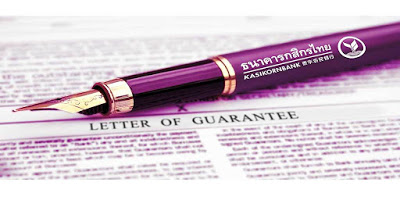
A letter of guarantee can be
described as some sort of promise, it denotes that the giver of the guarantee
promises to carry out an act on behalf of another. A good illustration will be
a letter of guarantee given to a creditor, by this letter of guarantee, the
guarantor promises/guarantees to settle the debt of the debtor, should there be
a failure on the part of the debtor. Usually, it seeks to assure the creditor
of a return on the loan or debt sum.

A Supreme Court Justice, Per Onnoghen, JSC in Khaled B. Chami v. U.B.A. Plc (2010)6 NWLR
Part 1191, 474
at Page 501
defined a guarantee as –  “a written undertaking made by one person to
another to be responsible to that other person if a third person fails to
perform a certain duty e.g. payment of debt, the guarantor (or surety as he is
sometimes called) becomes liable for the said debt
”.

The above provision of the law is also stated
by Akpata JSC in Royal

Exchange
Assurance (Nig) Ltd & Ors v. Aswani Textile Industries Ltd (1992) 3 NWLR
Part 2271

at Page
13,
wherein His Lordship held that
– “A guarantee is a
written undertaking made by one person to a second person to be responsible if
a third person fails to perform a certain duty, e.g. pay a debt”.

It is settled law that where a person
personally guarantees the liability of a third party by entering into a
contract of guarantee or suretyship, a distinct and separate contract from the
principal debtor’s is thereby created between the guarantor and the creditor.

Also,
it is important to note that the contract of guarantee so created can be enforced
against the guarantor directly without joining the principal debtor in the
proceedings. The above –  mentioned
position is further illustrated in the pronouncement of the court in Olujitan v. Oshatoba (1992) 5 NWLR (Pt 241)
326
.

One elementary
but fundamental principle of law is that a contract of guarantee must be in
writing in order to be binding on the guarantor. In  F.C.M.B. v. S. A. I. C. Ltd (2007) ALL FWLR
(Pt. 363) 133 at 146 para.s. G – H (CA)
; the court held that
for a
contract of guarantee to be binding, it has to be in writing, evidencing an
agreement between the parties. Furthermore, the
legal nature of a guarantee requires that there be a valid contract of
guarantee between the surety and guarantee as stated in
Olam
(Nigeria) Limited v. Intercontinental Bank Limited (2009) LPELR-8275(CA).

For it is the existence of the Contract of Guarantee
that proves a contractual relationship between the parties. In essence, once
there is no privity of contract between the parties, a party cannot enforce
such a contract as held in Union Bank of Nigeria Plc v. Soares (2012)
LPELR-8018(CA)
.

The lesson therefore is that if one must enter into
a guarantee agreement, for it to be valid, it must be in writing.
Adedunmade
Onibokun

@adedunmade


Photo Credit – www.ethnews.com

Legalnaija Law Tip

Legalnaija Law Tip

Dear Business person, Contractual Agreements which have neither been fraudulently nor illegally entered into by parties, must in all respects be observed or enforced. 
Have you got any questions on the validity of an agreement, send us a DM or post a comment

Learn & Share
#contracts #lawyer #lagoslawyer #blawg #legalnaija #legaleducation #lawyerlife #lagos #abuja

NBA Nominates Gender Expert To EU-Nigeria-UNODC-CTED Partnership Project III

NBA Nominates Gender Expert To EU-Nigeria-UNODC-CTED Partnership Project III

The President of the Nigerian Bar Association,  Mr. Paul Usoro SAN FCIArb has forwarded the nomination of Professor Joy Ngozi Ezeilo, OON, Dean, Faculty of Law, University of Nigeria, Enugu Campus to represent the Nigerian Bar Association on the EU-Nigeria-UNODC-CTED Partnership Project III on Strengthening Criminal Justice Responses to Terrorism and Violent Extremism” funded by the European Union, which is slated for 3rd-5th October, 2018 in Abuja, Nigeria.

Professor Ezeilo is a respected scholar and expert in gender issues.

Politics Must Not Debase The Rule Of Law | Paul Usoro SAN

Politics Must Not Debase The Rule Of Law | Paul Usoro SAN

The Nigerian Bar Association (“NBA”) felicitates with President Muhammadu Buhari, GCFR, the Federal Government of Nigeria, the States and Local Governments of the Federal Republic of Nigeria and indeed every Nigerian on Nigeria’s attainment of 58 years of independence and sovereignty. We certainly have plenty to thank the Almighty for, particularly when we recall that our unity as a nation was sorely tested and almost shattered by and during the Nigerian Civil War. Indeed, our unity has been severely tested a number of times before and after the Civil War and remains a work-in-progress even today. That should not be, after 58 years of independence and sovereignty as a nation. 
This should indeed be a reflection point for our leaders on this Independence Anniversary day. A 58-year old man should, if he is not afflicted by some debilitating illness, be, in the prime of life and, in all respects mature and able-bodied. In making excuses for our 58-year old country, we often fall back on the arcane saying that “Rome was not built in a day” and that a country’s journey to maturity takes longer than that of an individual or a person. 
That is not true or correct. Singapore, illustratively, attained self-government in 1959 and became an independent and sovereign nation in 1965 after the collapse of its merger with Malaysia in 1963 and, as at date, that country is miles ahead of Nigeria in terms of development. Yes, Singapore does not have our population size and diversity with its attendant challenges, but it also does not have the gamut of our natural resources ranging from mineral resources, fertile arable land, a pool of talented citizens who continuously make us proud outside Nigeria.
What has consistently been lacking in our country is, perhaps, the ability to coalesce these abundant resources and talent which, it must be emphasized, can be found in all the nooks and crannies of this great country, into a unified and productive whole that could and would easily turn Nigeria into the figurative Eldorado and, in the process, turn our diversity into strength and our abounding population into a productive work force. These are reflections that must today occupy the minds of our leaders, of all strata, as we mark 58 years of Nigeria’s independence and declaration as a sovereign nation. This is also particularly apposite as we enter another season of National Elections, the precursor of which has been the recently conducted Osun State Governorship Election. With that in mind, our leaders need to consciously resolve, on this Independence Anniversary day of our nation, to make a difference in the lives of our people. Governments at all levels must renew their pledges to work for the betterment of the lives of our people thereby recording tangible dividends of independence for the Nigerian people.
In that respect, the NBA applauds the initiative and maturity of the Nigerian Labour Congress (“NLC”) in calling off its indefinite labour strike on the eve of our Independence Anniversary. Their maturity in calling off the strike should not be misunderstood as a lack of merit in labour’s demand for an increased minimum wage, from the stagnant N18,000.00 (Eighteen Thousand Naira only) that takes no account of inflationary and living condition trends. It is our hope and expectation that the Government negotiators will continue apace with the labour negotiations, notwithstanding the fact that the strike has been called off and, in the process, achieve a resolution that the parties could live with. In making this call, we must remember that the independence of Nigeria was attained through the efforts of our rainbow coalition of nationalists some of whom were labour leaders. Indeed, when we refer to “the labours of our heroes past” we must be understood to refer to the labours of all “our heroes past”, made up of all hues and colours of nationalists and activists, including but not limited to labour leaders, jurists, captains of industries and of course, our political leaders.
Those labours of our heroes past, we must continue to insist, must not be in vain. That reminder is particularly relevant as we launch into the 2019 political season. Our leaders need to be reminded that politics and the quest for offices must not divide our people; politics must not lead to violence and the deaths of our people; politics should and must unify us; politics must yield for our people not only the dividends of Independence but also the dividends of democracy. Politics must lead to abundant employment for our teeming youths; politics must give us clean, affordable, uninterrupted energy/electricity which would activate and unlock economic productivity and prosperity for our people. Politics must provide us with quality education, potable water, security of lives and property, affordable and quality health care and quality living standards. 
Politics must translate into sustainable governance and institutions that would yield for the Nigerian people all the positives afore-specified. Politics must provide our diverse peoples with equal opportunities, without discrimination, taking note of our diversity and the need for inclusion of all our peoples. Politics must not be our bane; it must be for us, a unifying force and the vehicle for our prosperity and enhanced living standards. These are the critical issues that must occupy our leaders’ minds on this Independence Anniversary day and beyond.
Finally, politics must not be allowed to debase our temple of justice and the rule of law in our country. Our judiciary and the rule of law must remain sacrosanct. The converse of the rule of law, we must always remember, is anarchy and we do not want to descend into that abyss. We must not, in the name of politics and for political reasons pollute our fountain of justice. The judiciary is one institution that has constantly kept our country united through its pronouncements; the decisions of our courts more often than not ward off ethnic strives, political unrests, chaos, bedlam and riots – the fingerlings of anarchy. We remain eternally grateful to Their Lordships for their services to our Fatherland and pray for continuous Divine wisdom and guidance for them as we journey into another year of national elections. We admonish the political class and indeed, the people of Nigeria, to continue to have faith in our judicial system even as we, the workers and ministers in Nigeria’s temple of justice, must, by our conducts, words and deeds imbue in our people that faith and confidence in our justice sector. It is not sufficient for us to call on the political class not to pollute our judiciary with their politics, partisanship, rivalries and enmities; it is seemly as well that we, as workers and ministers in Nigeria’s temple of justice – ranging from Their Lordships to lawyers and other stakeholders in the justice sector – constantly remind ourselves of the need to uphold the core values and sanctity of our noble profession in and through our words, deeds, actions and conducts, at all times.

The Nigerian Bar Association commends these thoughts to all Nigerians and hopes that these would and should serve as constant reminders for us on our journey to greatness, on our journey to a strong, united and prosperous Nigeria where the rule of law shall continue to prosper, abound and prevail.
Long live the Federal Republic of Nigeria. Long live the Nigerian Bar Association.

Paul Usoro, SAN, FCIArb President Nigerian Bar Association