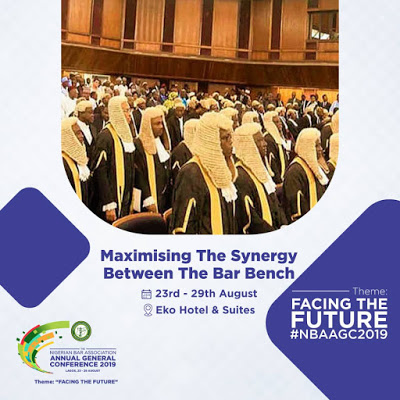
Reviewing Nigeria’s Constitutional Arrangement: A Few Considerations (1) | Fifehan Ogunde

Reviewing Nigeria’s Constitutional Arrangement: A Few Considerations (1) | Fifehan Ogunde

Nigeria has a very unique
constitutional arrangement. It incorporates several compromises designed to
suit the multi-ethnic and multi-religious nigerian state. However, we need to
reconsider the current constitution and assess its usefulness to the nigerian
society.

CONSTITUTION
IN CONTEXT
LEGISLATIVE LISTS
Under Sections 4 and 5
of the Constitution, legislative powers are divided between the National
Assembly and the State Houses of Assembly. Matters under the exclusive list are
within the legislative purview of the National Assembly and matters under the
concurrent list can be legislated upon by both the National and State Houses of
Assembly. Matters not contained in either list are regarded as ‘residual
matters’ and any Act passed by the National Assembly in these ‘residual areas’
are inapplicable in states that have not incorporated them into domestic law.
These lists are largely similar to those contained under the 1979 constitution.
Different global, regional and domestic 
developments have necessitated the review of these lists. Some matters
need to be clearly outlined as belonging to either lists e.g human rights and
criminal justice. Other matters may.need to be divided between the federal and
state to ensure excess power is not concentrated in either of the legislative
houses

STATE RELIGION

Section 10 prohibits
the Nigerian Federation or any State from adopting any religion as state
religion. However, criminal legislation of certain states in Northern Nigeria remain
rooted in Islamic law. As a matter of fact, the Sharia Penal Code governs the
conduct of Muslims in about 12 Northern States with the state Penal Code
applicable to non-Muslims. Furthermore, Section 260 and 276 establishes Sharia
Courts of Appeal in the Federal Capital Territory and in states that ‘require
it’. These courts regulate matters relating to Islamic personal and criminal law.
No other religion in Nigeria enjoys such a great deal of constitutional
protection. This position itself violates the spirit of Section 10 and needs to
be reviewed.  The integrity of the
constitution as the Supreme law making instrument in Nigeria also depends to a
large extent on the representation of the constitution as treating all
Nigerians fairly and equally without discrimination on grounds of religious
belief or affiliation. This does not represent the current position of the
Nigerian Constitution.

COURT JURISDICTION

Aside from the
fundamental rights granted to Nigerian citizens under Chapter IV of the
constitution, there are ‘fundamental objectives of government policy’ listed
under Chapter 2 for which the government has a duty to pursue. However Section
6(6c), in granting jurisdiction to the Courts, does not extend the jurisdiction
of the Courts to ‘
any
issue or question as to whether any act of omission by any authority or person
or as to whether any law or any judicial decision is in conformity with the
Fundamental Objectives and Directive Principles of State Policy set out in
Chapter II of this Constitution’. Chapter 2 covers the vast majority of
economic and social rights (right to work, right to education, right to health,
environmental rights etc). Under Chapter 2 (Section 17) for instance, the state
is to direct policy towards ensuring that ‘children, young persons and the age
are protected against any exploitation whatsoever, and against moral and
material neglect’. However, Section 6(6c) suggests that the Court’s
jurisdiction under the Constitution is not extended to matters that relate for
instance to actions being taken by the government to prevent children from
hazardous labour. It may even arguably imply that even if the government is
failing in this regard, the Courts do not have jurisdiction to make orders in
this regard against the government. Some scholars have argued that the constitution
can be interpreted otherwise but in any case, there is no reason why the
government of a country that seeks progress in matters relating to economic and
social rights such as the right to education or freedom from the worst forms of
child labour for instance should not be held accountable in this area. There is
no justification in my view for the duties listed under Chapter 2 to remain
mere ‘fundamental objectives of government policy’. They must be incorporated
as fundamental rights under Chapter IV which can be duly enforced in the Courts
without any procedural impediments, particularly such as is related to
jurisdiction.

FUNDAMENTAL RIGHTS

Section 38 of the Constitution
provides for the right of Nigerians to hold opinions and impart information
without interference. However, Section 39 provides that laws which are
‘reasonably justifiable in a democratic society’ may be imposed to regulate
wireless broadcasting, television and cinematography. The question of what may
be ‘reasonably justifiable’ is presumably a question for interpretation by the
Courts. There is however no reason why the constitution cannot contain provisos
as to what may not be ‘reasonably justifiable’. Section 42 deals with
non-discrimination and further to Section 42(1), a person shall not be
subjected either expressly by, or in the practical application of, any law in
force in Nigeria or any executive or administrative action of the government,
to disabilities or restrictions to which other individuals are not subjected.
It must however be noted that the question of discrimination extends to matters
relating to unjustifiable differential treatment of other individuals on these
prohibited grounds. A person may not necessarily be subject to disabilities or
restrictions but can still be a victim of discrimination if others enjoy
privileges not available to the individual in circumstances which cannot be
justified. This is especially evident in matters relating to proprietary rights
under customary law. The definition of discrimination under Chapter IV is also
problematic and in need of review.

GENDER ISSUES

For an individual born outside
Nigeria to apply for citizenship under Section 28, such an individual must be
of Nigerian ancestry (grandparents being Nigeria) or a woman married to a
citizen of Nigeria, irrespective of their ancestry. This excludes non-Nigerian
men who are married to Nigerian citizens. There is no reason why such a
provision should exclude these category of people. Furthermore, Section 29(4)
deems a woman who is married ‘of full age’ for the purpose of renouncing
citizenship. In 2013, protests were held in different parts of the country with
respect to the effect of this provision, particularly in relation to the age of
marriage of women in the country. While Section 29(4) may not validate child
marriage as some scholars or activists opine, it remains a problematic
provisions which in reality serves little positive purpose as it currently
stands.

TO BE CONTINUED

Fifehan
Ogunde

Oluwafifehan
Ogunde is an research specialist and consultant with research interests in
human rights law, criminal law and constitutional law. He has a Master’s degree
in Human Rights Law from the University of Nottingham and a Bachelor’s degree
from the University of Sheffield. He is also a barrister and solicitor of the
Federal Republic of Nigeria, having been called to the Nigerian Bar in February
2012.

Public-Private Partnerships – Panacea To Economic Development & Change

Public-Private Partnerships – Panacea To Economic Development & Change

Public-private partnerships
involve collaboration between a government agency and a private-sector company
that can be used to finance, build, and operate projects, such as public
transportation networks, parks, and convention centers. Popular PPPs in Nigeria
include the Muritala Mohammed Airport (MM2) in Lagos, the Lekki – Epe Expressway
and the Ikoyi – Lekki link bridge in Ikoyi, Lagos.

The most important advantage
of PPPs is the alternative it provides for government to find alternative
funding for infrastructure. Recently, Nigeria’s Vice President, Prof. Yemi
Osibajo stated that Nigeria needs over a trillion naira to cover its
infrastructural deficit with this current administration claiming that it has
spent about $10 Million on infrastructure within the past 4 years[i].

Public-private partnerships typically have contract periods of
25 to 30 years or longer. Financing comes partly from the private sector but
requires payments from the public sector and/or users over the project’s
lifetime. The private partner participates in designing, completing,
implementing, and funding the project, while the public partner focuses on
defining and monitoring compliance with the objectives. Risks are distributed
between the public and private partners according to the ability of each to assess,
control, and cope with them[ii]

Private-sector technology and
innovation, for example, can help provide better public services through
improved operational efficiency. The public sector, for its part, provides
incentives for the private sector to deliver projects on time and within
budget. In addition, creating economic diversification makes the country more
competitive in facilitating its infrastructure base and boosting associated
construction, equipment, support services, and other businesses. 

There
are downsides, too. Physical infrastructure, such as roads or railways, involve
construction risks. If the product is not delivered on time, exceeds cost
estimates, or has technical defects, the private partner typically bears the
burden. With regard to the advantages and opportunities available to Nigeria by
virtue of PPP Agreements, it is safe to say that PPP will be a panacea to
economic recovery and development in Nigeria.

This and much more would be discussed
at the NBA Annual General Conference coming up between the 23rd and
29th of August, 2019. Do ensure you participate in this session.

@Legalnaija


[i] Premium Times . (2018 ). Buhari govt
has invested $10bn in infrastructure — Osinbajo.
Available:
https://www.premiumtimesng.com/business/business-news/269403-buhari-govt-has-invested-10bn-in-infrastructure-osinbajo.html.
Last accessed 2nd August, 2019.
[ii] Will Kenton . (2019). Public
Private Partnerships .
Available:
https://www.investopedia.com/terms/p/public-private-partnerships.asp. Last
accessed 3rd August, 2019 .

Trade In Legal Services Current Realities And Future Possibilities

Trade In Legal Services Current Realities And Future Possibilities

Due to the advent of
globalization, the world has shrunk and is now a global village. For instance,
the combination of cheap and safe
air travel and the internet have made places which seemed so far away half a
century ago to be accessible to trans-national businesses


The combination of cheap and safe
air travel and the internet have made places which seemed so far away half a
century ago to be accessible to trans-national businesses. The implication is
that these conglomerates prefer to approach business from the stand of using
legal services that they are accustomed to and readily available. This preference
usually excludes the use of counsel practicing in the place where the business
is to be conducted. 
The importation of legal services by the foreign business
outfit into a country where its lawyers are not licensed to practice brings
about its complications and conflicts in (1) the authority of nation-states to
regulate multi-jurisdictional practice, (2) the law to be applied to regulate
the conduct of such counsel in the event of a breach of the rules of ethics and
(3) the consequences of unregulated multi-jurisdictional legal practice. [i]

In Nigeria, all
lawyers are admitted to the bar as barristers and solicitors of the Supreme
Court without any distinction as to their roles or functions.

Furthermore, only lawyers qualified in Nigeria have the right to practice in
Nigeria except upon application to the Attorney – General of the Federation. To
be able to practice in Nigeria, all lawyers must have attended the Nigerian Law
School. 


Lawyers within the Nigerian jurisdiction have been known to be jealous
of their turf and have over the years seen to ensure that lawyers from foreign
jurisdictions are not allowed to practice in Nigeria. Lawyers are however
loosing the edge as many foreign firms are now in Nigeria and collaborating
with local law firms.

The view was once widely held in Nigeria that globalization is a
journey to utopia1, a lotus-eater kind of world far away from reality. However,
this is not the view of the major players who control the economic resources of
the world.
The driving force of trade liberalisation is the World Trade
Organisation, a creature of the 1994 Uruguay Round Trade negotiations. One
of the achievements of the Uruguay negotiations is the General Agreement on
Trade in Services (GATS), which came into force in January 1995. The GATS, a
multi-lateral treaty based agreement was inspired by essentially the same
objectives as its counterpart in merchandise trade, the General Agreement on
Tariffs and Trade (GATT) The only major distinction was that GATS dealt with
services as opposed to trade and merchandise. Legal Services comes within the
purview of GATS.

In this context, we must ask
ourselves the following  

·       
How is trade in legal services undertaken and
regulated?

·       
How has trade in legal services evolved
globally since 1995 and does this have any relevance for scheduled commitments?
 

In more of a local focus, we
must also ask ourselves the following –

a.      What
is the current state of play in Nigeria?

b.     What
are the avenues for collaborations available?

c.      What
are the challenges surrounding digital trade in legal services in Nigeria.

The Nigerian Bar Association
will be treating this topic in one of the Breakout sessions of the NBA Annual
General Conference. The session will be moderated by Mr. Austin Alegeh SAN and
panelist will include Kofo Dosekun, Adedayo Apata and Mr. Gorge Etomi. It promises
to impactful and we hope you would contribute therein. 
@Legalnaija 


[i] The Nation . (2015). How To
Practice In Multi – Jurisdictions .
Available:
https://thenationonlineng.net/how-to-practice-in-multi-jurisdictions/. Last
accessed 2nd August, 2019.

The Role of the Attorney-General and the Public Interest | The Justice Reform Project

The Role of the Attorney-General and the Public Interest | The Justice Reform Project

The principal function of an Attorney-General is to preserve and promote the rule of law and to guide the government so that essential public confidence in the rule of law is maintained. This is a paramount public interest. 

That is why the testimony of Mr. Abubakar Malami SAN (who has recently held the office of Attorney-General of the Federation and may return to it) before the Senate of the National Assembly of Nigeria on 26th July 2019 could be dangerously misleading.
Senators asked the Attorney-General why he has wilfully disobeyed court orders by continuing the detention of individuals who have been granted bail by the very courts to which government has arraigned them. Mr Malami’s response was that he deliberately disobeys some court orders in the interest of the public and that it is his duty to protect the overall rights of Nigerians which overrides the need to respect individual liberties. The Senators did not demur.
Mr Malami is wrong. It is not the right or power of the Attorney General to determine legal rights and to pick and choose which he will respect or not. To assert such a right or power threatens the very constitution and the rule of law. If an individual or a group breaks the law or threatens national security or public order, it is the duty of the Attorney General to build a compelling case and then present it to the constitutional adjudicator. This official cannot be accuser, prosecutor and then judge at the same time. 
If any single minister or group of ministers can secretly determine what is in the public interest and enforce such assumed public interest by defying due and legal process, then every single Nigerian is at risk of arbitrary power. If any minister can determine that he can abuse or discard court process, even after himself invoking the power of the courts, then he can abort every other constitutional guarantee in turn.
The powers of the attorney-general are circumscribed in the constitution, and as a consequence, there may be need for the immediate past attorney-general to reconsider his position, particularly because as a senior member of the bar and former chief law officer, his unusual opinion might be taken as the correct representation of the law. JRP therefore considers it expedient to state that no matter the apparent flaws in our judicial system, it remains the bastion of our democracy that all court orders must be respected by every Nigerian citizen. No person or authority is superior to our constitution and therefore should not undermine the sanctity of court orders.
The Attorney-General’s role in ascertaining the balance between the competing public and private interest, is limited to persuading the court as to where the balance lies. It is necessary to remind Mr Malami, and any other holder of this special office, that as chief law officer he/she as an incumbent must uphold the constitution, the rule of law and respect for the independence of the courts. Arrogating to the office of the Attorney-General, powers that are exclusively reserved for the courts, erodes public trust and confidence in the administration of justice and negates the rule of law which authorises civil government.
Mr. Charles Adeyemi Candide-Johnson, SAN (Convener, Justice Reform Project)
1 August 2019
Cybersecurity and Data Protection in Nigeria: Sustaining the existing momentum | Fifehan Ogunde

Cybersecurity and Data Protection in Nigeria: Sustaining the existing momentum | Fifehan Ogunde

There is great excitement about recent developments in the private sector in Nigeria. E-commerce, mobile banking and more recently digital banking are just a few examples of such innovative developments. There is one common theme in all these developments: the collection, processing and use of personal data.

Given the importance of personal data to privacy rights, these innovations must be accompanied by a corresponding progress in data protection and cyber security mechanisms.

Why is this important?
40% of Nigeria’s adult population have accounts with a financial institution or a money service provider. That implies that at least 40 million Nigerians have their data registered with one financial institution or the other. A significant number of these financial institutions have also adopted digital banking and while that development remains at an infant stage, it remains highly significant with respect to individual data. By reason of their status, financial institutions have ready access to all forms of personal information including fingerprints and photos. They are also responsible for issuing credit and debit cards. In 2017, 53% of the most popular fraud-related posts on Facebook led to carding services or credit card fraud.
The telecoms industry is also another significant data mine. At least 92 million Nigerians of the 150 million with registered mobile phones use internet data according to a 2017 report by KPMG. Over 36 million of these registered users are also smartphone users. The number keeps rising every year. Registration and use of these mobile phones often requires the provision of personal data such as names, email addresses, locations and credit card details to these telecom companies. Personal information of Nigerians are also routinely collected on entertainment platforms such as IrokoTV which had over 65,000 subscribers as at 2017. Biometric data capturing is also used for an increasing number of functions including obtaining a driver’s license, national identity cards, voter’s cards and electronic passports.
Existing Legal/Regulatory framework: Signs of Progress? 
Notwithstanding the fact that Section 37 of the Nigerian constitution guarantees the privacy of Nigerians including their electronic and mobile correspondence, there remains no comprehensive personal protection information law in Nigeria. In 2015, the CyberCrime Act was enacted criminalizing certain offences such as unauthorized modification of computer data, system interference and identity theft. More importantly, it places a duty on every service provider to disclose information relating to investigation of offences under the Act. What it does not do is place service providers under an obligation to protect individual’s privacy. Financial institutions are also not placed under the obligation. However, the 2019 Data protection Regulations imposes stricter obligations on data handling bodies to develop security measures to protect data. Companies that breach this duty are liable to fines of 2% of their preceding gross income or 10 million Naira. The Central Bank of Nigeria’s Risk-based Cybersecurity guidelines also prescribe data protection standards for deposit money providers and payment service providers. Other relevant laws on data protection include the National Identity Management Commission Act 2007, Freedom of Information Act 2011 and Credit Reporting Act 2017. However, a significant setback with respect to data protection and cyber security in Nigeria was the refusal of assent by President Muhammadu Bill to the Digital Rights and Privacy Bill 2019.
On the overall, there are signs of progress and steps in the right direction. Questions nevertheless remain as to the capacity of bodies such the National Information Technology Development Agency to effectively monitor companies’ data protection policies. Doing so requires a level of expertise that may not be readily available. Another issue is the fact that none of these laws or regulations cover all businesses or persons located in Nigeria. This potentially limits the impact of enforcement measures. 
improving Cybersecurity and Data protection in Nigeria: Sustaining the momentum 
As indicated above, great progress has been made in developing a regulatory framework for data protection and cybersecurity. This momentum nevertheless needs to be sustained and accelerated if possible. One reason for this is the particular penetration and impact of cybercrime and other forms of data abuse in Nigeria. Cybercrime activities is said to cost the Nigerian economy 500 million dollars per year. According to Deloitte, cybersecurity breaches of various organizations in Nigeria led to billion Naira losses in 2018. For an economy that generates only 400 billion dollars, million dollar and billion naira losses have a significant negative impact and cannot be described as negligible. Our cybersecurity measures must increase at a faster rate than is currently the case to keep up with such colossal losses. The latest budget proposals do not indicate any exact amount being allocated to cybersecurity notwithstanding the increase in allocated funds for security in general. There is no express provision in the 2019 appropriation bill for cybersecurity research and a lack of a well-defined security policy makes assessing government efforts in cybersecurity even more difficult. In contrast, the United Kingdom government announced in January 2019 the allocation of £100 million as investment in new cybersecurity research. including in small businesses to . The budget for the 2020 financial year in the US saw an allocation of $9.6 billion dollars to cybersecurity. To put the necessity of cybersecurity research in context, Nigeria ranks third globally in cybercrime only behind these two countries.
In addition to government investment, there is the need for an increase in private sector and research participation in cybersecurity. Currently, very few organizations in Nigeria specialize in cybersecurity and data protection. In contrast, there are over 200 cybersecurity firms in the UK and over 2,024 of such firms in the US. Cybersecurity research takes place at the highest level in at least 19 UK Universities and there are 3 centres at different universities specifically for doctoral training in cybersecurity. There is no cybersecurity research centre in Nigeria established by the government and the operational status of its proposed government cybercommand is unclear.  Even if such a centre or command were to exist, there remains the problem of recruiting the right people to perform the necessary function. Nigeria is currently struggling to keep hold of its software engineers and even those who remain still have to deal with various infrastructural challenges, none of which appear to be resolved anytime soon. The good news is that there are available courses and training programmes on cybersecurity that both IT enthusiasts and non-enthusiasts can use. The rise in tech startups can also be channelled towards building a ‘quasi-cyber security’ army useful for both public and private data protection. Government funding for these startups similar to the £5000 grants to boost cyber security granted to small businesses in the UK by the UK government will greatly enhance such prospects.
Another way by which increased private sector participation in data protection and cybersecurity can be enhanced is through pressurizing advocacy by the representatives of civil society to hold private companies, especially financial and telecom companies to account over the disclosure of data protection measures that are in place. Greater awareness of the CyberCrime Act and corresponding data protection regulations is necessary to achieve this purpose. Data subjects have a right to know what their personal data is being used for and this right should be exercised. The duty of disclosure in relation to data use must apply to both small and large organizations. Based on current evidence, it is difficult to see how organizations are complying with this disclosure duty or indeed the requirement to inform the public of their data protection policies. Businesses may be helped in this regard by regulatory bodies issuing compliance guidelines as is the case under the European equivalent.
Expansion of services to include online or mobile app services must also be accompanied by investment in cybersecurity and data protection. Nigeria already has its hands full in terms of law enforcement offline. Failure to address cybersecurity and data protection effectively will only compound its online woes.
Fifehan Ogunde 
Oluwafifehan Ogunde is an research specialist and consultant with research interests in human rights law, criminal law and constitutional law. He has a Master’s degree in Human Rights Law from the University of Nottingham and a Bachelor’s degree from the University of Sheffield. He is also a barrister and solicitor of the Federal Republic of Nigeria, having been called to the Nigerian Bar in February 2012.
Environmental Justice and the Ecological Crisis in Nigeria: A Rule of Law Approach #NBAAGC2019

Environmental Justice and the Ecological Crisis in Nigeria: A Rule of Law Approach #NBAAGC2019

Case Review: 
Centre for Oil Pollution Watch v. NNPC [2019] 5 NWLR (Pt. 1666) 518
LOCUS STANDI AND THE RIGHT OF NGO TO SUE IN A PUBLIC LITIGATION AS IT RELATES TO ENVIRONMENTAL POLLUTION CAUSED BY OIL SPILLAGE

At the Supreme Court, learned Counsel for the NGO (the Appellant), Prof. Joseph Mbadugha, amici curiae – Aiwaju Adegboyega Awomolo, SAN, Lucious Nwosu, SAN and A. B. Mahmoud, SAN were of the view that the Appellant has the requisite locus standi to sue, having shown and demonstrated the required interest to entitle it to sue. They argued that any person with genuine and public-spirited intention should be permitted to approach the court with respect to public interest matters such as the one in the instant case. They urged the Court to expand the frontier and relax the concept of locus standi as applicable to environmental litigation.
– Learned Counsel for NNPC (the Respondent), Victor Ogude Esq., and amicus curiae – Chief Wole Olanipekun, SAN and Dayo Apata, (Solicitor-General of the Federation representing Abubakar Malami, SAN (the Attorney General of the Federation and Minister of Justice) sought to persuade the Court that the Appellant is a mere busybody or troublemaker (with an abstract corporate soul), usurping the rights of the affected citizens to complain. They also argued that extending the scope of locus standi to accommodate an NGO such as the Appellant in respect of environmental degradation matters would have the effect of usurping the powers conferred on agencies and offices like the Attorney-General’s office established by various State and Federal Laws to protect the environment on behalf of the people. They relied on several statutes which they submitted, have taken care of the Appellant’s grouse. It was also contended that allowing the Appellant standing to sue would open the floodgates to frivolous litigation which will overwhelm the courts’ dockets.
Thankfully, the Supreme Court came to the rescue. After a review of a host of local and international authorities, statutes and case law, and after due consideration of the compelling submissions of learned Counsel and Senior Counsel invited as ‘Friends of the Court’, the Supreme Court rightly observed and unanimously concluded as follows:
The Appellant has the right to institute the action (thereby expanding the scope of locus standi on environmental matters).
There is nothing in the Constitution that says the Attorney-General is the only proper person clothed with standing/power to enforce the performance of a public duty or institute public interest litigation such as the instant suit.
at p. 580-581, paras. G-B, of the report, Aka’ahs, JSC unequivocally stated:
“There is no gain saying in the fact that there is increasing concern about climate change, depletion of the ozone layer, waste management, flooding, global warming, decline of wildlife, air, land and water pollution. Both nationally and internationally, countries and organizations are adopting stronger measures to protect and safeguard the environment for the benefit of the present and future generations. The issue of environmental protection against degradation has become a contemporary issue. The Plaintiff/Appellant being in the vanguard of protecting the environment should be encouraged to ensure that actions or omissions by Government agencies or Multi-national oil companies that tend to pollute the environment are checked. Since other commonwealth countries such as England, Australia and India have relaxed their rigidity in the application of the concept oflocus standi in public interestlitigation, Nigeria should follow suit. The communities affected by the spillage leading to the environmental degradation may not muster the financial muscle to sue and if good spirited organizations such as the Plaintiff is denied access to sue, it is the affected communities that stand to lose.”
This ground breaking decision of the Supreme Court will be seriously discussed at the #NBAAGC2019 session on Environmental Justice and the Ecological Crisis in Nigeria: A Rule of Law Approach. 
Please join the discussion. 
Saving The Dinosaur From Extinction: Preserving Nigerian Law Practice In The 21st Century | Fifehan Ogunde

Saving The Dinosaur From Extinction: Preserving Nigerian Law Practice In The 21st Century | Fifehan Ogunde

There is tremendous excitement about the potential contribution of artificial intelligence to legal practice, especially in western countries. The turn of the century has particularly seen a growth in legal software that harnesses AI and machine learning. Artificial intelligence is also gradually making its mark in the Nigerian legal industry with the influence of legal technology firms such as Law Pavillion. 

Some people are actually worried that the human lawyer could be replaced by the artificial lawyer. While the available evidence does not suggest that this is the case, it is not unreasonable to suggest that many of the duties of the traditional Nigerian lawyer will be subsumed in artificial intelligence. This is of course assuming that AI software is developed in the expected manner. The threat of AI to the legal practitioner, if any, should not be overstated especially in Nigeria. AI software at the moment is limited, expensive and still too much of a work in progress to serve as a source of concern to the average Nigerian lawyer. Even if we should be concerned, there are bigger problems to worry about.
In Nigeria, there is already the problem of excessive supply over demand for legal practitioners, especially in the more economically productive areas. An average of 4,500 lawyers are called to the Nigerian Bar each year. Considering the fact that legal practice in Nigeria is a lifetime occupation with no designated retirement age, these lawyers only add to the existing lawyers that may still be seeking employment. Many of those who are employed are simply performing tasks equivalent to the function of a paralegal in the United Kingdom. Introducing AI technology into this mix will most likely lead to a reduction in available opportunities for qualified lawyers in Nigeria. This is in addition to existing problems relating to judicial independence and impartiality, corruption and poor remuneration of lawyers.
WHAT IS BEING DONE?
For Nigerian lawyers to remain relevant in the economy of the future, they must be able to show that they can offer more than the ‘traditional legal services’ of drafting and advocacy. As rightly noted by Jordan Furlong, the lawyer of the future is one that can rework his business model around advice and counsel as well as create niche areas for himself. A significant number of lawyers in Nigeria are already diversifying their expertise and venturing into alternative areas of service provision including legal consultancy and company secretarial work. The concept of Alternative Dispute Resolution (ADR) is also gaining ascendency in Nigeria. In Lagos state, the Lagos Multi-door courthouse and the Lagos Chamber of commerce and Industry provide platforms for ADR with the number of disputes resolved at the Multi-door courthouse rising yearly between 2002 and 2015. 14 other states in Nigeria have also adopted the Multi-door courthouse model in particular in relation to dispute resolution. Others are venturing into largely undeveloped areas of law in Nigeria such as entertainment law and sports law. A significant number are also directing their focus towards providing easily accessible legal information to the public through reference websites, blogs and social media threads. While this innovative approach is commendable, there is a danger that opening the legal profession in this manner will diminish the ‘specialist’ connotation associated with law practice. If legal information is readily available to the public for instance, people may start to question the need for lawyers in areas of public life that lawyers were hitherto considered fundamental to. Add AI into the mix and there may be very little demand for future law graduates. 
Furthermore, there is a need for the legal practice and curriculum in Nigeria to respond to changing societal dynamics. Gone are the days for instance where only lawyers really displayed any interest in the law. Now, non-lawyers are proving to be ‘law-savvy’ and informed concerning the legal position on various matters. The 21st century lawyer has to stand out in a different way. Nigerian lawyers need to, as succinctly put by Daniel Linna, combine deep substantive legal expertise with the ability to collaborate across many disciplines. Some have argued that lawyers need to add coding skills to their repertoire. While much of the current excitement around the influence of artificial intelligence and other aspects of technological advancement in the provision of legal services may be a bit overstretched, there is no missing the point: law practice in Nigeria needs to evolve beyond simply providing the traditional legal services to maintain its relevance not just globally but in Nigeria. This evolutionary approach must also be extended to the legal education curriculum in Nigeria. Already, top law schools like Harvard Law school and Georgetown university have gradually started introducing programming courses into their law curriculum. Many other universities in the US, Canada and UK offer combined undergraduate programs where law is combined with courses like business, criminology and computer science. The faculties of Law in Nigerian Universities do not currently offer such combined programs.
Evolution of the Nigerian lawyer is also significantly dependent on evolution of Nigerian law in general. Legislation is the foundation upon which litigation and other legal services stand and progressive lawmaking is key to progressive legal services. Nigerian law relating to areas such as cybersecurity, intellectual property and sports science remain largely underdeveloped notwithstanding the increase in the relevance of ICT and the worldwide web especially among young people in Nigeria. Laws such as the Cybercrime Act 2015 and the Copyright Act 2004 are definitely a step in the right direction in terms of developing relevant case-law and procedures relevant to the fourth industrial revolution. There is nevertheless a long way to go.  Many of the existing laws in Nigeria are also outdated and unfortunately very little is being done in terms of law reform. With a National Assembly where less than 15% of its members are lawyers, proposals for law reform may not be advanced as readily as may be necessary for development of our legal services.
Notwithstanding the focus on evolution of the 21st century lawyer, there is still an important role to be played by the ‘traditional lawyer’ in Nigeria. Furthermore, it is still the case that the law practice field is highly concentrated in major cities like Lagos, Abuja and Port-Harcourt. Nigeria is bigger than these cities and lawyers can make immense contributions in many abandoned areas in Nigeria. There are many areas ripe for law clinics, legal research centres and pro-bono work that can be run by lawyers, law graduates and law students. A great proportion of the population are still being denied access to basic rights and need qualified lawyers to help protect and defend their rights at different levels. Lawyers can also work as policy analysts and advisors for different professional enterprises.
The unique nature of legal practice is the fact that it is relevant to an area of human relations that will keep asking for specialists: protection of rights and dispute resolution. Problems will keep arising that require some form of resolution. Even the much vaunted fourth industrial resolution is set to create problems that will have to be resolved by those who are conversant with the dynamics created by the legal profession. The 21st century and the coming industrial evolution will not see the end of lawyers but the evolution of lawyers. Those who will survive are those who are willing to evolve.
Fifehan Ogunde Esq. 
Kidnapping and Terrorism: Threat to Freedom, Security & National Development

Kidnapping and Terrorism: Threat to Freedom, Security & National Development

The rate of kidnapping
in Nigeria has risen considerably in the last ten years. Not less than 1,500
people are kidnapped on an annual basis in the country thus making kidnapping
more or less a new “cottage industry”. With the statistical belief that one out
of every 5 Africans is a 
Nigerian, it may not be wrong to say with her population and
the increase in the wave of kidnapping, Nigeria has more potential kidnap
victims than most of her West African neighbours.
–                    
The Street Journal, 9th April, 2013, www.thestreetjournal.org

All over the world,
countries have had to deal with criminality in one way or the other. One of
such which Nigeria as a nation has faced with for a long period of time is Kidnapping
and Terrorism. Kidnapping and Terrorism are interrelated as the two constitute
a threat to individuals’ freedom, security and national development. Kidnapping
and Terrorism is a global phenomenon which has been of great challenge to every
government of affected countries.

Nigeria has experienced
kidnapping and terrorism in recent times. On April 2014, the terrorist group
called Boko Haram kidnapped 329 girls from a boarding school in Chibok.
Subsequently, some students were also kidnapped in Dapchi. Niger- Delta has
also experienced the kidnapping of expatriates by heavily armed militants. The
militants extended their activities to political figures. Nigeria has also
experienced various attacks on both the military and civilians. An example is
the gun and bomb attacks that occurred in Kano, Bauchi, Borno, Yobe and Kaduna.

The issue of national
security has become paramount in the policies of Nigerian government. This is
because of the fact that the survival of the political, economic and social existence
of Nigeria depends on the national security of the country. The rate of kidnapping
and terrorism especially in the north eastern part of the country is alarming.

The questions that arises
here are what are the current strategies of the Nigerian government to curb the
menace of kidnapping and Terrorism? How is the international community
assisting the government to curb these activities? How are the states of the
Federation ensuring national security

The various questions and
issues arising from this topic and the way forward would be discussed at the
Plenary Session of the NBA Annual General Conference scheduled to hold on;

Date:
Wednesday, 28th August 2019

Time:  9.00 – 10.30

Venue:
Jasmine, Eko Hotel

Speakers:          

Moderator: Dr Okezie
Victor Ikpeazu(Governor, Abia State)

Panelists:     Wahab Shittu

Major Diepreye
Biambi

Dr. Akintayo
Akinola

Bob Arnot

                       Musibau
Adetumbi

Join the discuss. 
@Legalnaija  

Trafficking in Persons and Irregular Domestic and Cross Border Migration #NBAAGC2019

Trafficking in Persons and Irregular Domestic and Cross Border Migration #NBAAGC2019

Trafficking is the trade
of humans which involves the practice of illegally transporting people from one
country or area to another, usually for the purposes of forced labour or sexual
exploitation. Most of the trafficked women and children are usually recruited
from the rural areas within the country’s border with the promise of a better
life or future. They are usually oblivious of what seems to await them. Nigeria
has been said to be the leading African country with the highest number in
human trafficking both domestic and cross border.

Italy has the highest
number of Nigerians victimized to human trafficking. These Nigerians are
usually promised better education and future. When they arrive the country,
they are forced into prostitution. Children are not left out. They are usually
taken from Nigeria to other West and Central African countries like Ghana,
Chad, Benin and Togo or they are moved from a disadvantaged state to another
where they are forced to act as domestic servants.

Nigeria has taken steps to
minimize and prevent human trafficking both domestic and cross border. There is
the 2002 Trafficking in Persons Law Enforcement and Administration Act amended
in 2005 to prohibits all forms of human trafficking and increase its penalties.
The Child Rights Act 2003 equally prohibits the trafficking of children.

Section 13, Trafficking
In Person (Prohinbition) Enforcement And Administration Act 2015
provivdes
that –

Any
person who recruits, transports, transfers, harbours or receives another person
by means of –

a.  Threat or use of force or other forms of
coercion.

b. Abduction, fraud, deception, abuse of power or
position of  vulnerability;

c.  Giving or receiving of payments or
benefits to achieve the consent or control of a person having control over
another person, for the purpose of exploiting that person;

Commits
an offence and is liable on conviction to imprisonment of not less than 2 years
and a fine of not less than N250,000.

If the Act prohibiting trafficking
of persons is being enforceable, why are there many persons who are still being
transported domestically and across border? 
What is Nigeria doing to curb the activities of people engaged in human
trafficking?

The various issues and
challenges of preventing trafficking and the way forward would be discussed at
the Plenary Session of the NBA Annual General Conference scheduled to hold on;

Date:
Wednesday, 28th August 2019

Time:  9.00 – 10.30

Venue:
Zinnia, Eko Hotel

Speakers:          

Moderator: Priscilla Kuye

Panelists:     Prof. Joy Ngozi Ezeilo, OON

Dr. Anselm Abonyi

Kaka S. Lawan

Joint the discussion