PRAI holds motivational session at Ikoyi Prisons

PRAI holds motivational session at Ikoyi Prisons


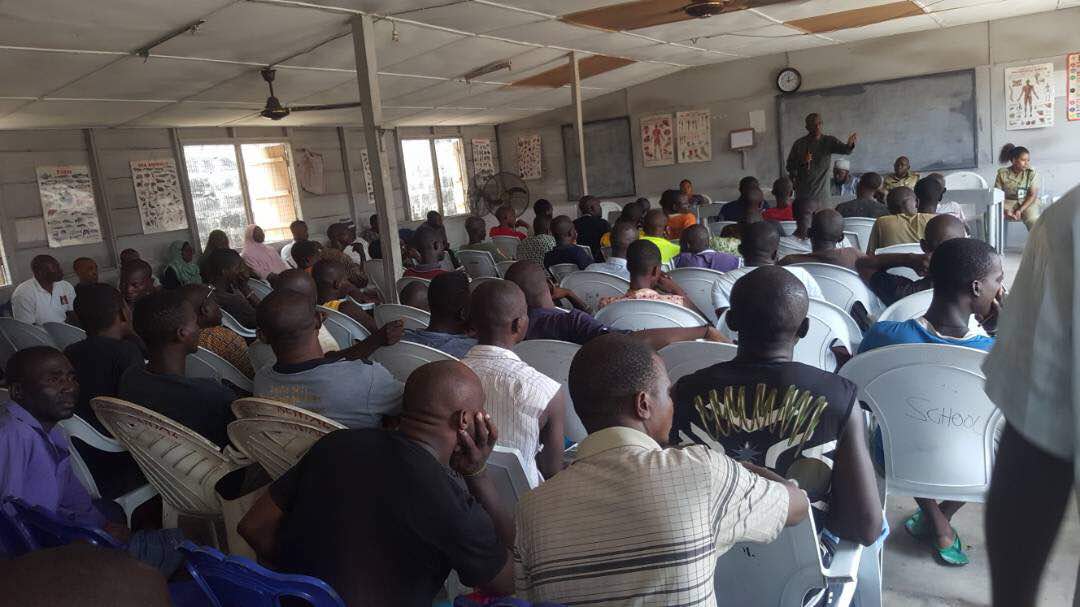
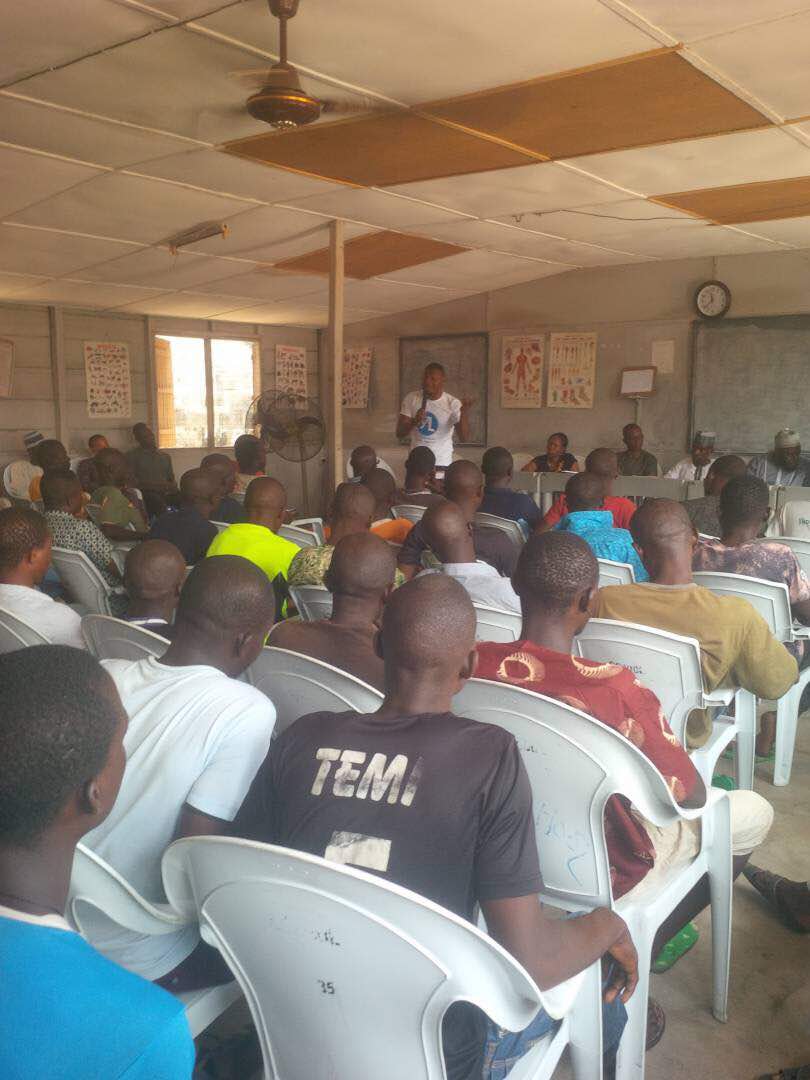
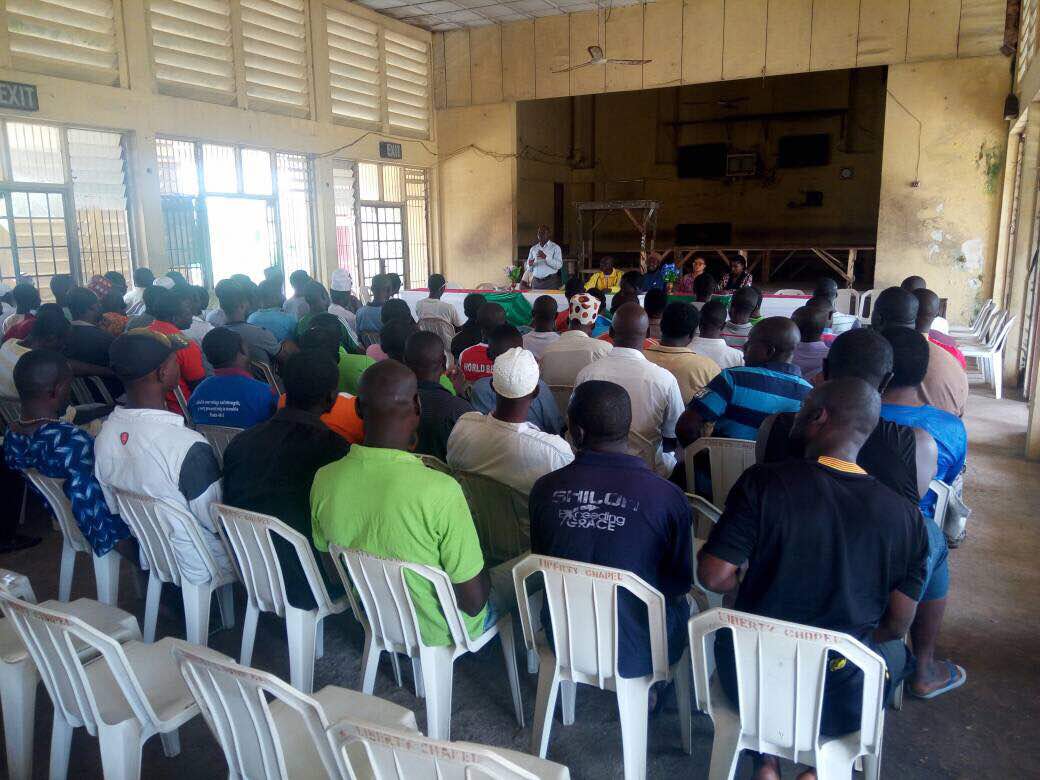
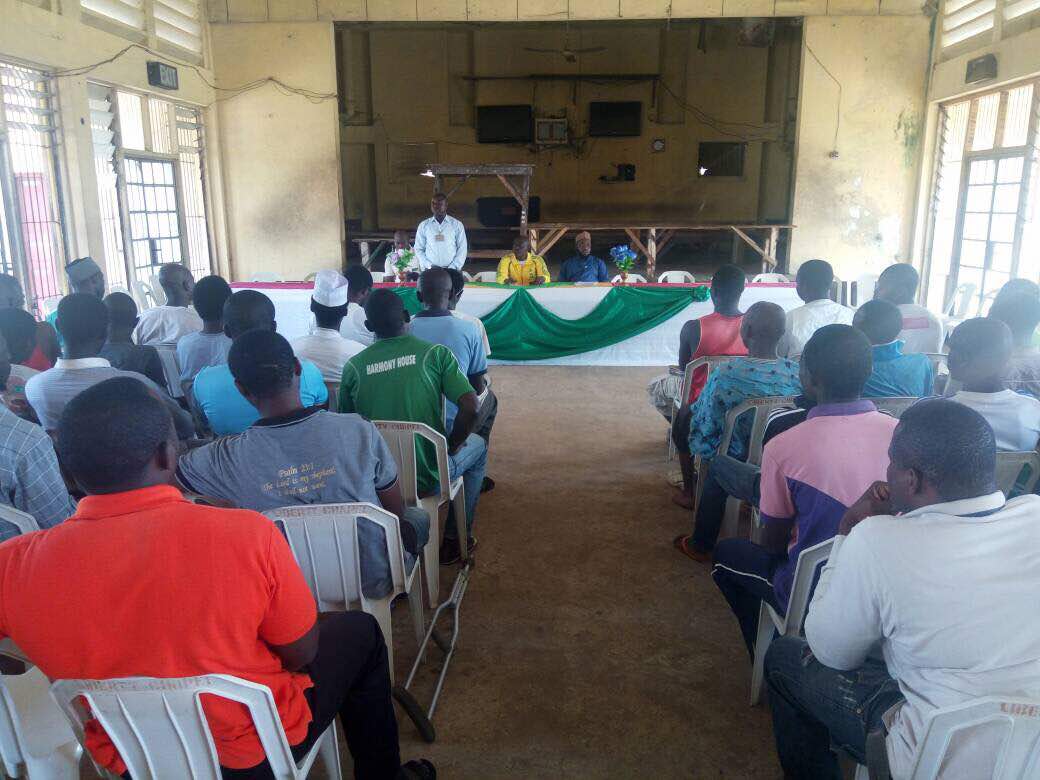
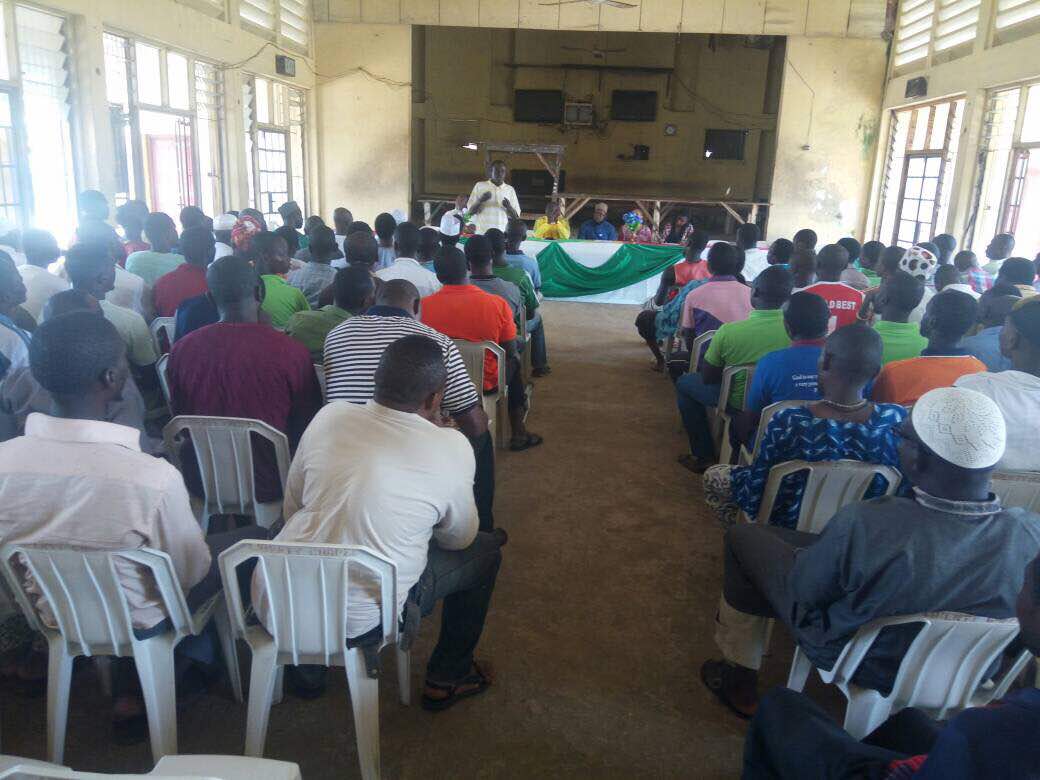
MOTIVATIONAL EVENT FOR INMATES OF IKOYI PRISON ON 6TH OCTOBER, 2017

The program started about 10:45am with an opening address from the coordinator, Mr Ahmad Adetola-Kazeem where he enlightened the inmates on the purpose of the organisation as well as the reason for our being there today. He stated clearly that the purpose of our presence today was to motivate the inmates on the importance of being educated or attaining certain skills which will help them become relevant upon their release to the outside world.

A welcome address was also done by the Principal of the school. In his address, he encouraged the inmates to attend the school rather than roaming about and waiting to be enticed with food before attending.
At this juncture, four ex-inmates were introduced to the inmates as the speakers for the day. They included:
Mr Harrison Gwamnishu ishu
Mr Tom
Mr Nathaniel Jangbadi
Mr Babagana Kachalla
The Deputy Controller of Prison joined the gathering after this and succinctly spoke to the inmates on the importance of attending the school and having an education. He further introduced another non-Nigerian NGO which was basically involved in prison welfarism in areas of feeding as well as building of better structures in the prison yard. The Controller thereafter commended both NGOs fir their selfless services to humanity.
An opening prayer was done by two inmates; a Muslim and a Christian.
Afterwards, the first speaker Mr Harrison Gwamishu started on a very lively note, chanting the popular slangs of the prisons which all the inmates instantly resonated with. Mr Harrison who was falsely accused for conspiracy, armed robbery and attempted murder had served four years awaiting trial. He made the inmates understand that it was when he entered the prison that he saw the need to be a better person which prompted him to join the drama group as well as attend school. He further said that it was in the very same Ikoyi prison that he took his GCE in 2013 before he was transferred to the Delta prison before he was eventually released. Mr Harrison spoke to the inmates on the importance of empowering themselves through education as that would be their ticket to the total freedom they wish to have. He further explained that planning to commit more crimes upon their release will do them no good and as such, they should ensure they grab the opportunity of free education and empowerment the prison offers. Mr Harrison is now the founder of Behind Bars Initiative which is an initiative aimed at fighting for the rights of inmates. He was also selected for the Mandela Washington Fellowship in the United States.
The second speaker Mr Tom was an ex-inmate of the Ikoyi prison and is well-known to many of the inmates. He told spoke to them on the importance of education which he buttressed was one major way of staying relevant in the world outside. He further informed them that it was as a result of the opportunity to learn skills while in prison that he has been able to successfully start a new business. He also stated that it is only by getting an education while in the prison that they can avoid being stigmatized when they leave the walls of the prison.
There was about 10 minutes break where the entire audience was thrilled to jokes by Kelvin, a comedian in the prison.
 After that, Mr Nathaniel Jamgbadi, the third speaker, who is a retired banker and a financial consultant who was also falsely accused and spent two years awaiting trial at the Minna prison. He spoke very briefly on deciding who they want to be. He advised them to ensure they do not take negative qualities out of the prison and to do this he said, begins with them gaining knowledge and skills. He further told them that this period was the best time to empower and equip themselves for the world outside.
Mr Babagana who was an ex-inmate at the Kirikiri maximum prison for being accused (falsely) of being a Boko Haram member, shared his experience on how and what led to his arrest and detainment. He further informed them that he learnt the importance of furthering his education while he was in prison and how he also participated actively in teaching others what he knew. He advised the inmates to strongly improve on their spirituality as nothing was impossible with God.
At this juncture, an inmate, Paul Adeoye spoke to the other inmates about the importance of changing their mind-sets first as that would be the only way they would open up to learn. Paul is now a part 2 student of the National Open University of Nigeria studying Entrepreneurship and Business Management and he confessed that the best decision he ever took was making up his mind to take the GCE in prison.
The meeting ended with distribution of snacks and drinks which led to a lot of drama and elation from the inmates. 226 inmates attended the invent.  The closing remarks and answering of questions was done by the Coordinator and the program came to a close at about 1:25pm.
-@PRAINigeria
PRAI holds motivational speaking session for Kirikiri Prison Inmates

PRAI holds motivational speaking session for Kirikiri Prison Inmates

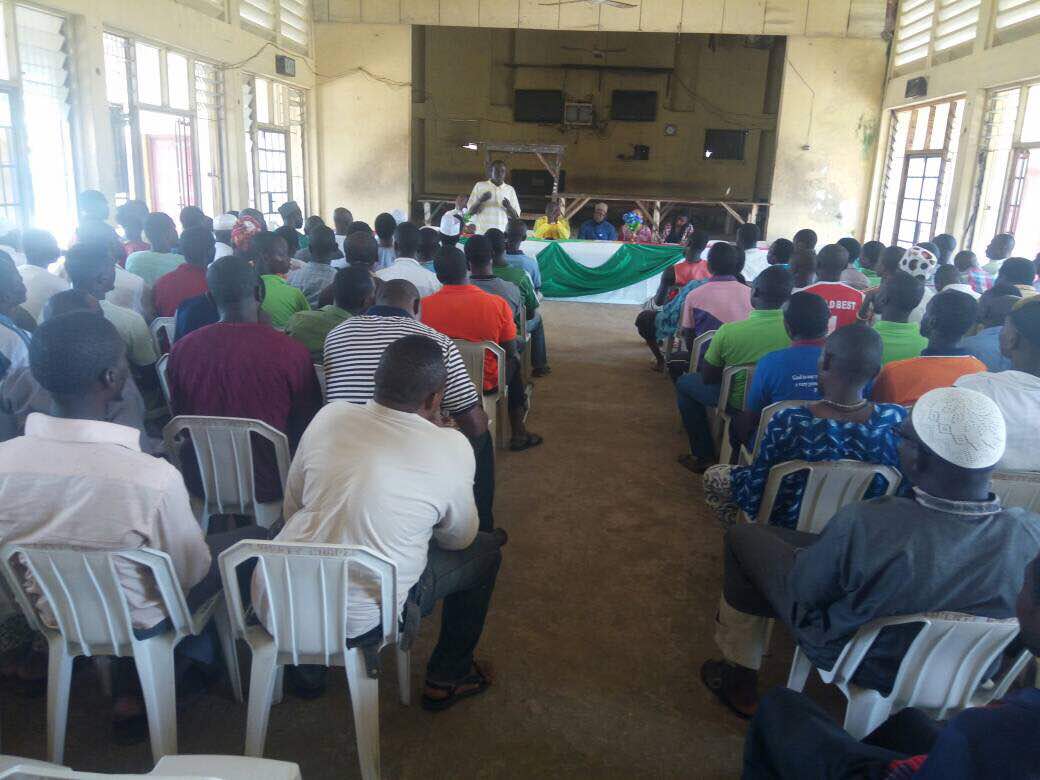
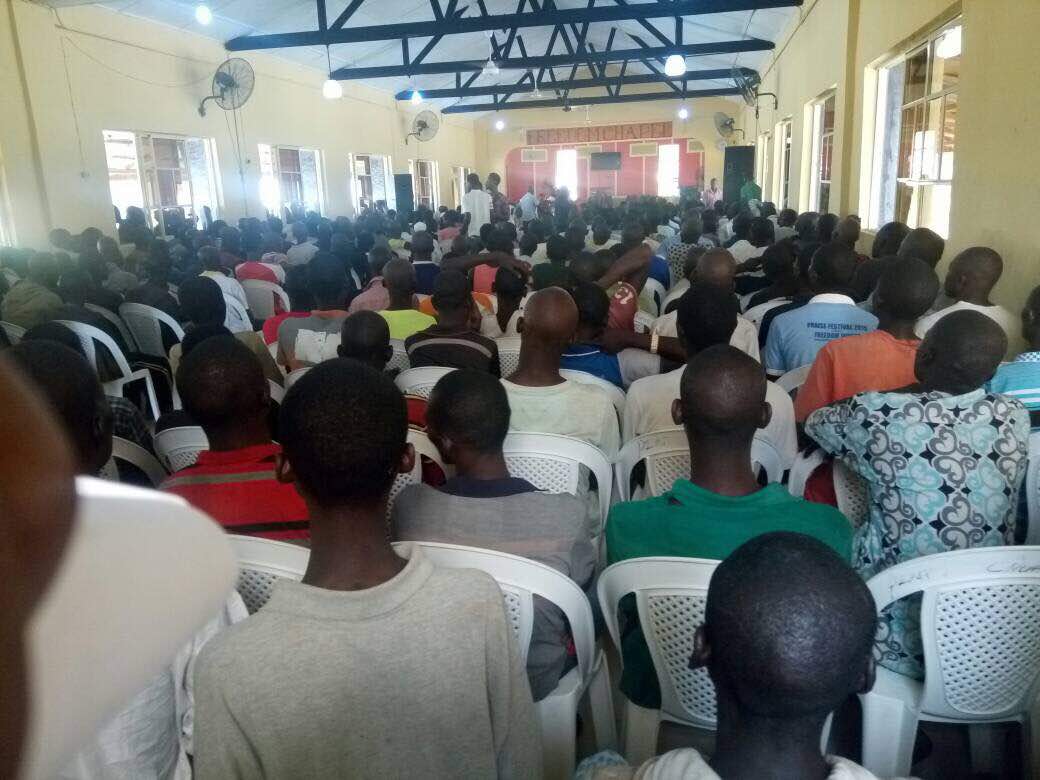
PRAI’S MOTIVATIONAL EVENT HELD AT KIRIKIRI MAXIMUM AND MEDIUM PRISON ON FRIDAY OCTOBER 14, 2017

The program at Kirikiri maximum prison started at 11.10am an introduction by the Welfare Officer of the prison. There was a brief talk by the Director of PRAI, Mr Ahmed Adetola-Kazeem, about  the aims and objective of PRAI, its past events and goals, and an introduction of the PRAI’s three volunteer schemes (“Represent and Inmate”, “Educate an inmate” and “Empower an Inmate’) and few of PRAI’s achievements in assisting inmates and ex-inmates. He added that those skills began in the prison and encouraged the inmates to be a part of the scheme.

The Deputy Controller of Prisons in charge of the Maximum Prison, also confirmed PRAI’s numerous efforts in terms of pro bono litigation and rehabilitation programmes and other efforts towards making the prison system in Nigeria a better one.  The welfare officer called out inmates, who are beneficiaries of the Prison’s educational system, to share their experiences.

Moshood Oladipo a former death row inmate and lifer appreciated the officers at maximum prison, all prison authorities that saw to the establishment of school in the prison. He gave his testimony of how he started learning shoe making in the prison before he wrote GCE and enrolled at the National Open University of Nigeria for his first degree and then Masters degree, despite awaiting his death. He informed everyone present that his release warrant was recently signed by the Oyo state government  because of the Masters degree he obtained from  NOUN. He advised the inmate to be good influence to other inmates and be known for something good in the prison because that could aid their release. He advised those who don’t want to attend school to learn a vocational skill.

The general pastor of the inmates was also called upon; he said he was detained in 2003 and was condemned to death before and later the death sentence was commuted to life imprisonment . He appreciated the opportunity that was given to him to acquire both PGD and MSc. Degree at the Maximum Prison. He advised inmates that their aim of going to school shouldn’t be about the certificate but to acquire knowledge and be well equipped with skills.

The catchyst of the prison catholic church who is also an inmate was called upon to share his experience; he appreciated PRAI and acknowledged that education a very important key to success.  He took the audience through his journey from Ikoyi prison where he wrote jamb, taught fellow inmates, learnt soap making and enrolled at the Open University. He admonished inmates to take the step and start now, saying if inmates are not reformed and are being released they go outside to cause more problem just like the case of an ex-inmate that killed a one-time Gulder Ultimate Search winner. He said that with his education, once he is out of the prison he can become a Special Adviser to the President on prison issues, based on his knowledge of the prison system and the reformation he has gone through. He concluded by saying that the prison should be reformatory  and not defamatory.

Barr. Adetola Called out for inmates interested in registering in the school today and quite a number signified by raising their hands and a list went round to collect their names.
The head teacher in the prison yard, appreciated the yard officials and the representatives of PRAI, he called them the instrument God is using to change their lives. He sought for assistance in the rehabilitation of the school structure which is always leaking during rainfall. He also sought for fainacial support for the inmates who are teachers in the school as well as books, markers, pens, boards etc. He showed appreciation to the welfare officer of the prison,  Alhaji Rasheed  for always assisting the teachers with food supply .

Mr.  Ogbonaya the prison  psychologist appreciated PRAI and its representatives. He said education is a continuum which starts from birth to death. He added that human thoughts are products of what they know and what they know is what they acquire through education. He introduced a club called 3R’s and invited inmates to be a part of the various sessions such as  entertainments, sports, catering services and other activities. He advised that inmate should be mindful of the people they move with because some inmates have PhD in pulling people down. He concluded by appreciating the organizers of the program and said some prayers for them.
PRAI’s director,  appreciated all attendees and encouraged inmates who indicated interest in studying to fulfill their promises by attending the school. He introduced the volunteers of PRAI present at the event from Mr. Nathaniel Jamgbadi, Miss Nelly D, Miss Aramide Adedeji, Mrs. Yewande and Mr. Kehinde Ibrahim.  He appreciated the prison authorities for allowing the program. The inmates showed appreciation by giving PRAI 3 gbosas.
The inmates were told to queue up to collect the food items that was brought for them and they all matched out afterwards.

There was a short meeting with 7 of the school teachers. They all introduced themselves and the subject they teach. Ibrahim Kamil Ogun an inmate who has been sentenced to life imprisonment but seized the opportunity to enroll in the prison nursery school to university and now teaches in the school was one of the teachers at the meeting.
The head teacher indicated that they need teachers in the following subjects; BIOLOGY, MATHEMATICS, ACCOUNTING, HISTORY, ENGLISH and LITERATURE respectively and  they also need MARKERS, EXERCISE BOOKS, and BIROS. He also said teachers needs encouragements in form of stipends.
There were about 150 inmates in attendance.
The program at Kirikiri medium prison commenced at about 2:15pm. The Executive Director of PRAI, Mr Ahmed Adetola-Kazeem appreciated the pastor for allowing the use of the church for the program because the school was extremely small. He introduced PRAI and how it’s set up to liberate, educate and empower inmates. He informed the inmates that PRAI will no longer be taking up random cases on behalf of inmates , and only cases of those enrolled in the school and workshops will be handled by PRAI henceforth.
 The principal of the school spoke about the needs of the school and that they have three inmates currently enrolled at the National Open University of Nigeria (NOUN). He said that they need computers in their computer school, markers, books and other materials important for the running of the school. He also said he is looking forward to meeting the new teachers and advised fellow inmates to take advantage of this opportunity.
Mr. Oyeleye, another inmate appreciated PRAI and other Initiatives that are making impart in the lives of many inmates. He said that the government hasn’t been looking at human capital development and investments programs and that the school should be given a lift so that proper impartation can be made. He added that there should be a platform for empowerment and if the government can see all these, they would do a broader one.
Barr. Adetola responded by saying we will keep trying our best, however we cannot do more than we can do. He made emphases on their involvements in school because we can only help those we know and PRAI is looking into human capital development programs.
Frank an inmate who is a beneficiary of PRAI’s pro bono legal services, said  his coming to the prison is not a mistake, but God’s divine directions and that the life he lived that got him to prison was nothing compared to what he has achieved while in prison. Before he became an inmate he had no skill and had no knowledge but now he is a 200 level student in the Open University studying criminology. He is also a website designer and developer; he told inmates that he works with Onesimus Ventures, which is in partnership with the prison service and Covenant University, where they produce paint, soaps, hand wash, car wash e.t.c and he said their products are better that the ones we find outside. They have established business with Wema bank and have sold 5 cartons of soap to them, now he has no reason to go back to committing crime when he leaves the prison. He encouraged other inmates to take advantage of the school and workshops and that he is not impressed with the turn up of inmates in the school and the workshops.
Mrs. Yewande Omotayo, a volunteer and great supporter of PRAI, buttressed his view and further encouraged more inmates to join the school, and called for those who would promise to attend school and workshops. Several of them indicated interest by raising their hands and a list was passed to them.
An inmate asked that after inmates have acquired these skills and have gone through school what would be the end result since the government has made the rule that freed persons would wait 10 years after being released to be fully integrated into the society again and he suggested such law be removed. Barr. Akinola responded by saying, no education is a waste and that it is the duty of the ex-convicts to show that they are reformed and worthy of pardon and he won’t advocate that the law be scrapped.
Another inmate opined that most of the inmates do not understand the meaning of human capital development and how they can take partake in what they do not understand, he also said that many of them went into crime because of lack of skills and knowledge and they need more help from initiative like this in other to expand the training facilities to accommodate more inmates. He added that ventures in prisons like Onesimus Ventures needs to have partnership with initiatives and foundations such as  PRAI the purpose of marketing and awareness.
ASP Tony , who represented the DCP, said he is aware that the population of inmates in the prison is much and they all want to leave and are not interested in education, but what they do not know is  when they will leave and that is why they need to acquire vocational skills. He told them about the department in the welfare unit called the after care and ones they are empowered the after care unit will follow up on them. He appreciated PRAI for the program and the gifts of Bread, eggs and tea that was brought to feed the inmates.
The program ended few minutes after 4 and there were over 330 inmates in attendance.

Tax Incentives for Start-Ups and Venture Capitalists in Nigeria|

Tax Incentives for Start-Ups and Venture Capitalists in Nigeria|

Developing countries tend
to use both targeted and general incentives to attract investors. Such
incentives may be included in tax laws, financial regulations, investment laws,
government directives and the likes. The mere fact that tax incentives do not
require upfront use of government funds makes them a preferable option for
developing countries, unlike developed countries that are generally more open
to grants or subsidized loans.


In line with the above,
Nigeria passed the Venture Capital (Incentives) Act Cap V2, LFN 2004 (“The
Act”) which was enacted for the sole purpose of granting additional
tax incentives to venture capital and start-ups generally. However, the
structure/mode of operation of a start-up is a major determinant of which and
what benefits are applicable to such entities (kindly seek professional
advice for clarity)
.

The incentives in the Act
are as follows;

1.      Pioneer
Status
: This exempts an organization from paying company
income tax for a period of 3 years. The privilege can be extended for an
additional 2 years, making a possible total of 5 (five) years of tax exemption.

2.      Withholding
Tax:
 The
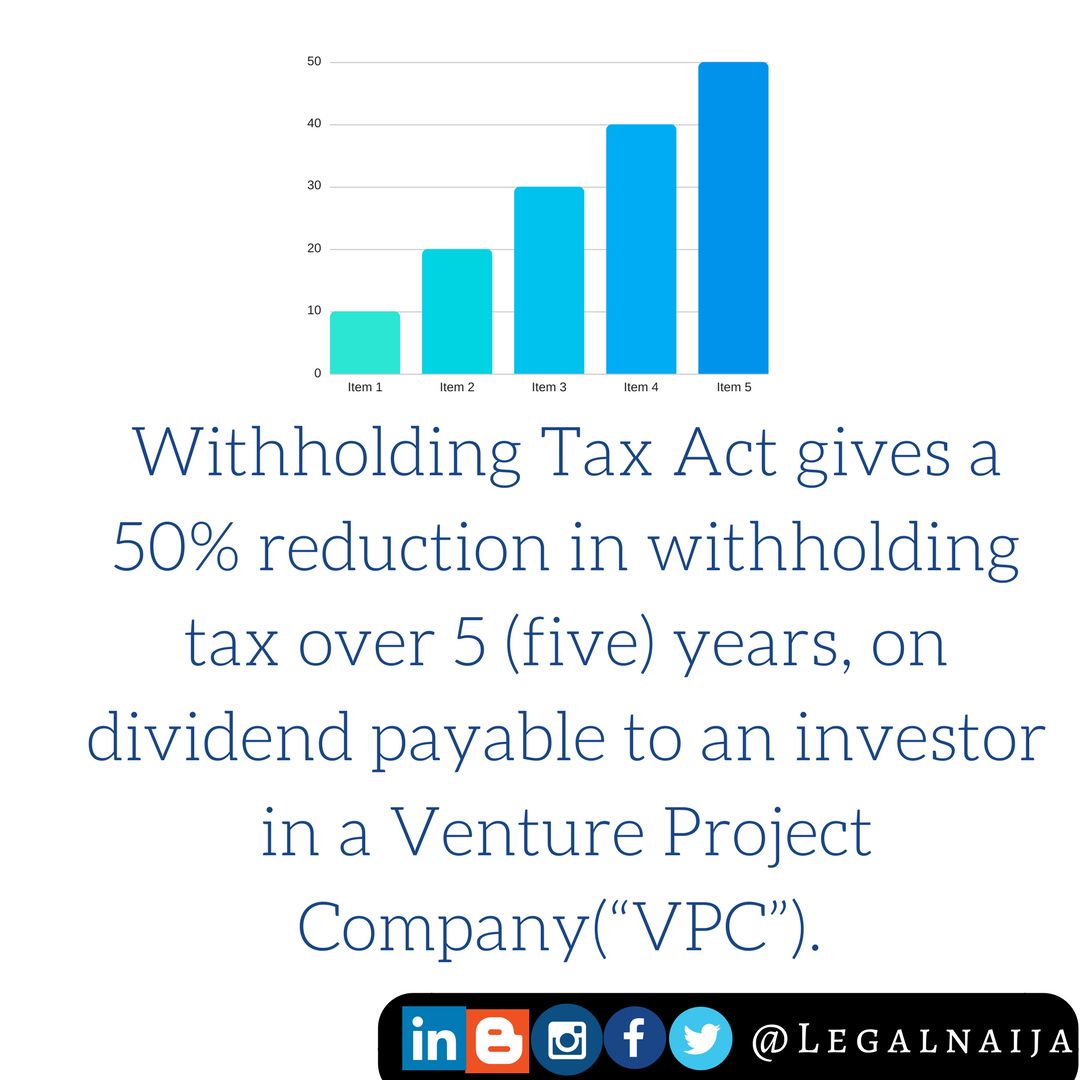
Act gives a 50% reduction in withholding tax over a period of 5 (five) years,
on dividend payable to an investor in a Venture Project Company(“VPC”).

3.      Capital
Gains Incentives
: This is a reduction in the amount payable
as tax on the profit made when disposing an asset that has increased in value. 

The act provide as follows:
  • Disposal of capital within five years
    of investment, 100 per cent
  • Disposal of capital between six and
    ten of investment, 75 per cent
  • Disposal of capital between eleven and
    fifteen years of investment, 25%
4.      Capital
Allowance: 
It is a tax deduction companies or
start-ups can claim for the wear and tear of fixed assets used in trade or business.
They are as follows:

  • 30% deduction for the 1st year
  • 30% deduction for the 2nd year
  • 20% deduction for the 3rd year
  • 10% deduction for the fourth year
  • 10% deduction for the 5th year
5.      Export
Incentives:
 Start-ups that qualify (in accordance
with the provisions of the Act) will be able to access export incentives such
as financial assistance from the Export Development Fund as well as benefit
from the export expansion grant and the export adjustment scheme fund.

 Eligibility
Requirement for Incentives under the Act

1.    
Venture Project Company under the Act:
A VPC is defined as one established for the following purposes (a) The
acceleration of industrialization by nurturing innovative ideas, projects and
techniques to fruition (b) The commercialization of research findings with high
potentials for far-reaching forward or backward linkages (c) The promotion of
self-reliance through the establishment of resource-based and strategic
industries through the provision of risk guarantee and insurance (d) The encouragement
of indigenous process and technologies (e) The promotion of the growth of small
and medium scale enterprises with emphasis on local raw materials development
and utilization (f) such other objectives as may from time to time, be
specified by the FIRS. A VCC must also be established for the foregoing
purposes to be eligible for the incentives provided for under the Act.

2.    
Share Capital Threshold: The
Venture Capitalist must acquire not less than 25% of the total capital required
for the project.

3.    
FIRS Certification: The
Federal Inland Revenue Service is the agency responsible for administering the
incentives under the Act and generally has the power to determine whether a
company is capable of fulfilling one or more of the incentives. Companies who
intend to take advantage of the incentives under the Act must obtain the
accreditation of the Federal Inland Revenue Service.

Conclusion
In as much as the intent
of the Act might be commendable, there is a large room for improvement on what
presently obtains. One of the various steps that should be taken includes
expanding the scope of VPC and a general review to capture present business
realities.
Olanrewaju
Olumide
Partner
at Bamidele Aturu & Co

Ease of doing business is about to disrupt these 11 bottlenecks | Ibiyode Ibikunle

Ease of doing business is about to disrupt these 11 bottlenecks | Ibiyode Ibikunle


The Presidential Enabling
Business Environment Council (PEBEC) through its secretariat has released the
national action plan in its continuous bid to facilitate ease of doing business
in Nigeria.


The national action plan
is supposed to last for a period of 60 days from the 3rd of
October to 31st of December 2017 and it is to cut across 11
major areas in the economy.

Also of note with the plan
is that as it affects various sectors, they are specific to different regions
in the country.

The innovations contained
in the plan are as follows,
  • Incorporation: Incorporation
    is expected to be easier with one of the processes removed and about 72
    hours removed from the procedure.

  • Construction: It
    is expected that obtaining construction permits get easier with the time
    frame for obtaining governor’s consent set at a maximum of 30 days.

  • Property Registration: The
    introduction of e-consent by the governor is included with clearly defined
    fee schedules made available to public. Also statistical information on
    land disputes is to be available online.

  • Getting Electricity: There
    is to be further reduced time to get connected to the grid by deploying
    online systems and a revised procedure for connection and strict adherence
    to the timeline

  • Access to Credit Facilities: There
    is an increase in number of financial institutions on the collateral
    registry with about at least 300 microfinance banks joining the National
    Collateral Registry and increased usage of credit scoring services by
    banks and other financial institutions.

  • Tax Remittance: The
    plan is expected to simplify the process and reduce the time for paying
    taxes with all large and medium size enterprises to be registered on
    e-filing system.

  • International Trade: The
    plan is expected to cover cross border trading by joint examination of
    import cargo in Lagos (led by Nigerian Custom Services) and prevent
    multiple inspections. Also, there will be strict compliance with 48-hour
    scheduling process by pre-shipment inspection agents. Also, export
    documentation and import documentation has been reduced to 7 and 8
    respectively.

  • Enforcement of Contracts: The
    plan is to address the time spent in court relating to commercial
    transactions.

  • Public Procurement: The
    plan is to address the process of procurement by government for SMEs.
    Also, the Bureau of Public Procurement will ensure compliance of relevant
    government agencies to laid down procedures and timelines.

  • Immigration: The
    plan addresses the experience of travelers entering and leaving Nigeria.
    The plan would ensure reduction of time spent at the airports.
    Streamlining of the processes for entering the country is also expected to
    be worked on with a Single Passenger Clearance system at airports to
    reduce average clearance time by 50%. Processing and approval of Temporary
    Work Permit (TWP) within 48 hours is also expected. There is also going to
    be the introduction of Automated Expatriate Quota (EQ) application process
    at the Federal Ministry of Interior to ease entry of expatriates.

  • Local Trade: The
    plan also encompasses trade practices within the locality. Plans will
    include the simplification of the process of registering food and drugs at
    NAFDAC, removal of illegal road blocks, clear backlog of outstanding marks
    at the trademark registry among other things.

Committed Leadership in Lagos State | Senator Ashafa

Committed Leadership in Lagos State | Senator Ashafa


The Senator representing
Lagos East has described His Excellency, Governor Akinwunmi Ambode of Lagos
State as a visionary, committed and courageous leader.


The Senator made the
comment while addressing the press at the ongoing Lagos State
Executive/Legislative Parley 2017 themed “Mega City to Smart City.”
Ashafa stated that “Let me seize this opportunity to commend His
Excellency Governor Ambode and the entire team of Lagos State Government under
his leadership for the awesome work of further transforming Lagos State. The
socioeconomic and infrastructure development going on around the state can only
be a testament of one thing: Visionary, committed and courageous
Leadership.”

The Senator also
identified Lagos State as being in the forefront of development across the
country stating that “No doubt Lagos State has been in the forefront of
development across the Country and this is so not necessarily because
we have so much resources, but because the resources coming into Lagos have
been well managed by the Governor of Lagos State and his team.”

He
stated further that “
Sincerely, it is
events like these where we come together to brainstorm over the future of our
dear state and the direction in which it should go that set Lagos State apart
as the Center of Excellence.It is my hope that we would in the next few days be
able to discuss frankly and with clarity on the theme of this years parley:
Mega City to Smart City.

​​Ashafa
concluded by calling on Lagosians to continue supporting the government of
Governor Akinwunmi Ambode while also restating the commitment of the
Senators and Members of the National Assembly from Lagos State to always
give 
their best in defending the
interest of Lagos State as 
they also
continue to contribute 
their quota in
the grassroots
and various constituencies
to ensure the actualization of the vision of His Excellency, Governor Ambode
for Lagos State.
How is Technology redefining Legal Profession and Law Office Management?

How is Technology redefining Legal Profession and Law Office Management?


Part 1
Technology has significantly impacted most
industries and fields in the world and the legal profession is not an exception
especially in the area of law office management. The legal profession like
other professional services is dynamic and it has shown this by adapting to the
socio-economic realities around the world through the integration of technology
into legal practice. 
This article examined the beneficial
relationship between law and technology, its impact on law office management
and current trends in the global legal industry.

Many factors have influenced the economic
development of the world at different stages, the third and fourth industrial
revolution (characterized by the use of information technology to automate
production and fusion of technologies that has blurred the line between the
physical, digital and biological spheres respectively) have increased the
possibilities of billions of people being connected by mobile devices and other
means, this has engendered various inventions like internet, social media,
artificial intelligence, the internet of things, autonomous vehicles,
nanotechnology, quantum computing, etc. Similarly, new professions and skills
like Computer science, Certified Software Management, Networking, Software
Development, Systems Analysis, etc. have been birthed while old ones like Law,
Medicine, Engineering, Banking, etc. have adopted technology.

Legal Practice and technology
Some few years ago, lawyers were accused of
being arsy-varsy in adopting technology, critiques even suggested that lawyers
were Luddites and it was because the trade of law thrived on obsolete and
unnecessary professional practices like being ever reliant on sharp practices
and ‘medieval’ methods of document and case management, delitescent billing system
and mundane business operation. Fortunately for the profession, technology does
not discriminate, there is room for anybody, anywhere in the world to catch up
and adopt it as long as the requisite infrastructure are in place, asides this,
use of technology in the professional services industry became invaluable,
Management Consultants, Medical practitioners, Accountants, etc. rely on
technology to deliver better services to their clients and of course, reap the
benefits relatively. Therefore, as technology was customized to improve service
delivery in some of the above mentioned industry segments, developers started
designing hardware tools and software applications specifically for improving
the efficiencies within the legal practice.

On one hand, technology has redefined Legal
education globally, research is the tool of legal practice, and one cannot
ignore the fact that the advent of technology has enhanced this throughout the
world, law students now have unrestricted access to contents regardless of their
physical location. Hence, many Nigerian universities (and even the Nigerian law
school) have incorporated Information and Computer Technology (ICT) into their
curriculum, similarly, lectures are now delivered using hardware tools
(computer, projectors, etc.) and software applications (Ms Office), law
faculties in the country now have libraries with Computers, internet and paid
subscription to research databases like Lexis/Nexis, Law Pavilion, etc. At the
Post-graduate level, universities around the world now offer technology related
courses for legal practitioners, for instance, Stanford Law School and Harvard
Law School offer Law, Science and Technology at the master’s level (LL.M).

According to a recent report by Robert Half
Legal, they made the following key findings about the impact of technology on
legal practice;

1. Law firms are making a greater
investment in IT
2. Web-based tools are improving client
communication and delivery of legal services
3. Law firms’ office footprint is shrinking
4. Technology is levelling the playing
field
5. Corporate legal departments are using
technology tools to manage higher workloads
6. Technology has dramatically changed the
realm of discovery

Even the Nigerian justice system has given
room for technology by allowing the admissibility of “Computer Generated
Evidence” in evidence during civil proceedings and criminal trial pursuant
to Section 84, Evidence Act, 2011.

Law Office Management
Simply put, law office management (also
known as law practice management) is the management of law practice. This is
the study of the organisation and methods employed in the law office and the
relationship between members of staff of that office on one hand and their
relationship with members of the public with whom they are in contact. It is
also concerned with the development of human and other resources in a law
office. Efficient office management of a lawyer comprises a number of vital
functions, including time management, organizing the paperwork and workspace,
managing cases of multiple clients simultaneously, and being in control of all
activities and responsibilities. It includes management of people (clients,
staff, and vendors), workplace facilities and equipment, internal processes and
policies, and financial matters such as collection, budgeting, financial
controls, payroll and client trust accounts.

No doubt, legal knowledge is important,
however, law office management can determine the success or failure of a legal
practitioner. Components of the law office management include; location of the
law office, size and features of the law office, employment and human
resources, equipment and furniture requirements, storage of documents, library,
office communications, power supply, rest rooms, meeting halls and visitor
rooms, working facilities, Periodicals and Journals, etc.

The next part of this article will bother
on importance of law office management, impact of technology on Law Office
Management and highlight the skills needed by a 21st Century lawyer.

To be continued…

and 
Damilola Oyebayo

Divorced But Married: The Disturbing Trend Of Fake Divorces | Jamiu Akolade Esq

Divorced But Married: The Disturbing Trend Of Fake Divorces | Jamiu Akolade Esq

The breakdown of a marriage is undoubtedly
a painful and life-changing event. But what could be more painful than finding
out that you are still married even though you are supposed to have been
divorced years ago?
I was instructed recently by Mrs. A to
claim maintenance for the child of her marriage to Mr. A who she had been
‘divorced’ from over three years before. According to her, Mr. A has been
inconsistent with the maintenance payments. My first response was to ask for a
copy of the order of court dissolving the marriage to have an idea of the
arrangements made by the judge for the welfare of the child post-dissolution.
What I saw next shocked me to the marrow.

I saw a supposed order for ‘nullification’
of marriage which purportedly dissolved the marriage summarily without a trial
and nullified the marriage from the day of celebration. For added measure, the
marriage was supposedly dissolved on the ground of ‘incompatibility’ between
the parties to the marriage which by the way lasted only two months. I was
convinced that the order was suspicious and required further investigation. A
few visits to the High Court registry confirmed my worst fear: This was a fake
order. It was not granted by any court but by one of the growing army of fake
divorce mercenaries What I found is a criminal racket that permeates the
marriage and High Court registries orchestrated by State officials and urchins
preying on the victims some of whom are willing and others unsuspecting,
looking for quick fixes to their marital woes and others needing it for more
criminal purposes – for emigration and other unspeakable frauds. Suffice to say
that we are taking action against the participants in this criminal enterprise
in the case of Mrs. A.
This got me thinking: how many people are
going around believing they are divorced when they are actually still married.
Mrs. A completely believed she was divorced and was in a relationship which
could have led to marriage (she would inadvertently have committed bigamy and
her ‘new’ husband would have been committing adultery with a married woman)
before this bombshell. She would not believe me until I produced the letter
from the court registry disclaiming the order. I then realized that citizens
need more education about how the marriage dissolution process works and
decided to pen down a few pointers to how the process works.
1.            
A
statutory marriage conducted at the marriage registry or in an authorized place
of religious worship for which a marriage certificate is issued can only be
dissolved by a judge after hearing the parties on the factors which led to the
breakdown of the marriage. If you are given a ‘divorce order’ without having to
appear in court, that my friend is a fake divorce.
2.            
Proceedings
for dissolution of a marriage is not complete until arrangements are made for
the welfare of the children of the marriage if any and other financial
provisions such as maintenance for the party entitled to it, settlement of
property, e.t.c.
3.            
The
court is mandated to attempt reconciliation of the parties. This will happen at
different stages of the process. Before your lawyer files the suit, he is
expected to file a certificate confirming that he has advised his client on the
possibilities of reconciliation. During the proceedings, there is a compulsory
conference (meeting) which parties must have to explore settlement. After the
trial, there is also a three – month window within which the parties may
reconcile before the dissolution becomes absolute. Certainly, dissolution of a
marriage is not a tea party.
4.            
Dissolution
of a marriage is not conducted at the marriage registry or the court registry.
It is done before a High Court Judge in the case of a statutory marriage or
before the judges of a Customary Court for customary law marriages. In the case
of Mrs. A, she fell into the hands of a fraudulent person at the registry who
she called for advice and was told the marriage could be ‘nullified’ at the
registry since the marriage was still within a year of celebration!
5.            
 Many people fall into this trap of fake
divorces due to privacy concerns. They are more than willing to adopt any
measure that does not involve them appearing in court to ‘wash their dirty
linens in public’. While a court appearance may be unavoidable, it is important
to know the best approach to achieving a dissolution without the sordid details
of the marriage. Parties can exploit the no-fault option of seeking dissolution
on the ground of living apart for 2-3 years before presenting the petition for
dissolution if their case falls under this head. In this way, nobody needs to
prove the fault of the other party and the court would dissolve the marriage without
an inquiry into this.
If you suspect you may have fallen into
this trap of fake divorces, my advice to you is to visit the High Court
registry to verify the order you have been given. If you find out that you are
‘divorced but still married’ then you will need to go through the process
outlined above all over again. I share your pain.
T: @akoladejay
Lagos Nigeria.

Can the police be used as debt recovery agents in contractual matters between parties?

Can the police be used as debt recovery agents in contractual matters between parties?

Recently I was involved in a criminal
matter between two parties in Court. I appeared for the Defendant and my brief
was predicated on a contract that had gone sour and the Complainant getting the
Defendant arrested for “defrauding” him as he had elegantly put his case. It is
important to note that parties had entered into a contract, evidenced by a
contractual document that was tendered in court, and the IPO (Investigating
Police Officer) stated in open court during cross examination, that he
inspected the contractual document and unilaterally decided that the Defendant
had run afoul of the contractual terms.

The attitude of the Court in situations
like this is quite clear as espoused by Per Mbaba JCA in OCEANIC
SECURITIES INT. LTD VS. BALOGUN & ORS (2012) LPELR-9218(CA)
“It
has been stated many times that the police has no business in enforcement of
debt settlements or recovering of civil debts for banks or anybody. Only
recently, in the unreported decision of this Court in the case of IBIYEYE &
ANOR VS GOLD & ORS, APPEAL NO_ CA/IL/M.95/2010, delivered on 7/12/2011, I
had cause to scream thus, in my contributory judgment. “I have to add that the
resort to the police by parties for recovery of debts outstanding under
contractual relationship, has been repeatedly deprecated by the Court. The
police have also been condemned and rebuked, several parties, and for using its
coercive powers to breach citizens right and or/promote illegalities and
oppression. Unfortunately, dispute, all the decided cases on this issue, the
problem persists and the unholy alliance between aggrieved
contractors/creditors with the police remains at the root of many fundamental
right breaches in our Courts
The police have no business using their
coercive powers to deal in matters of contractual nature between parties. In
fact, it was held in another matter before the Court of AppealANOGWIE &
ORS VS. ODOM & ORS (20160 LPELR-40214 (CA)
, where My Lords were more
forceful with their judgment that
       “…the
invitation of the police to intervene in a matter that is purely civil in
nature CANNOT BE JUSTIFIED UNDER ANY CIRCUMSTANCES. The duties of the Police as
provided under Section 4 of the POLICE ACT, Cap 359 LFN 1990 does not include
the settlement of civil disputes or the collection of debts or the ENFORCEMENT
OF CIVIL AGREEMENTS BETWEEN PARTIES . See the case of MCLARENCE VS. JENNINGS
(2003) 3 NWLR (Pt. 808) 470. The mere fact that the police are invited into
just about every matter under the sun is no justification to get the police involved
in the resolution of civil disputes. The police has recently held itself out as
a responsible law enforcement organization and should be seen to live up to its
billings in quickly turning down matters not statutorily assigned to it so as
to avoid embarrassments of matters of this nature happening. There are usually
dire consequences at every turn of event in the event of things of this nature
happening. The position is and has always been that the private individual who
uses the police to settle a private score, would himself be liable for the
wrongful act of the police. See the case of NKPA VS. NKUME (2001) 6 NWLR (pt.
710) 543 and a host of other decided cases on the subject”
The Police derive their powers from section
4 of the Police Act, Cap 359 LFN 1990. This section states the Jurisdiction of
the police and being used as debt recovery agents, being involved in purely
civil matters or being used to resolve civil disputes has no basis in law
as by so doing, the police would have acted ultra vires. It is disheartening to
note many people; even Lawyers still use the police to hound people for purely
civil transactions that might have gone sour. As stated by My Lords in OCEANIC
SECURITIES INT. LTD VS. BALOGUN & ORS (Supra), 
this act leads to
many fundamental human rights breaches against individuals. Many times, the
police, using their coercive and physical presence force victims into making
undertakings promising to pay the debt at an agreed date. They threaten with
imprisonment and they harass the victims into agreeing to these undertakings
which have no basis in law.
The Courts have taken a very radical
approach to this problem as they have stated in numerous cases that the victims
can institute an action against the errant officer and the private individual
who used the police to settle a private score as he too would be liable for the
wrongful act of the police.
So in answer to the topic question, the
police cannot and should not be used as debt recovery agents nor should they be
used in purely civil matters as the act is ultra vires.

F.B.A Nabena & Co
Source: Linkedin 
My interest in International Economic Law | Damilola Dawodu

My interest in International Economic Law | Damilola Dawodu

International economic law is a field of international
law that involves the regulation and conduct of states, international
organizations, and private firms operating in the international economic arena.
It is a study of international forces that influence the domestic conditions of
an economy and shape the economic relationship between countries. In other
words, it studies the economic interdependence between countries and its
effects on economy.

It is concerned with the governance of
international economic relations between states as they affect individuals in a
state, including in particular their relations inter se across national boundaries.
A traditional drive for this normative framework has been the facilitation of
the optimal allocation and use of national and international resources for the
development of all the people of the world.
Different Parts of International Economic
Law
As such, international economic law encompasses
a broad range of disciplines which includes, among other things:
· international
trade law
· international
financial law
· public
international law and private international law
· domestic law
applicable to international business transactions.
The scope of international economics is
wide as it includes various concepts, such as:
· globalization;
· gains from trade;
· pattern of trade;
· balance of
payments; and
· FDI.
Apart from this, international economics
describes
· Production;
· Trade; and
· investment between
states
Additionally, international economic law
includes the following fields:
· Regional Economic
Integration, such as the European Union, ASEAN and other regional trade
organizations.
· International law
and development
· International
commercial arbitration
· International
intellectual property law
· International
business regulation
Importance 
of International Economic Law
International economics has emerged as one
of the most essential concepts for countries. Over the years, the field of
international economics has developed drastically with various theoretical, empirical,
and descriptive contributions.
Generally, the economic activities between
nations differ from activities within nations. For example, the factors of
production are less mobile between countries due to various restrictions imposed
by governments.
The impact of various government
restrictions on production, trade, consumption, and distribution of income are
covered in the study of internal economics. Thus, it is important to study the
international economics as a special field of economics.
The economic sector affects everything in a
country, the education, health and every other sector in the country. Economic
policy covers the system for setting levels of taxation, government budgets,
the money supply, interest rates, the Labour market, national ownership and
many other areas.
I have keen interests in influencing and
transforming the economic systems of my country and the globe at large. I have
tried to define problems with our economic system and I realized that economic
system may not thrive if  the  international economic relations among states
are not
properly governed and managed by making and
executing of good policies as they affect individuals in a state.
I aspire to work with the federal
government and with international organizations 
like the World Bank, International Monetary Fund, or any other
organisation that handles issues as regards the 
economy.
References
1.        
https://www.slideshare.net/mobile/Kingnabalu/lecture-3-sources-of-international-law,
24 July 2017, 2.45pm
2.       Qureshi A.H.
International Economic Law, London, Sweet and Maxwell, 2007, p. 35
3.       Principles of
International  Economic Law and the Right
to Economic Development Vis-À-Vis  The
Guiding Principles of Sustainable
Development
4.       As an individual,
why I am interested in International Economic Law
4https://www.law.cornell.edu/wex/international_economic_law
11th September 2017, 3.45pm
5.       hp://www.economicsdiscussion.net/internaonal-economics/internaonal-economics-its-concept-parts/4205
18th September 2017, 11.18 a.m.

Damilola Dawodu
Lawyer | Writer| Speaker| Blogger


Photo Credit – iielaw.org 
Through The Lens hosted by Olisa Agbakoba Legal

Through The Lens hosted by Olisa Agbakoba Legal

On the 5th of October, 2017, Olisa Agbakoba Legal hosted “Through The Lens’, a business round table event on Entertainment, Fashion and Sports Law. It was an exciting and enlightening event having participants such as Kola Kuddus, Adekoye Sowemimo (Head of Sports at Temple Management); Ego Maduekwe,(Creative director at Alter Ego), Adamu Samson (Founder, COPA Lagos) and Tega, Head of Partnerships, Mavins Records.