
GUEST BLOGGER: #30PERCENT OR NOTHING by Arikor Collins

GUEST BLOGGER: #30PERCENT OR NOTHING by Arikor Collins

None other, perhaps, in my humble opinion, than any other event in the
existence of twitter, Nigerian social-networking stratosphere has been
shaken to its foundations by a trending topic on twitter, than the
recently trended #30PercentOrNothing. In keeping with the needs of most
Nigerians-youths, especially-all manners of saviours and messiahs have
appeared at one point or the other. Most times, a repetition, other
times, unprecedented.
Periodically, a seasoned mind-bogger and a
renowned spin doctor with a considerable reputation, might rally and
rouse the flames of revolution in the youths. And an enraged, or perhaps
frightened youths will hungrily pick up the trend, make the necessary
noise without second thoughts, only for that highly anticipated
requisite action to become instantaneously and permanently frozen. It
goes without saying then, that the Nigerian situation is aptly captured
by the different animals left on Manor Farm, after their highly praised
revolution, as painted by George Orwell, in his ‘Animal Farm’.

That
trended topic on twitter, a few weeks back made a deep impression on
me, that I sought to add my voice to the unresolved intrigues and rage
(as would naturally befit any Nigerian  socio-political drama). The
trend I was referring to was the #30PercentOrNothing noise that emanated
from the doorsteps of  twitter user, @MrFixNigeria. According to all
sides of the gist, MrFixNigeria felt that the Nigerian youths were
heavily cheated from the arrangement and governance of the country and
as such, he felt youths should seriously agitate for a 30% inclusion in
present and any forthcoming government of the country. As is usual with
novelty in Nigeria, he has within a short notice, alongside his
supporters literally taken over Nigerian social networking. 

The
paradoxical nature of the situation, to me, had been as a yoruba adage
succinctly captures it: the matter is like fart in your mouth and salt
is added to it; you are torn between spitting it out and swallowing it. I
really don’t have any problem with MrFixNigeria’s demands and the
foremost yearnings of his supporters; everyone is entitled to his
feelings and the way he chooses to express it should not be a concern of
others. But, I am consoled by the adage that, ‘one should not swallow
poison because he is afraid to spit it and offend others. Moreover, a
feeling can only be a feeling and nothing more. If after fantasizing of
stealing, one goes ahead to steal, then I am afraid, he must go in for
it. Though afraid of social ostracism and stigmatization typical of
Nigerian youths, many a youth might decide to add his two-kobo weight to
the ongoing agitation without second thoughts and proper weighing. I
will rather, as a matter of logical reasoning choose to take the matter
with a grain of salt.

The current clamour for youth inclusion in
the scheme of things, cannot be far-fetched from the ‘normal’ Nigerian
mentality of ‘it is our turn to nibble at the national cake’. Perhaps,
because the originator of the trend saw the massive chunk of the
national cake delegates to the just concluded National Conference took
home; or maybe as is usual in the Nigerian political scene, an Abuja
appointment is patiently waiting. With the mannerism of setting up
committees for this; committees for that, it isn’t unusual that
MrFixNigeria will soon be appointed Chairman of the Committee for Youth
Inclusion in Governance. A make up office at Abuja will hurriedly follow
suit. Real estates at Abuja and long line of modern automobiles will
also be in the offing.

So as not to be labelled a sardonic,
tongue-in-cheek and confused person, I humbly implore you to properly
scrutinise the performance indices of youths that have been granted
opportunities to be in one position of service or the other. Gratifying
their ‘personal’ success was the foremost policy to be implemented once
they’ve occupied such offices. Current National Association of Nigerian
Students (NANS) president, Yinka Gbadebo is a classic portrayal of the
above ideology. Polytechnics’ students across the federation sadly were
forced to sit at home as a result of the inglorious strike of their
lecturers, that of course, was coming on the heels of the infamous ASUU
strike of the recent past that kept University students at home for six
months. 

All those while, Yinka Gbadebo was wining and dining with the
very people that could answer the question why students were at home:
his co-students for that matter! Yinka Gbadebo may have gained some
cheap reputation by being a delegate at the National Conference, but
creases of disappointment didn’t cross my face when he couldn’t proffer a
single imput at the Conference. The current Presidential assistant on
new media, Reno Omokri is a youth. What Reno Omokri has thus far been
able to achieve is to ‘rightly’ paint the opposition party with all
shades of black by cheap propaganda. Weakening their strongholds by
smearing ideologies, even to the extent of using a fake alias, Wendell
Simlin, to achieve his incivility. We have a Jude Imagwe in the person
of person of Presidential adviser on Student Affairs, a youth. His only
advice, as can be guessed by overt manifestations of his boss, is to
refuse the simple demands of teachers in higher institutions, so they
can go on embark on strike actions.

Without any misplaced hope
or embittered disillusionment, let me quickly clarify at this point that
I am not a member of the ruling  PDP, neither was I sponsored by the
opposition party. I humbly implore you to gaze down from the summit of
your lofty position and recognize me as that common Nigerian youth, then
you will appreciate the great and unmerited suffering inflicted on me
by a cruel fate. That will make me just an ordinary Nigerian who seeks
to uphold the rule of law. That ordinary individual who seeks equity and
fairness. In the like manner a snake in your bedroom will not hesitate
to bite you as the one in the bush, so I see the composition of the
ruling PDP and main-opposition APC. They are practically made up of the
same bunch of old folks who have stubbornly held on to power since
independence. The same chicanery that have constituted our present 
government to be tumult soaked. Members from both sides have
successfully mismanaged this country for long. Their operational basis
is what Tammy Koroye would describe as, ‘a revolving cycle’ forever
recycling them into the fabrics of Nigerian politics.

What then
of the so-claimed youths, MrFixNigeria, and his such-like band are
clamouring for their inclusion in the roadmap and pathways of
governance? The ones who are more interested to see the current edition
of unrealistic reality tv shows, than show concerns about their own
affairs? The ones who in their quest for the fleeting vanities of life
will engage in rapaciousness that mocks reason? The ones wallowing in
indecencies and irrelevancies, that will end up consuming unconsumables
at alarming rates because of their ignoble and pernicious cravings? The
speed at which avarice drives them to indulge in obnoxiousness lends
credence to the uphill task MrFixNigeria has embarked upon.

I
wouldn’t be surprised to find out that this whole hocus-pocus was
carefully spurned by a master puppeteer, skilled in puppetry, who seeks
to compel attention by all means or a meal-ticket of the originator,
because who knows, with the current massive unemployment, man must wack.
Digressive measures and diversionary tactics have repeatedly proven
effective to those at the helm in this country, such that in such a
dog-eat-dog clime, it wouldn’t be out of place to find out that this
whole 30Percent noise was originally designed to permanently keep youths
at bay. To continuously chain them to the complexities of emotions,
flattery and deceit; humans being duplicitous, self-absorbed, slaves to
intense passions, fickle and gullible. It was customary for those who
wish to gain favour from political office holders to so do by offering
them gifts and those things which such office holders deem precious. I
sincerely hope that the current clamour will not turn out to be such
‘gift’. A window of opportunism which was hurriedly grabbed by
MrFixNigeria.

However, I am certain that the earnest yearnings
of our founding fathers must be fulfilled one day. It takes a daring,
bold and audacious individual, who would have a quality of personhood
that could turn shared morality into fighting spirit, and thus prove
that our founding fathers were not wrong in their quest for our
independence from British imperialism. Such pragmatic individual that
will tear through the general praxis of corruption and corrupt
tendencies; that will uphold honesty and not be bought over for a cheap
price tag. The pitfalls of irresoluteness, lack of spirit and fear
should be far off from the region of this current clamour. This way, the
revolutionary spirit and it’s consequent vicissitude of appropriate
leadership, which the country has greatly lacked will come to fruition.
To this end, I will not hesitate to align my spirit with a genuine 
#30PercentOrNothing movement. A 30PercentOrNothing that will ensure I
am  effectively represented in the scheme of things, not the type that
will produce more Gbadebos, Imagwes, Omokris and their ilk.

A
real populist ideology is the one which is totally porous-proof. The
type that withstands negative vettings. That should be the one being put
forward by MrFixNigeria. MrFixNigeria should be stubborn and never
yield an inch. Though he may suffer ridicule, his spirit should remain
unshaken. Every genuine agitation that has passed the acid test will
become a concept; perfect in form, explicit in meaning, with a striking
balance, strength, harmony, lucidity and intellectual force that will be
the true yardstick by which other principles are measured. I hope the
#30PercentOrNothing agitation pans out as such.


BY: ARIKOR COLLINS 

PROFILE: DOROTHY UFOT SAN

Mrs. Dorothy Udeme Ufot, B.SC, LL.B, LL.M.BL, FCIArb. (U.K.), Chartered Arbitrator
Dorothy Ufot is the founding partner of Dorothy Ufot & Co, a leading law firm in Nigeria since 1994, where she heads the international arbitration and litigation departments of the firm.

Dorothy is a Fellow of the Chartered Institute of Arbitrators and a chartered arbitrator. She is currently a member of the council of the legal practice division of the International Bar Association and a former vice-chair of the arbitration committee of the IBA.
Dorothy is a member of the ICC International Court of Arbitration and the ICC Commission on Arbitration. She has extensive experience as counsel and arbitrator in institutional and ad hoc arbitrations (ICC, UNCITRAL). She is among the 467 experts in 63 jurisdictions who are listed in the 2009 edition of The International Who’s Who of Commercial arbitration Lawyers, reconised as leaders in the field of international commercial arbitration.
Dorothy has acted as arbitrator in several complex high volume arbitrations in oil and gas, construction, joint venture, international supply contracts and financial services, having been appointed by major multinational oil corporations, state governments, federal government agencies and large and medium sized public and private companies.
A member of the editorial board of the Journal of International Arbitration, Dorothy teaches arbitration at the Chartered Institute of Arbitrators and has presented papers on oil and gas arbitration, professional ethics and dispute resolution at several international conferences.
Dorothy is a member of the Swiss Arbitration Association and many other professional associations. She holds a BSc degree in political science from the University of Calabar, Nigeria and obtained her law degree and a Masters degree in Law from the University of Lagos, Nigeria and was called to the Nigerian Bar in 1989.
Dorothy sits on the board of Chevron Oil Nigeria Plc as a non-executive director. 
Source: www.dorothyufotandco.com
REFUSING TO CONSUMMATE; GROUND FOR DIVORCE

REFUSING TO CONSUMMATE; GROUND FOR DIVORCE

Toyosi and Kingsley have been married for a year and 6 months but Toyosi is very unhappy because since they got married, they have not had sex  consummated the marriage.  Toyosi after requesting time and time again for intercourse with Kingsley is now frustrated and it makes matters worse that Kingsley refused to give any explaination for his refusal. Toyosi has now been told that she can apply to court for the marriage to be dissolved on the grounds of Kingsley’s wilful refusal to consummate the marriage.  Do you think it’s possible? Let’s find out. 

Several weeks ago, a story about a man whose wife refused him sex for a month was trending on the internet, it was particularly interesting because the man prepared an excel document stating every reason the wife gave. Hope you caught the story. This takes me back to our scenario and the question if one can really apply for a divorce because a partner has refused the other sex to consummate.
Well the answer to that question is “yes”. Wilful refusal is a ground for divorce under the Matrimonial Causes Act. To establish the facts, the petitioner (person asking for a divorce) must show that the refusal is both wilful and persistent. A refusal is wilful if the person refuses to have intercourse for not just cause, thus a spouse who insists on the use of condoms cannot be said to have wilfully refused to consummate and if a spouse has a good reason to refuse consummation, such spouse cannot be said to have wilfully refused to consummate. 
It should be noted that, the ground for a wilful refusal to consummate will not be valid if the couples had sex at least once after the celebration of the marriage and there can be no wilful refusal if no request for consummation was made in the first place. 
By provision of the law, the wilful refusal must continue until the day the matter comes up in court. Thus an unscrupulous respondent can agree to consummation just a day before the date fixed for hearing, however at such instance, the courts will have to examine the particular facts of the case in determining the issue before the court. 
From the foregoing it is obvious that consummation in a marriage is very important to the life span of that marriage and can be a ground for petitioning for a dissolution of the marriage.
Adedunmade Onibokun 
@adedunmade  
Adedunmade Onibokun is a legal practitioner, publisher and blogger. He holds an LLM in International Business Law from the University of Bradford and publishes the Nigerian law blog Legalnaija.

THE LAW ON ASSAULTING WOMEN

Source: Google

SCENARIO 1

It’s been a long week for John, finally it’s TGIF and he can’t
wait to get out of his work routine and meet up with Bisi, a very beautiful girl
he just met at the mall the previous week, they had exchanged text messages and
phone calls for the past week and it just seemed like an eternity before their
date at 5pm.  John was turned up and
excited at the thought of dining with Bisi and he hoped to invite her to his
apartment later on in the night. 

Finally, its 10pm, after a lovely meal at the Chinese restaurant
in Ikeja G.R.A, Bisi and John are sitting on his couch paying little attention
to the News on Channelstv and finally John makes his move, he tries to kiss Bisi
but she refuses and playfully pushes him away. John who does not intend to take
no for answer holds Bisi down and begins to touch her. Bisi is scared at this
point and shouts for John to leave her alone, John pays no heed to her calls
for freedom, he forces himself upon her and rapes her. 
THE LAW
By provision of Chapter 30 of the Criminal Code Act, CAP
C38, Laws of the Federal Republic of Nigeria, 2004
; Section 357 provides
that;
“Any person who has unlawful carnal knowledge of a woman or
girl, without her consent, or with her consent, if the consent is obtained by
force or by means of threats or intimidation of any kind, or by fear of harm,
or by means of false and fraudulent representation as to the
nature of the act, or, in the case of a married woman, by personating her
husband, is guilty of an offence which is called rape”.

The law further provides that any person who commits the offence of rape is
liable to imprisonment for life, with or without caning while a person who
attempts to commit the offence of rape is guilty of a felony, and is liable to
imprisonment for 14 years, with or without caning.

SCENARIO 2
Chucks, Femi, Aminu and Teju are flat mates. Chucks invites a
girl he met earlier over. Immediately she walks in, Chucks locks the door, Femi
holds her hands, Aminu rips off her clothes and Teju covers her mouth to
prevent her from screaming, they physically assault her but however do not rape
her before they let her go. 
THE LAW
Section 360 of the Criminal Code Act further
states that any person who unlawfully and indecently assaults a woman or girl
is guilty of a misdemeanor, and is liable to imprisonment for two years. Also any
person who, with intent to marry or carnally know a female of any age, or to
cause her to be married, or carnally known by any other person, takes her away,
or detains her against her will, is guilty of a felony, and is liable to
imprisonment for seven years.

SCENARIO 3
Hakeem approaches his friend Mustapha for the hand of his 14
year old daughter, Amina in marriage but Mustapha refuses. Hakeem then lures Amina
to his hotel where he hides Amina for 3 days. Mustapha is distraught at the disappearance
of his daughter and after involving the police discovers Amina in Hakeem’s
hotel.  
THE LAW
Section 362 of the Act states that any person who unlawfully
takes an unmarried girl under the age of sixteen out of the protection of her
parents or guardians against the will of such parents will be guilty of a
misdemeanor, and is liable to imprisonment for two years. It is immaterial if
the offender believed the girl to be above the age of sixteen or if the girl
was taken with her consent.

It is important that any female who has
been the victim of any of the acts mentioned above should file a complaint at
the police station nearest to her in other to ensure the prosecution of the
offender
.
Adedunmade Onibokun Esq.
@adedunmade 
@adedunmade 
Adedunmade Onibokun is a legal practitioner, publisher and blogger. He
holds an LLM in International Business Law from the University of
Bradford and publishes the Nigerian law blog Legalnaija.
EXPROPRIATION OF FOREIGN INVESTMENTS IN NIGERIA

EXPROPRIATION OF FOREIGN INVESTMENTS IN NIGERIA

Source: Google

One major fear every foreign investor has is the stability of government in the investment destination  and the  security of investments. Many times, investors have been short changed due to National policies that take away their wealth by the governments of the investment state.

As part of the efforts to provide
an enabling environment that is conducive to the growth and development of
industries, inflow of foreign direct investment (fdi), shield existing
investments from unfair competition, and stimulate the expansion of domestic
production capacity; the federal government of Nigeria has developed a package
of incentives for various sectors of the economy. These incentives, it is
hoped, will help revive the economy, accelerate growth and development and
reduce poverty.


Expropriation or “wealth
deprivation” could take different forms: it could be direct where an investment
is nationalized or otherwise directly expropriated through formal transfer of
title or outright physical seizure. Expropriation or deprivation of property
could also occur through interference by a state in the use of that property or
with the enjoyment of the benefits even where the property is not seized and
the legal title to the property is not affected.

Section 25 of the Nigerian Investment Promotion Act  guarantees against expropriation of foreign investments, it provides that:

(1) Subject to subsections (2)
and (3) of this section-

(a) No enterprise shall be nationalized or
expropriated by any Government of the Federation; and

(b) No person who owns, whether wholly or in
part, the capital of any enterprise shall be compelled by law to surrender his
interest in the capital to any other person.


(2) There shall be no acquisition
of an enterprise to which this Act applies by the Federal Government, unless
the acquisition is in the national interest or for a public purpose and under a
law which makes provision for-

(a)   Payment of fair and adequate
compensation; and


(b)  A right of access to the courts for the determination of the investor’s
interest or right and the amount of compensation
to which he is entitled.

(3) Any compensation payable
under this section shall be paid without undue delay,and authorisation for its repatriation
in convertible currency shall where applicable, be issued.


Criteria for determining indirect expropriation


i)                   
The degree of interference with the property
right,


There is broad support for the
proposition that the interference has to be substantial in order to constitute
expropriation, i.e. when it deprives the foreign investor of fundamental rights
of ownership, or when it interferes with the investment for a significant
period of time. Several international tribunals have found that a regulation
may constitute expropriation when it substantially impairs the investor’s economic
rights, i.e. ownership, use, enjoyment or management of the business, by
rendering them useless.

Source: Google


 ii)                 
the character of governmental measures, i.e.
the purpose and the context of the governmental measure,


A very significant factor in characterizing a government measure as falling within the expropriation sphere
or not, is whether the measure refers to the State’s right to promote a
recognised “social purpose” or the “general welfare” by regulation. “The
existence of generally recognised considerations of the public health, safety,
morals or welfare will normally lead to a conclusion that there has been no
‘taking’”. “Non-discriminatory measures related to anti-trust, consumer protection,
securities, environmental protection, land planning are non-compensable takings
since they are regarded as essential to the functioning of the state”.


 iii)                
the interference of the measure with
reasonable and investment-backed expectations
.


Another criterion identified is
whether the governmental measure affects the investor’s reasonable
expectations. In these cases the investor has to prove that his/her investment
was based on a state of affairs that did not include the challenged regulatory
regime. The claim must be objectively reasonable and not based entirely upon
the investor’s subjective expectations.


However, international law also
sets circumstances for the legitimacy of expropriation of foreign
investors‘assets. Essentially, it would appear that under international law,
foreign investors should only be deprived of their property rights for a public
purpose, in a non-discriminatory way, on the condition that there is payment of
compensation and upon the basis of due process.

Adedunmade Onibokun Esq
@adedunmade 

Adedunmade Onibokun is a legal practitioner, publisher and blogger. He
holds an LLM in International Business Law from the University of
Bradford and publishes the Nigerian law blog Legalnaija.

OPINION: WHY ARE WE SO POOR ! By Sogo Akinola

OPINION: WHY ARE WE SO POOR ! By Sogo Akinola

Source:google.com

There can be no argument
about the topic which implies that the Nigerian economy is not working for majority
of Nigerians. The economy is not working for the poor, students, and people
residing in the rural communities, the physically challenged, the elderly and worse for the unemployed, In Nigeria, there is the issue of youth and
employment. 70 per cent of the 80 million youths in Nigeria are either
unemployed or underemployed, by the statistics given by the Central Bank of
Nigeria. Although the recent World Bank report that Nigeria’s poverty level has
dropped by 2.1 per cent but this doesn’t change the fact that most Nigerians
are poor.Little wonder we pray for peace and security without any answers, in a
nation in which there are one hundred million people living in poverty? It is
highly unlikely.
It is impossible for Nigeria to enjoy
sustainable peace or law and order until we address the unbalanced economic
growth that creates billionaires in few and poverty and unemployment in
hundreds of millions.

WHY IS THIS SO? 
There are major issues
arising from our economy i.e. the control of Gross Domestic Product (GDP) by
only three sectors of the economy: petroleum and natural gas, agriculture,
trade and alsothe  government’s
expenditure on repeated expenses of 
politics and public service which doesn’t provide employment for a large
percentage of Nigerians; the influence of our oil and gas sector by less
productive public sector, the structure of our financial sector which does not
include the emerging Small, Medium and Micro Enterprises in financing through
loan facilities,  provision of  mortgages and housing for citizens.The results
of the dependency of the economy on these sectors has limited the exploration
of other sectors which has increased poverty and unemployment.Potential sectors
such as manufacturing, solid minerals, fashion, building and construction, real
estate etc. are either very small in size or have very low growth rates, while
sectors like telecommunications which are fast growing do not employ large
numbers.
 

Source: google.com

The shortfall in
electricity supply is one of the reasons why we haven’t been able to create
sustainable industrialization especially in areas such as manufacturing,
mining, modernized agriculture, agro-processing and agro-allied industry, and
construction. Nigeria presently generates 4,502 megawatts of electricity and we
are hoping to reach 7,000 megawatts of electricity by the end of the year
(amen) compared to our African counterparts, Egypt’s 24,000MW and South
Africa’s 40,000MW which is our vision 2020 dream! Other factors such as poor
transport infrastructure, poor security, water, postal, immigration, etc. all
of which in addition to the cost of alternative power generation raise the cost
of operations for our businesses and becomes discouraging.
Our education system
places insufficient emphasis on quality, skills and competencesi.e the
educational system does not promote economics, management and entrepreneurship
education which destroys innovation and creativity that is supposed to foster student’s
own independent learning and creative thinking.In Northern Nigeria, the willful
exclusion of millions of young people from modern education and skills is a
guarantee of large scale poverty and is now a threat to national security.
WHAT CAN BE DONE TO AMELIORATE THIS SITUATION?
We must diversify our
economy away from rents from oil, into a productive economy based on
manufacturing, transportation, mining, agriculture and construction, amongst
others, a proper structure of the financial sector to render it capable and
willing to lend to SMEs. A drastic reduction in the cost of governance in
running of the governance. Also industrialization is achievable by improved
electricity supply, transport infrastructure, low interest rate and inflation, better
public services including security, water, postal, ports, immigration and
customs and constant tax review.Adequate monitoring of the power sector following
the completion ofNational Integrated Power Project NIPP privatization to
maximum effectiveness.Government must also consider the provision of
unemployment support for the unemployed populace. 

Finally we must embrace
a stronger enforcement theory of abolition of corruption rather than a lip
service approach and  our leaders and
aspiring leaders must be prepared to fight corruption at every level of
governance.
By:
Sogo Akinola
Sogo Akinola Nathan is
a young commercial lawyer at GbengaBiobaku and co. He specializes in Taxation,
oil and gas law and Real Estate. He is a graduate of ObafemiAwolowo University
and the Nigerian Law School. He is a member of the Nigerian Bar Association and
a member of the Association of Young International lawyers and  Young International Arbitration Group and also
an intending associate member of the Chartered Institute of Taxation of Nigeria
WHY YOU SHOULD NOT BUY/SELL PIRATED CDS & ARTIST WORKS

WHY YOU SHOULD NOT BUY/SELL PIRATED CDS & ARTIST WORKS


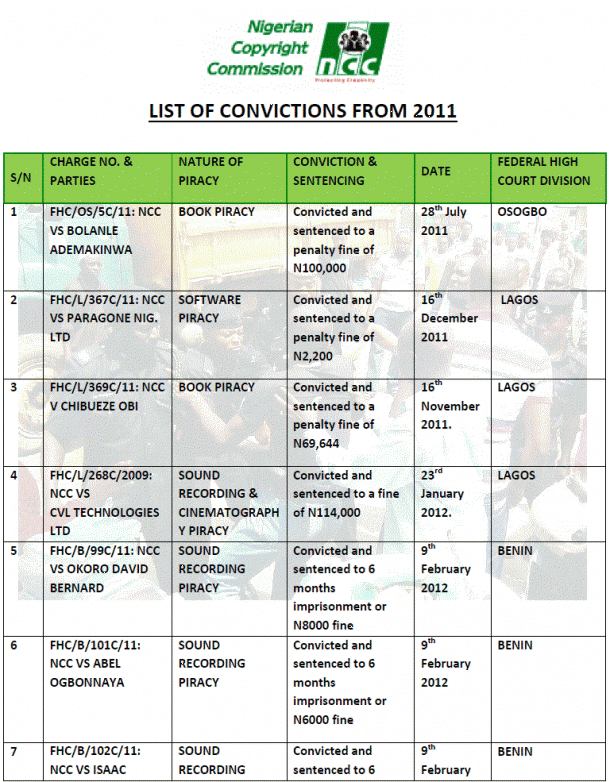
The Copyright Act was promulgated in 1988 as the Copyright Decree (No.
47) of that year. It repealed the Copyright Decree (No 61) of 1970. With the
revision of all existing federal legislation, the Decree was re-designated the
Copyright Act and contained in Cap. 68, Laws of the Federation of Nigeria,
1990. The Act was amended by the Copyright (Amendment) Decree (No. 98) of 1992
and further amended by the Copyright (Amendment) Decree (No. 42) of 1999. It
became part of the codification of Nigerian Law done in 2004 and is presently
referenced as Cap 28 Laws of the Federation of Nigeria, 2004.
How will you feel if you were Tuface Idibia, driving through
the Lagos traffic on a lovely and bright Saturday afternoon and to your sudden
dismay, you see this thief audio cd vendor hawking pirated copies of
your sweat and blood CDs to willing buyers in traffic, won’t that make
you want to break someone’s head and beat the shit out of him call the
attention of the police to such a vendor. Grooming a talent takes years of training
and commitment to an artist’s passions, dreams and aspirations, it’s a great
loss to have all that work going down the drain while some stupid children
pirates make illegal copies of your work and make undeserved profits from your
work, it’s a crime that’s killing our talent industry and must really be stopped. 

Nigerian Copyright law in Section 1
of the Copyright Act, Cap 28, LFN 2004 states that the following shall be
eligible for copyright‐ literary works; musical works; artistic works; cinematograph
films; sound recordings; and broadcasts. However, a literary, musical or
artistic work shall not be eligible for copyright unless‐
(a) sufficient
effort has been expended on making the work to give it an original character;
(b) the
work has been fixed in any definite medium of expression now known or later to
be developed, from which it can be perceived, reproduced or otherwise
communicated either directly or with the aid of any machine or device.
Copyrights are conferred on every
work eligible for copyright of which the author or, in the case of a work of
joint authorship, any of the authors is at the time when the work is made, a
qualified person, that is to say‐
(a) an individual who is a citizen of, or is
domiciled in Nigeria; or
(b) a body corporate incorporated by or under the
laws of Nigeria.
INFRINGEMENT OF COPYRIGHT
Section 15 of the Copyright Act states that a Copyright is
infringed by any person who without the licence or authorization of the owner
of the copyright‐
(a)
does, or causes any other person to do an act, the doing
of which is controlled by copyright;
(b) imports or causes to be imported into Nigeria any copy of a work
which if it had been  made in Nigeria
would be an infringing copy under this section of this Act;
(c) exhibits in public any article in respect of which copyright is
infringed under paragraph of this subsection;
(d) distributes by way of trade, offers for sale, hire or otherwise or
for any purpose prejudicial to the owner of the copyright, any article in
respect of which copyright is infringed under paragraph (a) of this subsection;
(e) makes or has in his possession, plates, master tapes, machines,
equipment or contrivances used for the purpose of making infringed copies of
the work;
(f) permits a place of public entertainment or of business to be used
for a performance in the public of the work, where the performance constitutes
an infringement of the copyright in the work, unless the person permitting the
place to be so used was not aware, and had no reasonable ground for suspecting
that the performance would be an infringement of the copyright;
(g) performs or causes to be performed for the purposes of trade or
business or as  supporting facility to a
trade or business, any work in which copyright subsists.
Infringement of copyright shall be
actionable at the suit of the owner, assignee or an exclusive licensee of the
copyright, as the case may be, in the Federal High Court exercising
jurisdiction in the place where the infringement occurred; and in any action
for such an infringement, all such relief by way of damages, injunction, accounts
or otherwise shall be available to the plaintiff as is available in any
corresponding proceedings in respect of infringement of other proprietary
rights. This means the owner of licensee of a copyright can sue any person whom
infringes on the copyright and can claim damages or ask the court to stop the
act of infringements.

Criminal
liability
(1) Any person who‐
(a) makes or causes to be made for sale, hire, or for the purposes of
trade or business any
infringing
copy of a work in which copyright subsists; or
(b) imports or causes to be imported into Nigeria a copy of any work
which if it had been
made in
Nigeria would be an infringing copy, or
(c) makes, causes to be made, or has in his possession, any plate,
master tape, machine, equipment or contrivance for the purposes of making any
infringing copy of any such work; shall, unless he proves to the satisfaction
of the court that he did not know and had no reason to believe that any such
copy was an infringing copy of any such work, or that such plate, master tape,
machine, equipment or contrivance was not for the purpose of making infringing
copies of any such work, be guilty of an offence this Act and shall be liable on
conviction to a fine of an amount not exceeding NI,000 for every copy dealt
with in contravention of this section or to a term of imprisonment not
exceeding five years, or to both such fine and imprisonment.
(2) Any person who‐
(a) sells or lets for hire or for the purposes of trade or ‘business,
exposes or offers for sale or
hires any
infringing copy of any work in which copyright subsists; or
(b) distributes for the purposes of trade or business any infringing
copy of any such work; or
(c) has in his possession other than for his private or domestic use,
any infringing copy of
any such
work,
(d) has in his possession, sells, lets for hire or distribution for
the purposes of trade or business or exposes or offers for sale or hire any
copy of a work which if it had been made in Nigeria would be an infringing
copy, shall, unless he proves to the satisfaction of the court that he did not
know and had no reason to believe that any such copy was an infringing copy of
any such work, be guilty of an offence under this Act and shall be liable on conviction
to a fine of N100 for every copy dealt with in contravention of this section,
or to a term of imprisonment not exceeding two years or in the case of an
individual to both such fine and imprisonment.
(3) Any person who, without the consent of the owner, distributes, in
public for commercial purposes, copies of a work in which copyright subsists by
way of rental, lease, hire, loan or similar arrangement, shall be guilty of an
offence under this Act, and shall be liable upon conviction to a fine of N 100
for every copy dealt with or imprisonment for six months or to both such fine
and imprisonment.
(4) The court before which any
proceedings are taken for any offence under subsections (1), (2) and (3) of
this section, whether the alleged offender is convicted or not, may order all
copies of the works, plates, master tapes, machines, equipment and contrivances
in the possession of the alleged offender, which appear, to be infringing
copies, of the works, to be destroyed or delivered up to the owner of the
copyright or otherwise dealt with as the court may think fit.

(5) Where an article has been seized by a police officer or an
authorised officer in connection with a suspected offence under this Act, a
court may on the application of the Attorney‐General of the Federation or owner
of the copyright in connection with which such offence is suspected to have
been committed, order that the article be destroyed or delivered up to the
owner of the copyright or otherwise dealt with as the court may think fit,
notwithstanding that no person has been charged with the suspected offence.
Offence by
bodies corporate
(1) Where an offence under this Act has been committed by a body
corporate, the body corporate and every person who at the time the offence was
committed was in charge of, or was responsible to the body corporate for the
conduct of the business of the body corporate shall be deemed to be guilty of
such offence and shall be liable to be proceeded against and punished
accordingly: Provided that nothing contained in this subsection shall render
any person liable to any punishment, if he proves that the offence was
committed without his knowledge or that he exercised all due diligence to
prevent the commission of such offence.
(2) Notwithstanding anything contained in subsection (1) of this
section, where an offence under this Act has been committed by a body corporate
and it is proved that the offence was committed with the consent or connivance
of, any director, manager, secretary or other officer of the body corporate
such director, manager, secretary or other officer shall also be deemed to be
guilty of that offence and shall be liable to be proceeded against and punished
accordingly.
(3) For the purposes of this section‐ “body corporate”
includes a firm or other association of
persons;
and “director” in relation to a firm includes a partner in the firm.
 

Source: www.copyright.gov.ng

Adedunmnade Onibokun 
@adedunmade 
Dear Nigerian Army, Where Is My Friend, Captain Aliyu Musa? by Tope Atiba

Dear Nigerian Army, Where Is My Friend, Captain Aliyu Musa? by Tope Atiba

‘I’m surviving, hope you are fine too? Am in Adamawa now, close to Gwoza, my regards to all’- (Excerpts of an SMS exchanged on Friday 22nd August, 2014 between my friend and I, few hours before his disappearance or ……. death)

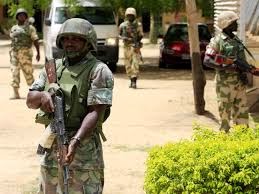
Exactly one week ago, during a counter-insurgency operation carried out by the Nigerian Army against the dreaded Boko Haram Sect somewhere between Mubi and Gwoza in Adamawa and Borno States respectively, Captain Musa Aliyu was allegedly shot alongside two other officers of the Nigerian army whose lifeless bodies have since been recovered. Aliyu’s body has however not been found.

While the inspiration to write this article is not unconnected with the fact that Aliyu is a close friend of mine, with whom I have shared some of the best and most memorable moments of intellectual discourses, bottles of beer and a common vision to develop this country in our separate fields, Aliyu was/is a firstclass example of an individual who places this country’s interest above his at all times. His professional responsibility to the nation consumed him and was palpable the moment you met with this fine officer. 
It was in Aliyu’s flat in the Onitsha Barracks that I characteristically spent at least a week of my yearly vacation. Arrangements were also in top gear to perform this yearly ritual when the call of duty sent Aliyu to Mubi in Adamawa State to join his colleagues in special missions against the dreaded Boko Haram sect.
This piece, while inspired by a close relationship that might be lost forever if indeed he is dead, is not entirely about one soldier, but about every officer and soldier of the Nigerian army and indeed the entire army as an institution. This is about the modus operandi of the institution, about the blanket of secrecy that over-mystifies the practices of the army, shields the financial outlay of the army from public scrutiny, and buries most Officers who die in combat in shallow unmarked graves as “unknown soldiers” after losing their lives due to inadequacy of information, strategy and weaponry caused wholly by embezzlement of the Military’s budgetary allocation.
In 2012, the office of the National Security Adviser under the leadership of the late General Adrew Azazi, got about 1 Trillion Naira in budgetary allocation. This amount was ordinarily supposed to be geared towards the acquisition of state-of-the-art arms and ammunition to be used in the Army’s counter terrorism campaign. In 2013 the Office of the NSA was allocated about N81,309,412,020 while the armed forces got about N364,415,146,885. 
In the 2014 budget, the figures are N117,725,072,907 for the office of the NSA and N349,707,339,871 for the armed forces. Meanwhile, sometime earlier in the year, Mr. Jonathan had come out to seek approval for another loan of about 1 Billion Dollars for the same purpose of acquiring arms and ammunition for the armed forces.
The apposite question then becomes, what happened to the 1 Trillion Naira that was paid to the office of the National Security Adviser under the leadership of Andrew Azazi? To follow up in quick succession, questions like: how much is the complete kit/gear of each soldier in the Nigerian Army? How much is the risk allowance of every soldier at the war front? Are the allowances paid as at when due? Why is there shortage of requisite ammunition to fight this cancerous insurgency? 
Why is it difficult to send Nigerian Soldiers to the battlefront without more than a magazine of bullets for his A.K 47 while the members of Boko Haram generally need an extra person to carry the belt of their seemingly inexhaustible bullets (as seen in the videos of the attacks on Giwa barracks and overrun of Gwoza) for general purpose machine guns, rocket propelled grenades, and even armoured tanks?
I wonder why our finest and bravest men are sent out blindly to die in the face of the obvious superior fire power of Boko Haram. 
Obviously, victory is not only a result of military training. It doesn’t require rocket science to realize that military training without ammunition will result in losses and casualties. I wonder what happened to the 5 helicopter gunships that were procured by Olusegun Obasanjo? Why does it suddenly seem like the Nigerian Airforce has been silenced in this battle as against the usual pounding of the obviously inadequate and relatively obsolete alpha jets that hitherto went before the troops and in other cases served as back ups?
It is obvious that the Nigerian Army has been abandoned and left out in the cold by thieving politicians and probably the top echelon of the army, as severally insinuated by organizations like Transparency International who have singled out corruption and embezzlement of funds voted for the equipping of the military as the cause of the seeming drought in the armoury of the armed forces.
Military contractors have been known to deliberately purchase 2nd, 3rd, 4th hand military hardware which has become the bane of the current campaign against Boko Haram and consequently resulted in the death or disappearance of my friend Captain Aliyu Musa as the case may be. Yet, due to this great act of treason, droves die and nobody has been apprehended, investigated and prosecuted. Is everybody not obviously complicit? Including the Commander in Chief? Or is he oblivious of these redundant facts?
I use this medium to request, that the Nigerian army begins a program to immortalize both officers and NCOs (Non Commissioned Officers) alike who have been killed due to the selfishness, callousness and corruption of the same government that sends them out to Defend its territorial integrity and in the process sends them to deaths that could have been prevented if these brave and gallant soldiers were properly and adequately armed and catered for.
This is not asking for too much. It is as simple as having a public wall emblazoned with all the names of those we lost (something like the Vietnam Memorial Wall in the US). These soldiers too are flesh, blood, brothers, sisters, sons, daughters, parents and ‘FRIENDS’ alike. Their life is worth more than a press release and an unmarked grave.
This is only the beginning of a campaign to ensure that the 2% of soldiers that stake their lives for the 98% of civilians like us, get their due. We will as a people, question the votes for security and the armed forces and we will hopefully get to the root of this rot. We will get there, so that my friend and yours will not lose their lives in vain.
This is Nigeria.
I am Aiyé Kòótó